




Navigation Technologies Announces NAVTECH Coverage Expansion
As traffic congestion continues to worsen and Americans spend nearly 36 hours a year stuck in traffic, technology is stepping in to reduce travel time - and frustration. Navigation Technologies Corp. has expanded to reach more than 130 metropolitan markets with traffic-enabled NAVTECH(R) map data, that enables synchronization with real-time traffic-information services for all the applications which already use Navigation Technologies' navigable map database. As an example, traffic-enabled NAVTECH map data allows motorists to instruct a navigation system to calculate alternate routes based on real-time reports of accidents, delays, congestion, construction, slowdowns, and travel speeds that impact traffic flow and travel times. "We have reached our goal of providing coverage to every North American metropolitan area which has the infrastructure and services to support this technology," said John MacLeod, executive vice president for North American and World Markets. "Thousands of commuters already rely on navigational technology and we expect that number to rise significantly as traffic problems continue to increase." Navigation Technologies' coverage expansion comes at a time when traffic congestion has reached unprecedented proportions. According to a recent study by the Texas Transportation Institute at Texas A&M University, traffic-related delays result in billions of dollars of lost productivity and wasted fuel annually. The NAVTECH expansion marks the final phase of a strategic rollout by Navigation Technologies begun last year in 24 major metropolitan markets. The most recent of the 130 cities to benefit from traffic-enabled NAVTECH map data include Orange County, Calif.; Pittsburgh, Pa.; Memphis, Tenn;, Madison, Wis;, and Tampa/St. Petersburg, Fla., among others. Traffic-information service providers are able to report any incident adversely affecting the flow of traffic and assist commuters with making informed routing decisions. For example, a stalled vehicle is reported to the traffic agency, which uses NAVTECH data to compute such incident details as exact location, approximate time until the incident is cleared, and delays in terms of distance. With traffic-enabled NAVTECH map data, motorists can instruct their system or service to propose alternate routes to bypass congestion for a more efficient commute, according to Navigation Technologies. This could be even more important as real-time traffic information becomes widely accessible through a variety of delivery methods, including in-vehicle navigation systems, personal digital assistants (PDAs), WAP-enabled digital phones and pagers, as well as personal computers. In addition, traffic-enabled NAVTECH maps offer manufacturers and service providers a variety of benefits, including reduced product-development costs, increased speed-to-market and accelerated growth opportunities in the North American telematics market, according to MacLeod. "Our goal is to continue building strong relationships by offering traffic providers a uniform environment in which to operate," said MacLeod. "This not only results in increased efficiencies for manufacturers and service providers, but also offers commuters the flexibility to receive this information via the channel most convenient for them." About Navigation Technologies Navigation Technologies is a global provider of map data for vehicle, Internet/wireless, and business applications. Navigation Technologies Corp. creates the digital map database that powers location-based services and navigation around the world. For more information, visit www.navtech.com. NAVTECH is a registered U.S. trademark of Navigation Technologies Corporation.
More Small Fleet


Developing Budget-Friendly Driver Safety Programs
From driver training and safety meetings to one-on-one coaching and incentive programs, several small fleets share how they have developed a safety culture with their drivers using low- to no-cost resources.
Read More →
Boosting Last-Mile Fleet Uptime, Safety, and Value with AI Vehicle Inspections
AI-powered inspections are transforming last-mile fleets by replacing manual checks with highly accurate automated scans that detect defects in seconds. By giving fleet operations visibility into the daily condition of their vehicles, you can identify trends over the vehicle’s lifecycle that enable improved procurement decisions, route management, driver training and accountability.
Read More →
Five Ways Seat Belts Help Prevent Injuries
There are five ways seat belts protect occupants from injuries, according to the Tennessee Department of Safety and Homeland Security.
Read More →
It’s here: The 2026 Fleet Technology Trends Report
What does AI mean for fleets? Get the answer — and learn other top tech trends.
Read More →
Small Fleets, Big Impact: How Independent Drivers Power Wreaths Across America
Check out how small fleets and independent drivers power Wreaths Across America each December and why their impact matters more than ever.
Read More →
VMS Survey Finds 65% of Small Fleet Managers Run Operations Alone
A new VMS survey shows small fleet managers are stretched thin, with most handling operations solo and eager to adopt digital tools for relief.
Read More →
Tips for Driving Safely on Halloween Night
This video features a reminder from the Connecticut Department of Transportation (DOT) and the Connecticut Police Chiefs Association, urging drivers to prioritize safety this Halloween.
Read More →
AI, Access, and Uptime: VMS’s Next Chapter with David Prusinski
VMS’s new Co-CEO, David Prusinski, shares how an AI-first approach will give small fleets and repair shops the tools to compete like big players.
Read More →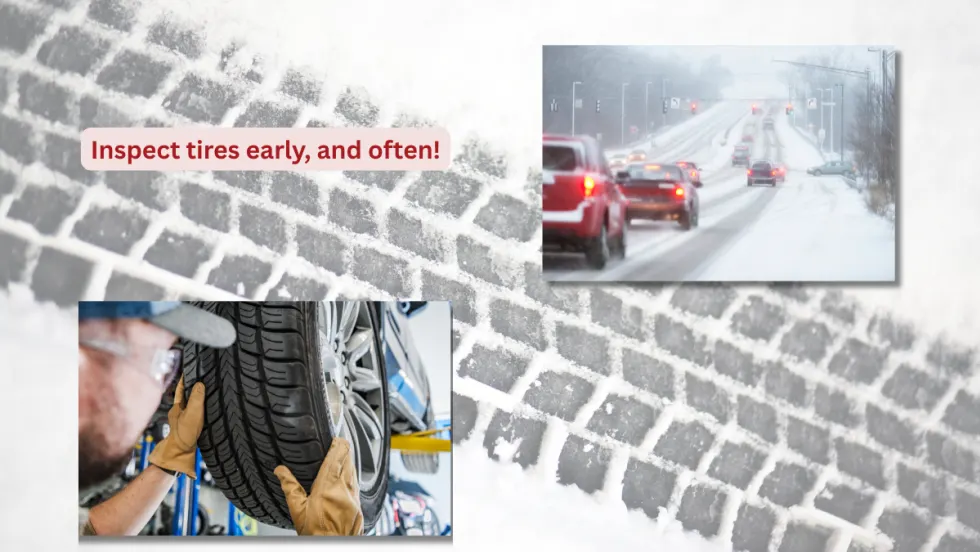
Fleet Managers Share Winter Prep Tips: It's Never Too Early!
Three fleets share best practices to prep vehicles for winter and prevent downtime when the cold sets in.
Read More →