




Members of Congress Quiz FMCSA on Oversight
WASHINGTON – The Federal Motor Carrier Safety Administration (FMCSA) has improved its oversight and compliance reviews of high-risk carriers, but work remains to be done.
WASHINGTON – The Federal Motor Carrier Safety Administration (FMCSA) has improved its oversight and compliance reviews of high-risk carriers, but work remains to be done, members of the House Transportation and Infrastructure Committee were told July 11, according to the Web site www.etrucker.com.
The Motor Carrier Safety Improvement Act of 1999, which created the FMCSA, required the agency to reduce fatalities involving commercial motor vehicles by 50 percent by 2009, and to submit a plan to Congress to quantify the agency’s progress. In 1999, more than 5,365 individuals were killed in large truck crashes compared to 5,212 in 2005, an improvement of less than three percent.
Since FMCSA’s 2004 review of SafeStat, the number of large-truck crashes reported has improved 32 percent.
The FMCSA has made important progress, but that progress appears to have leveled out, and further reductions in the fatality rate will be difficult to achieve, said Calvin Scovell, inspector general for the U.S. Department of Transportation.
As part of FMCSA’s CSA 2010 initiative, violations will be evaluated monthly to determine the motor carrier’s status, rather than waiting for an on-site review. A pilot test of CSA 2010 will be conducted in four states.
True safety evaluations depend not just on crash data but on driver and carrier data, and CSA 2010 will include both drivers and carriers.
Past crashes are the best determinant of future crashes, said Susan Fleming, director of physical infrastructure issues for the U.S. Government Accountability Office (GAO), the investigative arm of Congress. The GAO recently estimated that if FMCSA used a statistical approach, it could increase its ability to identify high-risk carriers by about 9 percent over SafeStat, according to the www.etrucker.com.
U.S. Rep. Todd Platts, R-Pa., asked Hill whether any progress has been made in improving the commercial driver’s licensing process.
Plans are being drawn to merge the medical and CDL certifications, and a Notice of Proposed Rulemaking on the training of entry-level drivers is pending.
Missing crash data can seriously affect the ranking of a motor carrier, leading to either more or less oversight than is appropriate. For example, a high-risk carrier with many unreported nonfatal crashes might not be targeted for FMCSA’s attention, even when it should be.
More Operations
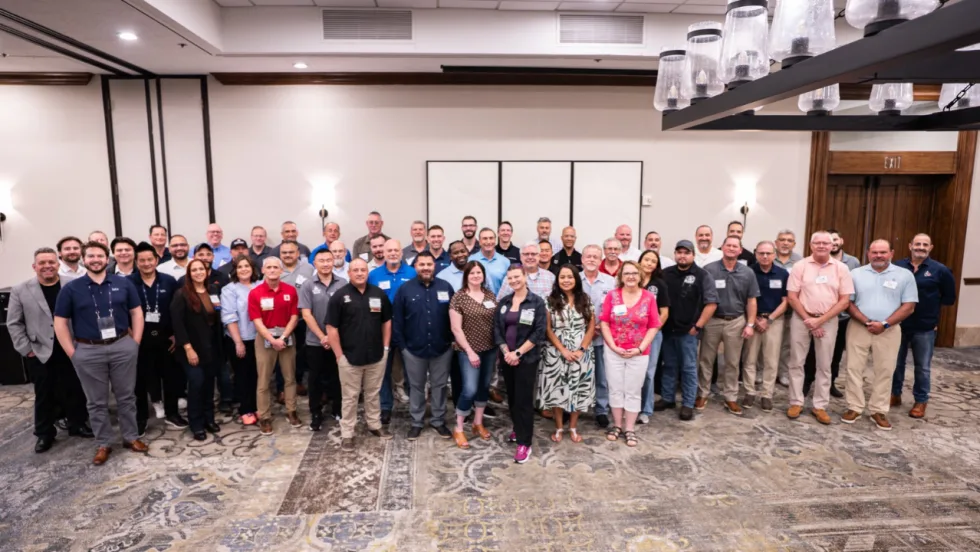
Fleet Conversations and Connections at Work Truck Exchange 2026
Fleet connections, friendly competition, and a few flying axes. See the people and moments that brought Work Truck Exchange 2026 to life.
Read More →
Workhorse Enters Modular AI Infrastructure Market Through TerraPod Partnership with RHAELM
Workhorse’s initial agreement with RHAELM is to develop a full-scale TerraPod manufacturing spec unit, then a non-binding letter of intent covers further expanding the partnership, including a supply agreement and a contemplated contingent initial order for 150 TerraPod systems.
Read More →
Your Fleet Experience Deserves a Vote
You know what happens after the vehicle leaves the dealership. Work Truck’s fleet awards give that experience a place in the industry conversation, and a reason to make your voice heard.
Read More →From Our Partners
Basic Tracking vs Next Generation Fleet Technology
Sponsored by AT&T Business

5 Facts Every Fleet Manager Should Know About Embedded Telematics
Sponsored by Stellantis/Mobilisights

How AI Video Telematics Boosts Driver Safety and Helps to Avoid Unnecessary Costs
Sponsored by Verizon Connect

Charting the 8 Bottom-Line Benefits of Workforce Optimization
Sponsored by Verizon Connect


Work Truck Seeks Fleet and Industry Insights on 2026 Trends and 2027 Forecasts
Work Truck is seeking insights from fleet leaders and industry partners on the trends that shaped 2026 and what commercial fleets should prepare for in 2027. Participate today!
Read More →
30 Years in Fleet and Still Learning: Lessons Beyond Trucks
After more than three decades in fleet, Bob Adamsky has learned that knowing trucks is only part of the job. The bigger lessons come down to communication, understanding, and never assuming you know it all.
Read More →
What Every New Fleet Manager Should Know
Carolyn Edwards shares lessons on finding mentors, showing fleet’s value, and leading teams in this episode of Legends of Fleet.
Read More →
Les Schwab Tires Launches Foundation With $100,000 for Community Recovery
Les Schwab Tires launches a foundation with $100,000 to support recovery for Silver Rail Elementary and the Bend community following a school shooting.
Read More →
Bring Some Fleet to Your Halloween with Our Pumpkin Carving Templates
Download Work Truck’s truck-themed pumpkin patterns, explore more automotive designs, and give your shop or front porch a seasonal upgrade.
Read More →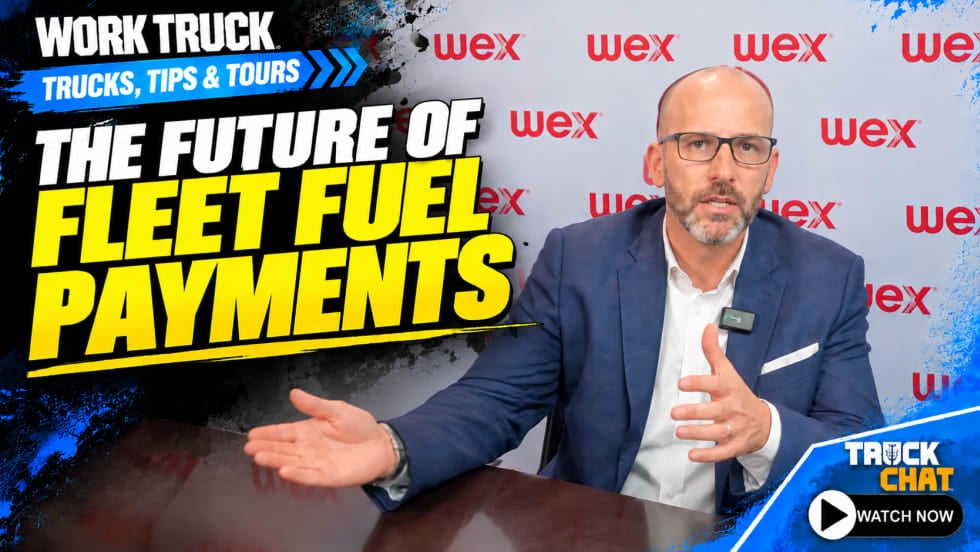
How Cardless Fuel Payments Benefit Commercial Fleets
Is it time for fleets to move beyond plastic fuel cards? David Abraham of WEX explains how cardless fuel payments can help reduce fraud, simplify driver transactions, and improve efficiency by allowing drivers to pay for fuel using their smartphones.
Read More →
Good Fleet Leadership Starts With the People You Already Have
From developing future leaders to listening to employees, discover how better leadership can help work truck fleets retain talent and build stronger teams.
Read More →