




Marathon and Syntroleum Expand Synthetic Fuels Demonstration Plant
Syntroleum Corporation and Marathon Oil Company, a wholly owned subsidiary of Marathon Oil Corporation, announced May 31 agreements to expand the configuration and capability of the Syntroleum gas-to-liquids (GTL) complex to supply ultra-clean fuels for long-term testing in government and private fleet vehicles. The GTL demonstration complex, currently under construction at the Port of Catoosa near Tulsa, OK, is part of an ultra-clean fuels production and demonstration project managed by the U.S. Department of Energy's (DOE) National Energy Technology Laboratory. According to the company, the GTL complex is scheduled for completion in mid-2003. Under the terms of the $36 million project, the DOE says it is providing $16 million in funding, and Syntroleum is contributing key components of its previously developed GTL demonstration plant, which has been moved from Washington State to Tulsa. Marathon has provided most of the remaining funding for the original project, plus funding for additional equipment to evaluate the probable cost of scaling up the demonstration plant and to support future operator training for commercial scale GTL plants after the DOE project is complete. In addition to this funding, Marathon says it is providing technical and project management personnel to work with Syntroleum in the engineering, construction and operation of the synthetic fuels plant. The agreement contemplates the additional participation of other Syntroleum licensees in the project. According to the company, the expanded configuration will include installation of a gas turbine and other equipment to make the completed 70 barrel-per-day complex mirror the major components of a commercial scale plant. In return for the additional investment, Marathon will have access to the complex for operator training and will have the right to convert its investment into a combination of credits against future license fees and Syntroleum stock at no less than $6 per share. Additionally, under the new agreements, a previous contractual restriction that prevented Marathon from acquiring more than 10% of Syntroleum's common stock has been waived. Marathon currently owns less than a 1% equity interest in the company. "This additional commitment is consistent with Marathon's integrated gas strategy -- a key element of which is to commercialize stranded gas reserves using a variety of technologies, including Syntroleum's gas to liquids technology," stated Tim Tipton, vice president of technology for Marathon. "While the Port of Catoosa complex is small, it is a complete GTL demonstration facility that mirrors a commercial scale plant, allowing us to not only gain process knowledge and experience, but also train operators in anticipation of the possible development of a commercial scale plant." "We are pleased that Marathon is expanding its commitment and funding for the DOE clean fuels demonstration plant," stated Kenneth Agee, Syntroleum chairman and CEO. "We are excited about the prospect of being able to provide ultra-clean synthetic fuels for long-term testing in government vehicles. We are confident that the test results will provide additional impetus to adopt GTL fuels, especially in a number of non-attainment areas where cleaner exhaust emissions are increasingly critical for a cleaner environment." Other participants in this project include Integrated Concepts & Research Corporation, as the prime contractor, plus the U.S. Department of Defense, U.S. National Park Service, Washington Metropolitan Area Transit Authority, Massachusetts Institute of Technology's Sloan Automotive Laboratory, Arthur D. Little, Inc., University of Alaska at Fairbanks, and West Virginia University's transportable emissions testing laboratory. DaimlerChrysler and Volkswagen are also participants in the Project to demonstrate the use of these fuels in vehicles having prototype diesel engines and emission control systems. The DOE project calls for the production of ultra-clean synthetic diesel and other fuels for a series of test programs that will be managed by Integrated Concepts Research Corporation. The synthetic fuels will be initially tested in fleet vehicles in Washington, DC and Denali Park, Alaska. Marathon is an energy company engaged in the worldwide exploration, production and transportation of crude oil and natural gas. Through Marathon Ashland Petroleum LLC, the company also refines, markets and transports petroleum products in the United States. For more information about Marathon, please visit the company's Web site at www.marathon.com. Syntroleum Corporation says it is the developer of a proprietary process for converting natural gas into synthetic liquid hydrocarbons. The company, in partnership with others, plans to build specialty chemical and fuels plants using its technology in a number of global locations. Additionally, Syntroleum licenses its process to oil companies for the manufacture of fuels. For further information about Syntroleum, visit the company's website at www.syntroleum.com.
More Small Fleet

Developing Budget-Friendly Driver Safety Programs
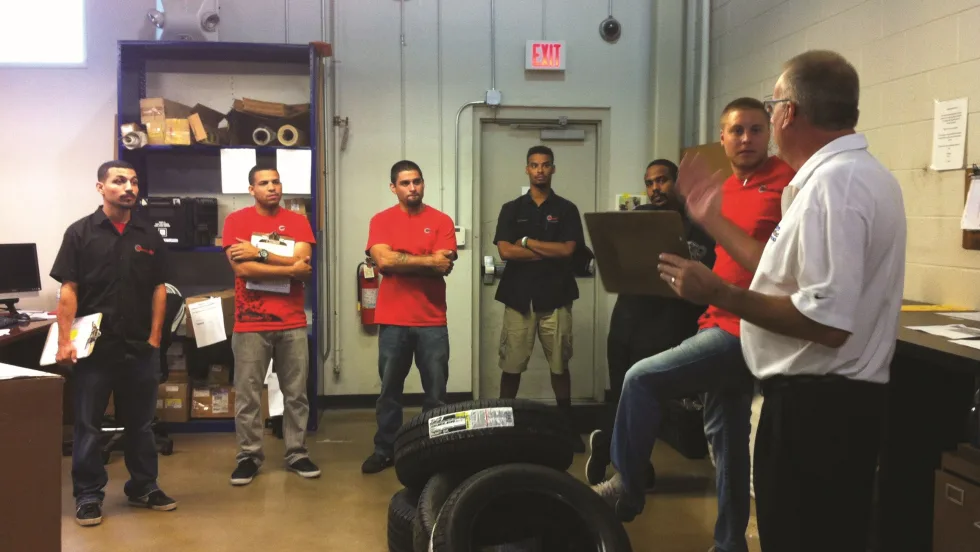
From driver training and safety meetings to one-on-one coaching and incentive programs, several small fleets share how they have developed a safety culture with their drivers using low- to no-cost resources.
Read More →
Boosting Last-Mile Fleet Uptime, Safety, and Value with AI Vehicle Inspections
AI-powered inspections are transforming last-mile fleets by replacing manual checks with highly accurate automated scans that detect defects in seconds. By giving fleet operations visibility into the daily condition of their vehicles, you can identify trends over the vehicle’s lifecycle that enable improved procurement decisions, route management, driver training and accountability.
Read More →
Five Ways Seat Belts Help Prevent Injuries
There are five ways seat belts protect occupants from injuries, according to the Tennessee Department of Safety and Homeland Security.
Read More →
It’s here: The 2026 Fleet Technology Trends Report
What does AI mean for fleets? Get the answer — and learn other top tech trends.
Read More →
Small Fleets, Big Impact: How Independent Drivers Power Wreaths Across America
Check out how small fleets and independent drivers power Wreaths Across America each December and why their impact matters more than ever.
Read More →
VMS Survey Finds 65% of Small Fleet Managers Run Operations Alone
A new VMS survey shows small fleet managers are stretched thin, with most handling operations solo and eager to adopt digital tools for relief.
Read More →
Tips for Driving Safely on Halloween Night
This video features a reminder from the Connecticut Department of Transportation (DOT) and the Connecticut Police Chiefs Association, urging drivers to prioritize safety this Halloween.
Read More →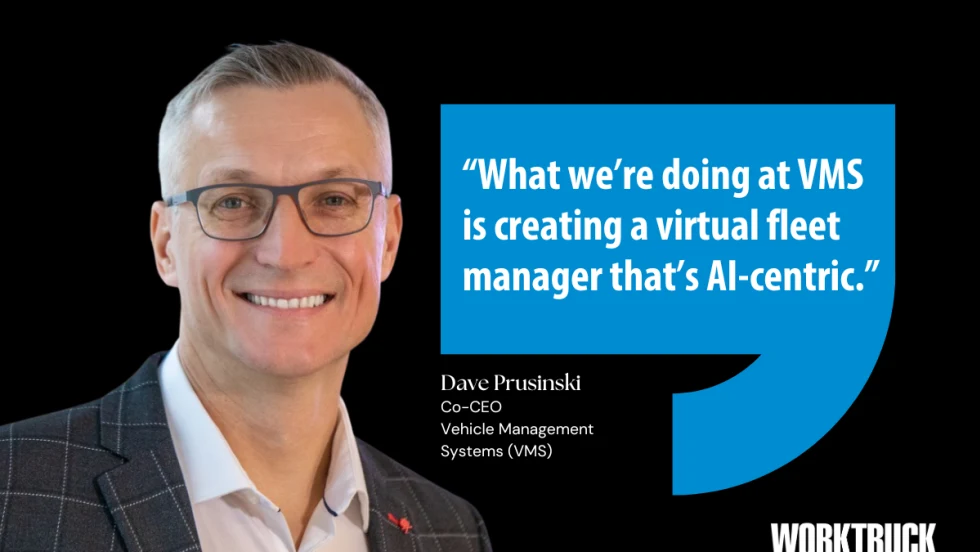
AI, Access, and Uptime: VMS’s Next Chapter with David Prusinski
VMS’s new Co-CEO, David Prusinski, shares how an AI-first approach will give small fleets and repair shops the tools to compete like big players.
Read More →
Fleet Managers Share Winter Prep Tips: It's Never Too Early!
Three fleets share best practices to prep vehicles for winter and prevent downtime when the cold sets in.
Read More →