



Lincoln MKZ Hybrid Rated at 41/36 MPG
The 2011 Lincoln MKZ Hybrid's final fuel economy certification was completed this week, and the vehicle will carry an EPA label of 41 mpg for city driving and 36 mpg on the highway when it goes on sale this fall.
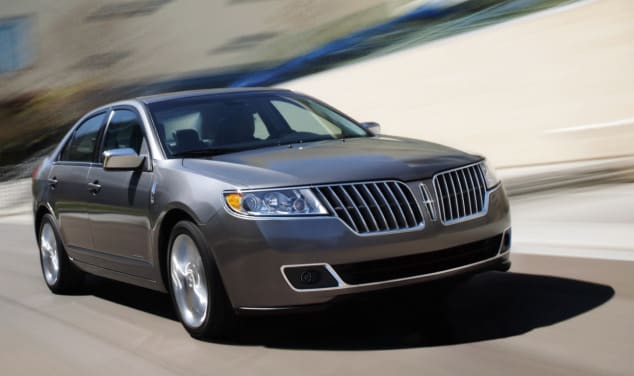
2011 Lincoln MKZ Hybrid
Lincoln's first-ever hybrid - the 2011 Lincoln MKZ Hybrid - is now officially the most fuel-efficient luxury sedan in America with an EPA-certified 41 mpg rating in city driving and 36 mpg on the highway.
"The 2011 Lincoln MKZ Hybrid provides a real choice in the marketplace for customers looking for a vehicle that not only makes a statement about who they are but also reflects their ideals," said Derrick Kuzak, Ford's group vice president, global product development. "It offers the best fuel economy in its segment, a host of advanced safety features, and all the amenities and modern design of a true luxury sedan."
The 2011 Lincoln MKZ Hybrid's final fuel economy certification was completed this week, and the vehicle will carry an EPA label of 41 mpg for city driving and 36 mpg on the highway when it goes on sale this fall. It tops its nearest competitor - the 2010 Lexus HS 250h - by 6 mpg.
The 2011 Lincoln MKZ Hybrid uses Ford's second-generation hybrid technology - the 2.5-liter Atkinson-cycle I-4 hybrid engine - named one of Ward's 2010 "10 Best Engines." The system combines the best attributes of the gasoline engine and electric battery-driven motors to deliver optimal performance and fuel economy.
The combined gasoline engine and electric motor provide 191 net horsepower. Plus, the pure electric mode on the Lincoln MKZ Hybrid extends to 47 mph - compared with the Lexus HS 250h battery-only mode, which reaches just 25 mph.
In addition to being the most fuel-efficient luxury sedan in America, the 2011 Lincoln MKZ Hybrid includes a host of standard features and others available at an extra cost. They are:
SmartGauge with EcoGuide
Lincoln SYNC
Bridge of Weir leather-trimmed seats
10-way power passenger seat
Power driver memory seat settings
Heated and cooled front seats
Genuine wood trim
Reverse sensing system
Keyless entry keypad
Easy Fuel Capless Fuel-Filler
Personal Safety System
MyKey
Integrated spotter mirrors
Acoustic laminated windshield
More Small Fleet


Developing Budget-Friendly Driver Safety Programs
From driver training and safety meetings to one-on-one coaching and incentive programs, several small fleets share how they have developed a safety culture with their drivers using low- to no-cost resources.
Read More →
Boosting Last-Mile Fleet Uptime, Safety, and Value with AI Vehicle Inspections
AI-powered inspections are transforming last-mile fleets by replacing manual checks with highly accurate automated scans that detect defects in seconds. By giving fleet operations visibility into the daily condition of their vehicles, you can identify trends over the vehicle’s lifecycle that enable improved procurement decisions, route management, driver training and accountability.
Read More →
Five Ways Seat Belts Help Prevent Injuries
There are five ways seat belts protect occupants from injuries, according to the Tennessee Department of Safety and Homeland Security.
Read More →
It’s here: The 2026 Fleet Technology Trends Report
What does AI mean for fleets? Get the answer — and learn other top tech trends.
Read More →
Small Fleets, Big Impact: How Independent Drivers Power Wreaths Across America
Check out how small fleets and independent drivers power Wreaths Across America each December and why their impact matters more than ever.
Read More →
VMS Survey Finds 65% of Small Fleet Managers Run Operations Alone
A new VMS survey shows small fleet managers are stretched thin, with most handling operations solo and eager to adopt digital tools for relief.
Read More →
Tips for Driving Safely on Halloween Night
This video features a reminder from the Connecticut Department of Transportation (DOT) and the Connecticut Police Chiefs Association, urging drivers to prioritize safety this Halloween.
Read More →
AI, Access, and Uptime: VMS’s Next Chapter with David Prusinski
VMS’s new Co-CEO, David Prusinski, shares how an AI-first approach will give small fleets and repair shops the tools to compete like big players.
Read More →
Fleet Managers Share Winter Prep Tips: It's Never Too Early!
Three fleets share best practices to prep vehicles for winter and prevent downtime when the cold sets in.
Read More →