




J.D. Power and Associates Reports: 2003 Vehicle Dependability Study
While Japanese-branded vehicles continue to dominate in terms of long-term vehicle quality, the Europeans have lost their edge over the U.S. domestic-branded vehicles, according to the J.D. Power and Associates 2003 Vehicle Dependability Study (VDS). The 2003 study, which measures problems reported by original owners of 2000 model-year vehicles at three years of ownership, finds that although there is near parity between U.S. Domestics and Europeans in terms of initial quality, substantial quality gaps appear between the Domestics and the Europeans in long-term durability. On average, models by domestic automakers outpace the Europeans by 49 problems per 100 (PP100) vehicles at three years of ownership. "Conventional wisdom said that dependability was the property of the Japanese and Europeans," said Joe Ivers, partner and executive director of quality/customer satisfaction at J.D. Power and Associates. "While that's still true for automakers like Toyota and Honda, it's no longer the case for many of the Europeans. Porsche, Jaguar, Saab and BMW perform well above the industry average in dependability, but many other European brands are bought based on a reputation for long-term quality and fall far short of even the average. This is in stark contrast to the results of the first VDS, conducted in 1990, when Mercedes-Benz led the industry." According to the study, Toyota Motor Sales, U.S.A, Inc. boasts nine models with top segment rankings, followed by Ford Motor Company and General Motors with three each, and American Honda and Porsche Cars North America with one each. Lexus is the top-ranked nameplate for the ninth consecutive year. Porsche Cars North America leads the corporate ranking, while Toyota Motor Sales leads among the full-range vehicle manufacturers. General Motors is the only domestic manufacturer to rank above the industry average in the corporate rankings, with 12 models finishing in the top three of the segment rankings, second only to Toyota Motor Sales with 13. Other notable performances in the 2003 results include Subaru and GMC, which both performed considerably better when measured at three years in VDS than when they were measured at 90 days of ownership. At the other end of the spectrum is Mercedes-Benz, which experiences the largest quality gap between initial quality and long-term quality measurements. Also deteriorating more rapidly than the average vehicle are Audi and Volvo. According to the study, some problems that occur much more frequently as vehicles age include excessive brake wear, air conditioning system issues, wind noise and the replacement of components not called for under the normal maintenance schedule. New problems that arise as vehicles age include issues with shocks and struts; faded, cracked or worn materials; worn or broken moldings; cracked and peeling paint; and various fluid leaks. Long-term quality measures have a big consumer impact, says the study. Among new-vehicle buyers, 52 percent indicate that long-term durability is among their most important factors in choosing a vehicle. Further, among used-vehicle buyers, 42 percent report buying a used vehicle instead of a new vehicle because they felt that the quality of the used vehicle is as good as a new one. This is particularly true among luxury used-vehicle buyers. "With the proliferation of long-term warranties being offered on new vehicles and the increasing popularity of manufacturer-sponsored used-vehicle certification programs, long-term quality issues are critical to manufacturers and their bottom lines," said Ivers. "Manufacturers must align themselves with consumer expectations for durability. Long-term quality issues have a substantial impact on customer retention, even among 'got to have' models that seem impervious to quality issues at their introductions." The 2003 Vehicle Dependability Study is based on responses from more than 55,000 original owners of 2000 model-year cars and light trucks. The study covers 147 specific problem symptoms grouped into nine major vehicle systems. For the first time, the study reviews models at three years of ownership instead of the historical four- to five-year period in order to better support manufacturer product improvement efforts in next-generation replacement models. Headquartered in Westlake Village, Calif., J.D. Power and Associates is an ISO 9001-registered global marketing information services firm operating in key business sectors including market research, forecasting, consulting, training and customer satisfaction. The firm's quality and satisfaction measurements are based on responses from millions of consumers annually.
More Small Fleet


Developing Budget-Friendly Driver Safety Programs
From driver training and safety meetings to one-on-one coaching and incentive programs, several small fleets share how they have developed a safety culture with their drivers using low- to no-cost resources.
Read More →
Boosting Last-Mile Fleet Uptime, Safety, and Value with AI Vehicle Inspections
AI-powered inspections are transforming last-mile fleets by replacing manual checks with highly accurate automated scans that detect defects in seconds. By giving fleet operations visibility into the daily condition of their vehicles, you can identify trends over the vehicle’s lifecycle that enable improved procurement decisions, route management, driver training and accountability.
Read More →

Five Ways Seat Belts Help Prevent Injuries
There are five ways seat belts protect occupants from injuries, according to the Tennessee Department of Safety and Homeland Security.
Read More →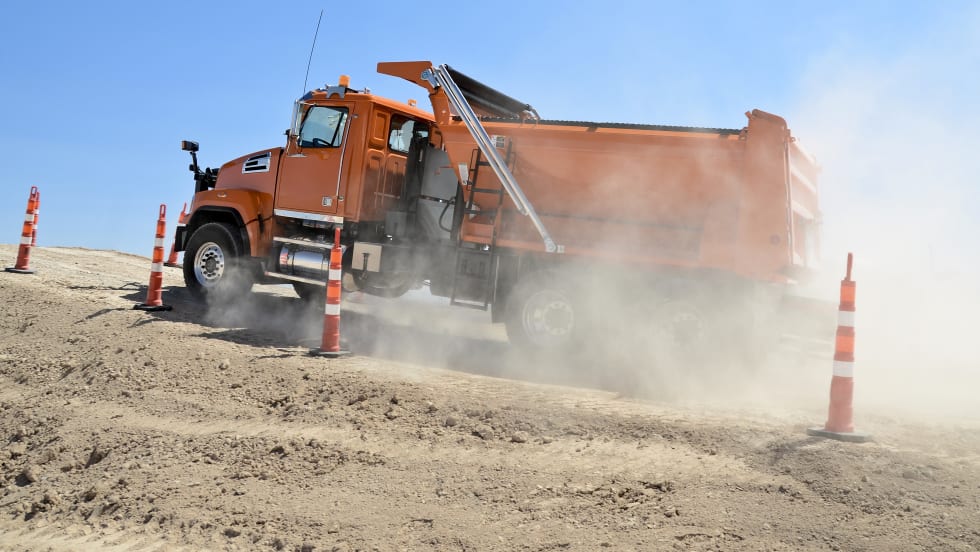
Basic Tracking vs Next Generation Fleet Technology
Fleet software is getting more sophisticated and effective than ever, tying big data models together to transform maintenance, safety, and the value of your existing tech stack. Fleet technology upgrades are undoubtedly an investment, but updated technology can offer a much higher return. Read how upgrading your fleet technology can increase the return on your investment.
Read More →
It’s here: The 2026 Fleet Technology Trends Report
What does AI mean for fleets? Get the answer — and learn other top tech trends.
Read More →
Small Fleets, Big Impact: How Independent Drivers Power Wreaths Across America
Check out how small fleets and independent drivers power Wreaths Across America each December and why their impact matters more than ever.
Read More →
VMS Survey Finds 65% of Small Fleet Managers Run Operations Alone
A new VMS survey shows small fleet managers are stretched thin, with most handling operations solo and eager to adopt digital tools for relief.
Read More →
Tips for Driving Safely on Halloween Night
This video features a reminder from the Connecticut Department of Transportation (DOT) and the Connecticut Police Chiefs Association, urging drivers to prioritize safety this Halloween.
Read More →
AI, Access, and Uptime: VMS’s Next Chapter with David Prusinski
VMS’s new Co-CEO, David Prusinski, shares how an AI-first approach will give small fleets and repair shops the tools to compete like big players.
Read More →