




Introducing the Volvo Multi-Fuel
As part of their aim at finding different ways to sustainable mobility, Volvo Car Corporation has developed a system for a multitude of fuels. The Volvo Multi-Fuel is a prototype car, optimised for running on five different fuel types; hythane, biomethane, natural gas, bioethanol E85 and petrol. Hythane consists of 10% hydrogen and 90% methane, a blend that has tested most effective for this system.
Optimised for five different fuels
The Volvo Multi-Fuel is a five-cylinder, 2.0-litre prototype car (200 bhp) that runs on five different fuels; hythane (10% hydrogen and 90% methane), biomethane, natural gas (CNG), bioethanol E85 (85% bioethanol and 15% petrol) and petrol. The new concept is introduced at the Michelin Challenge Bibendum 2006 and is one of its kind.
"The whole car is optimised for high performance, driving on any of the five different fuels," says Mats Morén, Project Leader Engine at Volvo Car Corporation. "The Multi-Fuel is just as safe as all Volvo vehicles, with the added bonus of being exceptionally clean. One of its benefits is that combustion of pure renewable fuels like hydrogen, biomethane and bioethanol gives negligible net contribution of fossil carbon dioxide."
"It is a first step towards a hydrogen powered society," says Mats Morén. "Perhaps we can develop the system even further, to run on a higher blend in the future."
Independent of local infrastructure
Volvo Car Corporation believes that the road to the future is not one but many. No renewable fuel type can alone replace the fossil fuels of today. Since local conditions vary, different markets need engines for different alternative fuels, together with cleaner conventional ones. With this in mind, Volvo Car Corporation has developed the Multi-Fuel, a prototype car that can be powered by five different fuel types, thus be driven on the energy source at hand - anywhere in the world.
"The idea is to make use of the fuels that are produced locally," says Mats Morén. "This means that less fuel needs to be transported between continents, and you can fill up the car on the fuel that is available wherever you are."
Reinforced gaseous fuel tank
The Multi-Fuel vehicle contains one large and two smaller tanks of totally 98 litres for gaseous fuels (hythane, biomethane and CNG), and one 29-litre tank for liquid fuels (bioethanol E85 and petrol).
"The small gaseous fuel tanks are made of steel, whereas the large tank has a durable, gas tight aluminium liner, reinforced with high performance carbon fibre composite and an exterior layer of hardened fibre-glass composite," says Mats Morén.
The fuel tanks are fitted neatly under the luggage compartment floor, which means that full loading capacity is preserved. Two fuel fillers are used to fill up all five fuel types, one for gaseous and one for liquid fuels. The engine automatically adjusts itself to the right blend of gaseous or liquid fuels. To switch between fuel types, the driver simply presses a button.
High performance on any fuel with maintained fuel-efficiency
The whole Multi-Fuel vehicle - the engine, the tanks, the transmission and the fuel system - is optimised for the five different fuels. It can be started directly on gas, which is unique for this system. The Multi-Fuel has a motor effect of 200 bhp and accelerates quickly up to speed, 0-100 km/h in 8.7 seconds. This makes the car more responsive and smooth to drive. - The Multi-Fuel is turbo charged to achieve high performance on any of the five different fuel types, says Mats Morén. That makes it great fun to drive and we are very proud of its performance.
Low regulated and unregulated emissions
The Multi-Fuel is remarkably clean and meets the emission standards for Euro 4 and the proposed levels for Euro 5. An alternative catalyst system has also been developed to meet the tough demands on extremely low tailpipe emissions for PZEV/SULEV on the US market. The vehicle has two catalysts, one close coupled to the engine that lowers initial start emissions, and one under the floor for reduced high-speed emissions. The double catalysts and advanced engine control system lead to very low emissions. High-temperature materials in the exhaust manifold and turbo allow extremely high exhaust gas temperatures of up to 1050 °C. This enables the car to run cleaner, accelerate quicker and operate smoother at higher speed.
"I love this concept," says Mats Morén, "a turbo charged engine with high performance, low fuel consumption and low emissions. On top of that it has a brilliant tank installation and can be run on a multitude of fuels - all wrapped in one beautiful car."
For further information, please visit Volvo Car Corporation's Newsroom at www.media.volvocars.com or contact: Christer Gustafsson, cgustaf4@volvocars.com.
Volvo Car Corporation offers a wide selection of vehicles that can be run on renewable fuels. By tradition we develop safe solutions to make a difference here and now. Get acquainted with our safety systems and environmental car range in Paris, June 8-12.
More Small Fleet


Developing Budget-Friendly Driver Safety Programs
From driver training and safety meetings to one-on-one coaching and incentive programs, several small fleets share how they have developed a safety culture with their drivers using low- to no-cost resources.
Read More →
Boosting Last-Mile Fleet Uptime, Safety, and Value with AI Vehicle Inspections
AI-powered inspections are transforming last-mile fleets by replacing manual checks with highly accurate automated scans that detect defects in seconds. By giving fleet operations visibility into the daily condition of their vehicles, you can identify trends over the vehicle’s lifecycle that enable improved procurement decisions, route management, driver training and accountability.
Read More →
Five Ways Seat Belts Help Prevent Injuries
There are five ways seat belts protect occupants from injuries, according to the Tennessee Department of Safety and Homeland Security.
Read More →
It’s here: The 2026 Fleet Technology Trends Report
What does AI mean for fleets? Get the answer — and learn other top tech trends.
Read More →
Small Fleets, Big Impact: How Independent Drivers Power Wreaths Across America
Check out how small fleets and independent drivers power Wreaths Across America each December and why their impact matters more than ever.
Read More →
VMS Survey Finds 65% of Small Fleet Managers Run Operations Alone
A new VMS survey shows small fleet managers are stretched thin, with most handling operations solo and eager to adopt digital tools for relief.
Read More →
Tips for Driving Safely on Halloween Night
This video features a reminder from the Connecticut Department of Transportation (DOT) and the Connecticut Police Chiefs Association, urging drivers to prioritize safety this Halloween.
Read More →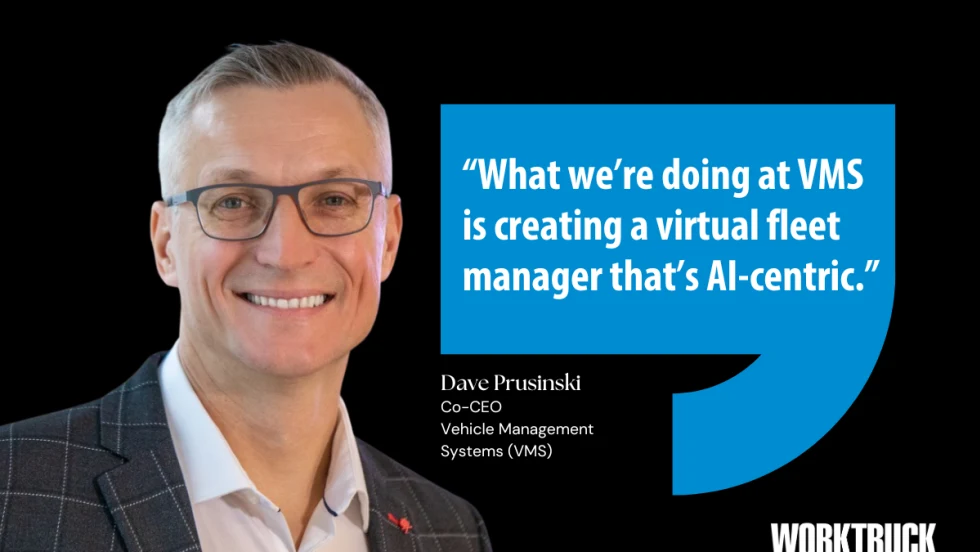
AI, Access, and Uptime: VMS’s Next Chapter with David Prusinski
VMS’s new Co-CEO, David Prusinski, shares how an AI-first approach will give small fleets and repair shops the tools to compete like big players.
Read More →
Fleet Managers Share Winter Prep Tips: It's Never Too Early!
Three fleets share best practices to prep vehicles for winter and prevent downtime when the cold sets in.
Read More →