




Hyundai Santa Fe May Become the First Environmentally Friendly Sport-Utility
Hyundai America Technical Center Inc. (HATCI), along with its partner QUANTUM Technologies Worldwide, Inc., say they are bringing the future a little closer with major advancements in the world of fuel cells and cutting edge technology that could power the cars of tomorrow. They are doing this by filling the hydrogen storage tank of a fuel cell powered Hyundai Santa Fe to store the clean hydrogen fuel at the never before reached level of 5,000 pounds per square inch (psi). Until now, no automobile manufacturer has been able to fill a hydrogen fuel cell vehicle tank to more than 3,600-psi. The fuel system developed for the Santa Fe meets the challenging packaging requirements for hydrogen fuel cell vehicles. While increasing the travel distance with more hydrogen in the same space, Hyundai says the vehicle maintains maximum safety conditions and allows for minimal intrusion into the cargo and passenger areas of the Santa Fe. The hydrogen tank is tucked out of the way so the Santa Fe maintains its 8.1 inches of ground clearance. "Hyundai is very proud of the achievement it has made with QUANTUM Technologies in the way of fuel cell technology advancement," said Dr. Young Woo Kim, president of HATCI. "With the success of the Santa Fe, it made sense for Hyundai to adapt its hot-selling crossover sport-utility to the cutting edge world of energy efficient fuel cell vehicles. By filling our hydrogen tank to 5,000 psi and increasing range, it brings us that much closer to producing a vehicle that meets the standards of our customers." "A vital issue in bringing fuel cell vehicles to the marketplace is extending vehicle range -- which requires efficient storage of compressed hydrogen at a high pressure," said Syed Hussain, president and CEO of QUANTUM. "This is the principle advantage of the TriShield(TM) tank and the significance of a 5,000-psi cylinder-fill." The packaging of hydrogen is achieved with QUANTUM's TriShield(TM) tank technology developed for Hyundai. The tanks are designed and manufactured with a one-piece permeation resistant seamless liner, a carbon composite over-wrap for strength, and an impact-resistant shell. This lightweight, rigid design allows for improved range and safety of hydrogen, according to Hussain. The ability to store large amounts of hydrogen in a small amount of space in a safe tank, even in the event of a collision, is what makes this technology so unique, Hussain said. Hyundai is participating in the California Fuel Cell Partnership (www.cafcp.org), a public-private venture of automakers, energy and fuel cell technology companies, and government agencies working together to advance the commercialization of fuel cell-powered vehicles. The partnership is headquartered in West Sacramento, Calif., and over the next few years, more than 60 fuel cell vehicles will undergo road testing in real-world driving conditions. About Hyundai Motor America Hyundai Motor America, based in Fountain Valley, Calif., is a subsidiary of Hyundai Motor Company of Korea. Hyundai cars and sport utility vehicles are distributed in the United States by Hyundai Motor America and are sold and serviced through more than 500 dealerships nationwide. About QUANTUM Technologies Worldwide Inc. QUANTUM Technologies WorldWide Inc., is a wholly owned subsidiary of IMPCO Technologies Inc. QUANTUM designs, integrates and commercializes fuel handling, advanced gaseous fuel storage systems, fuel metering and electronic control applications to original equipment manufacturers of fuel cell and internal combustion engines.
More Small Fleet


Developing Budget-Friendly Driver Safety Programs
From driver training and safety meetings to one-on-one coaching and incentive programs, several small fleets share how they have developed a safety culture with their drivers using low- to no-cost resources.
Read More →
Boosting Last-Mile Fleet Uptime, Safety, and Value with AI Vehicle Inspections
AI-powered inspections are transforming last-mile fleets by replacing manual checks with highly accurate automated scans that detect defects in seconds. By giving fleet operations visibility into the daily condition of their vehicles, you can identify trends over the vehicle’s lifecycle that enable improved procurement decisions, route management, driver training and accountability.
Read More →
Five Ways Seat Belts Help Prevent Injuries
There are five ways seat belts protect occupants from injuries, according to the Tennessee Department of Safety and Homeland Security.
Read More →
It’s here: The 2026 Fleet Technology Trends Report
What does AI mean for fleets? Get the answer — and learn other top tech trends.
Read More →
Small Fleets, Big Impact: How Independent Drivers Power Wreaths Across America
Check out how small fleets and independent drivers power Wreaths Across America each December and why their impact matters more than ever.
Read More →
VMS Survey Finds 65% of Small Fleet Managers Run Operations Alone
A new VMS survey shows small fleet managers are stretched thin, with most handling operations solo and eager to adopt digital tools for relief.
Read More →
Tips for Driving Safely on Halloween Night
This video features a reminder from the Connecticut Department of Transportation (DOT) and the Connecticut Police Chiefs Association, urging drivers to prioritize safety this Halloween.
Read More →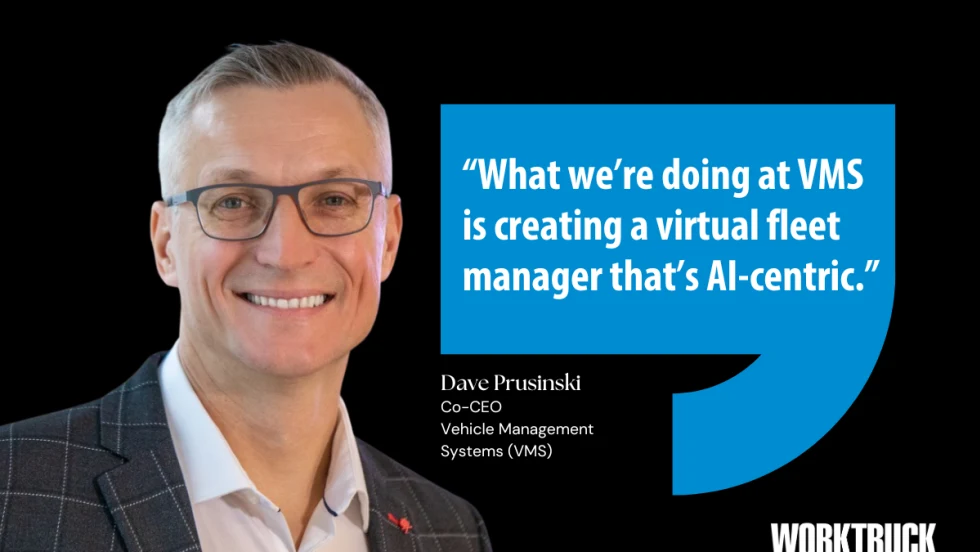
AI, Access, and Uptime: VMS’s Next Chapter with David Prusinski
VMS’s new Co-CEO, David Prusinski, shares how an AI-first approach will give small fleets and repair shops the tools to compete like big players.
Read More →
Fleet Managers Share Winter Prep Tips: It's Never Too Early!
Three fleets share best practices to prep vehicles for winter and prevent downtime when the cold sets in.
Read More →