




Honda Report Challenges Rivals on Feasibility of CAFE Changes
Exposing an auto-industry rift, Japan's Honda Motor Co. presented a Senate committee with a new study challenging rival automakers' claims that safety would be undermined by higher federal fuel-economy requirements for sport utility vehicles and other trucks, according to a Wall Street Journal story by Jeffrey Ball. The Senate Commerce Committee will probably propose a bill in the next two weeks that would require automakers to up the fuel economy of their cars and trucks so that, over about 10 or 15 years, the average mileage of the total fleet rises from the current level of about 24 miles per gallon to somewhere in the 30s. Honda lent its backing to a recent report by a National Academy of Sciences panel that said the auto industry could significantly increase its vehicles' fuel economy over approximately 15 years. Honda went even further, disputing arguments that boosting fuel economy would make the vehicles less safe. Honda said that it had hired a consultant to study the issue, and that the study's preliminary conclusion is that reducing the weight of an average vehicle by 100 pounds has a "very small and not statistically significant" effect on the number of traffic deaths. In the hearing, the trade group representing most other major automakers in the U.S. presented a different view about the feasibility of such an increase. The disagreement within the auto industry occurs as Congress and the Bush administration consider the details of how to up the federal Corporate Average Fuel Economy, or CAFE, standard for SUVs, pickups and minivans, known collectively as "light trucks." The trade group, the Alliance of Automobile Manufacturers, which doesn't include Honda but does include most other major companies that sell autos in the U.S., reiterated its view that Congress has no business toughening the CAFE mandate. The alliance wants the decision on CAFE to be made by the Bush administration, whose National Highway Traffic Safety Administration (NHTSA), which oversees the standard, is considering recommending an increase. The U.S. Senate Commerce Committee is expected to vote by early February to significantly raise the mileage requirements for cars and sport utility vehicles, congressional sources said on Jan. 24, according to a Reuters report. The committee is working to finalize language on the new fuel requirements that will be added to a comprehensive Democratic-sponsored energy bill, which will be debated during the second week of February. The current Corporate Average Fuel Economy (CAFE) standards require passenger cars to average 27.5 miles per gallon (mpg) and light trucks to get 20.7 mpg. The new numbers have not been finalized, but a draft copy of the energy bill circulated last month called for increasing the fuel efficiency of cars built between 2007 and 2010 to 36 mpg and to 27.5 mpg for light trucks. Those preliminary numbers were pulled from the final version of the bill, and left for the Commerce Committee to decide.
More Small Fleet

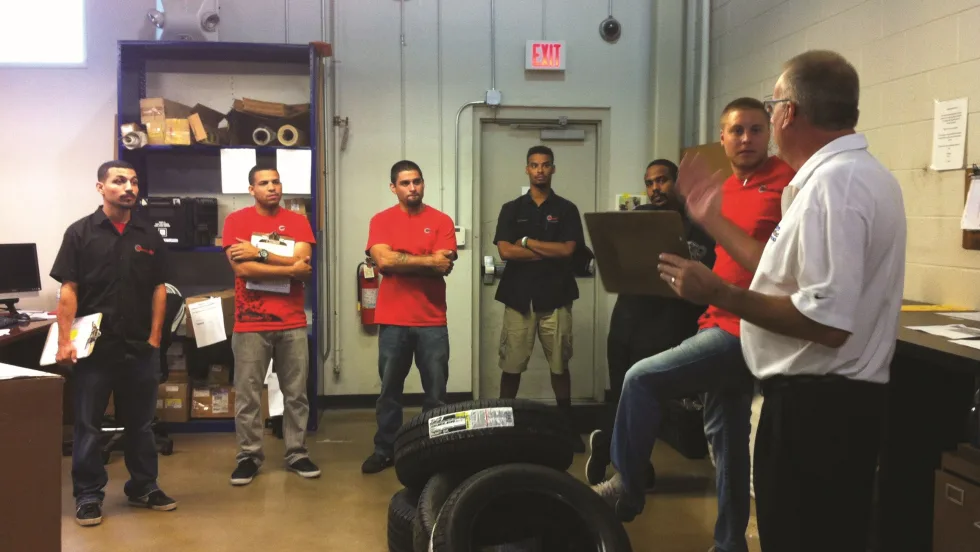
Developing Budget-Friendly Driver Safety Programs
From driver training and safety meetings to one-on-one coaching and incentive programs, several small fleets share how they have developed a safety culture with their drivers using low- to no-cost resources.
Read More →
Boosting Last-Mile Fleet Uptime, Safety, and Value with AI Vehicle Inspections
AI-powered inspections are transforming last-mile fleets by replacing manual checks with highly accurate automated scans that detect defects in seconds. By giving fleet operations visibility into the daily condition of their vehicles, you can identify trends over the vehicle’s lifecycle that enable improved procurement decisions, route management, driver training and accountability.
Read More →

Five Ways Seat Belts Help Prevent Injuries
There are five ways seat belts protect occupants from injuries, according to the Tennessee Department of Safety and Homeland Security.
Read More →
Basic Tracking vs Next Generation Fleet Technology
Fleet software is getting more sophisticated and effective than ever, tying big data models together to transform maintenance, safety, and the value of your existing tech stack. Fleet technology upgrades are undoubtedly an investment, but updated technology can offer a much higher return. Read how upgrading your fleet technology can increase the return on your investment.
Read More →
It’s here: The 2026 Fleet Technology Trends Report
What does AI mean for fleets? Get the answer — and learn other top tech trends.
Read More →
Small Fleets, Big Impact: How Independent Drivers Power Wreaths Across America
Check out how small fleets and independent drivers power Wreaths Across America each December and why their impact matters more than ever.
Read More →
VMS Survey Finds 65% of Small Fleet Managers Run Operations Alone
A new VMS survey shows small fleet managers are stretched thin, with most handling operations solo and eager to adopt digital tools for relief.
Read More →
Tips for Driving Safely on Halloween Night
This video features a reminder from the Connecticut Department of Transportation (DOT) and the Connecticut Police Chiefs Association, urging drivers to prioritize safety this Halloween.
Read More →
AI, Access, and Uptime: VMS’s Next Chapter with David Prusinski
VMS’s new Co-CEO, David Prusinski, shares how an AI-first approach will give small fleets and repair shops the tools to compete like big players.
Read More →