




Honda Fuel Cell Vehicle First to Receive Certification
The Honda FCX has become the first fuel cell vehicle in the world to receive government certification, American Honda Motor Co., Inc., announced July 24. Both the U.S. Environmental Protection Agency (EPA) and the California Air Resources Board (CARB) have certified the hydrogen-powered Honda FCX as meeting all applicable standards. The FCX has been certified by CARB as a Zero Emission Vehicle (ZEV) and by the EPA as a Tier-2 Bin 1, National Low Emission Vehicle (NLEV), the lowest national emission rating. The FCX will also meet applicable U.S. safety and occupant protection standards, according to the company. "This is an important milestone for the automobile industry that holds the promise of cleaner air for all Americans," said Jeff Holmstead, assistant administrator of the EPA's Office of Air and Radiation. "While there still remains much work ahead to make fuel cell vehicles a mainstream transportation option, this certification is an important first step." Honda says it will start a lease program for a limited number of FCXs in the U.S and Japan by the end of this year. During the first two-to-three-year period, Honda will lease about 30 fuel cell vehicles in California and the Tokyo metropolitan area, two locations with access to a hydrogen fuel supply infrastructure. The company currently has no plans, however, for mass-market sales of fuel cell vehicles. "Certification allows Honda to place fuel cell vehicles in commercial operation," said Tom Elliott, American Honda executive vice president. "We'll have an opportunity to evaluate fuel cell vehicles in real world applications and to study the development of a refueling infrastructure to support fuel cell vehicles. However, it is important to remember that significant cost, technology and infrastructure issues remain prior to the mass marketing of fuel cell vehicles." According to Honda, this latest version of fuel cell vehicle achieves 15 percent more maximum drive motor torque than previous models and also provides improvements in mid-to-high range power output characteristics and acceleration. It also has an increased driving range of 220 miles, about 25 miles more than the previous model. Honda started fuel cell research in 1989 and has been road testing vehicles in the United States and Japan since 1999. Honda is a member of the California Fuel Cell Partnership (CaFCP) based in Sacramento, Calif., and has been working closely with that organization. "The California certification of Honda's FCX is a tremendous accomplishment," said Alan C. Lloyd, chairman of CARB. "The California Fuel Cell Partnership, involving energy companies, auto manufacturers, component makers and government agencies, will continue to help coordinate key industry-wide issues, including infrastructure development."
More Small Fleet


Developing Budget-Friendly Driver Safety Programs
From driver training and safety meetings to one-on-one coaching and incentive programs, several small fleets share how they have developed a safety culture with their drivers using low- to no-cost resources.
Read More →
Boosting Last-Mile Fleet Uptime, Safety, and Value with AI Vehicle Inspections
AI-powered inspections are transforming last-mile fleets by replacing manual checks with highly accurate automated scans that detect defects in seconds. By giving fleet operations visibility into the daily condition of their vehicles, you can identify trends over the vehicle’s lifecycle that enable improved procurement decisions, route management, driver training and accountability.
Read More →

Five Ways Seat Belts Help Prevent Injuries
There are five ways seat belts protect occupants from injuries, according to the Tennessee Department of Safety and Homeland Security.
Read More →
Basic Tracking vs Next Generation Fleet Technology
Fleet software is getting more sophisticated and effective than ever, tying big data models together to transform maintenance, safety, and the value of your existing tech stack. Fleet technology upgrades are undoubtedly an investment, but updated technology can offer a much higher return. Read how upgrading your fleet technology can increase the return on your investment.
Read More →
It’s here: The 2026 Fleet Technology Trends Report
What does AI mean for fleets? Get the answer — and learn other top tech trends.
Read More →
Small Fleets, Big Impact: How Independent Drivers Power Wreaths Across America
Check out how small fleets and independent drivers power Wreaths Across America each December and why their impact matters more than ever.
Read More →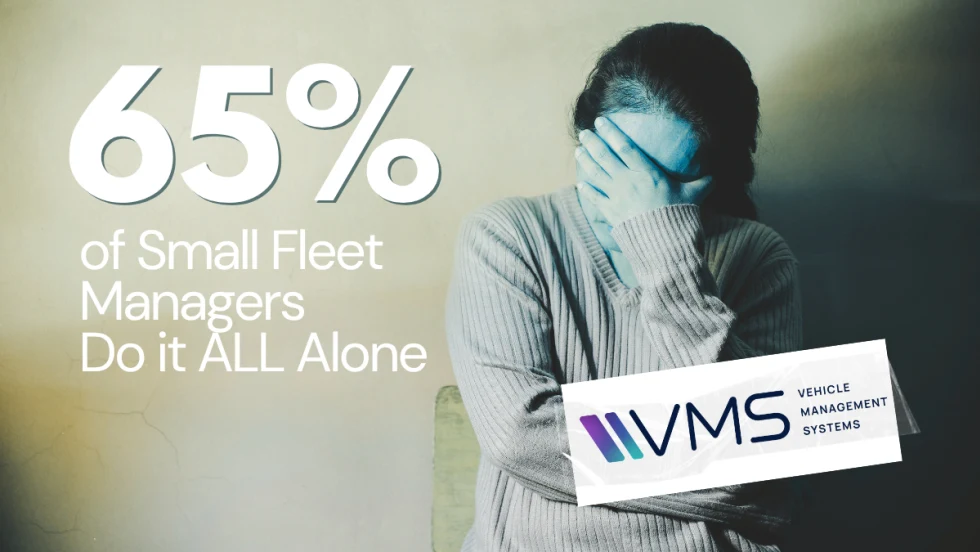
VMS Survey Finds 65% of Small Fleet Managers Run Operations Alone
A new VMS survey shows small fleet managers are stretched thin, with most handling operations solo and eager to adopt digital tools for relief.
Read More →
Tips for Driving Safely on Halloween Night
This video features a reminder from the Connecticut Department of Transportation (DOT) and the Connecticut Police Chiefs Association, urging drivers to prioritize safety this Halloween.
Read More →
AI, Access, and Uptime: VMS’s Next Chapter with David Prusinski
VMS’s new Co-CEO, David Prusinski, shares how an AI-first approach will give small fleets and repair shops the tools to compete like big players.
Read More →