




Government Agencies Consider Plug-in Hybrids
New York, California and Texas organizations are testing plug-in programs.
State and local governments are launching programs to see if it's possible to convert their hybrid cars and trucks into plug-in cars, CNET News.com reports. Plug-ins have both electric and gas motors, but they come with more battery packs, so the car can run more on electricity than on gas. They can get about 100 miles to the gallon, get charged from a wall socket and generally emit fewer greenhouse gases than conventional cars or other hybrids, according to CNET News.com. The New York State Energy Research and Development Authority recently solicited contract bids for nine plug-ins, said an official at the agency. If the trial succeeds, the state will try to convert the 535 hybrids it owns into plug-ins. Meanwhile, the Sacramento Municipal Utility District in California is conducting a three-year test on a couple of plug-in vehicles, and the city of Austin, Texas, last year teamed up with the local power company to launch a $1 million plug-in incentive program. Currently, minimal availability, high prices (it costs about $10,000 to $12,000 to convert a car like a Prius into a plug-in) and battery life resulting in reduced driving range are roadblocks to a rapid rise in plug-in use. However, range may not be as big a deciding factor for some organizations. School buses only go a few miles a day, and a lot of government fleet cars drive around within fairly limited geographic areas. Some agencies could conceivably start buying plug-ins for fleets before the range problem is worked out.
More Small Fleet


Developing Budget-Friendly Driver Safety Programs
From driver training and safety meetings to one-on-one coaching and incentive programs, several small fleets share how they have developed a safety culture with their drivers using low- to no-cost resources.
Read More →
Boosting Last-Mile Fleet Uptime, Safety, and Value with AI Vehicle Inspections
AI-powered inspections are transforming last-mile fleets by replacing manual checks with highly accurate automated scans that detect defects in seconds. By giving fleet operations visibility into the daily condition of their vehicles, you can identify trends over the vehicle’s lifecycle that enable improved procurement decisions, route management, driver training and accountability.
Read More →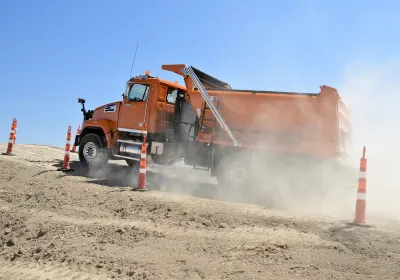

Five Ways Seat Belts Help Prevent Injuries
There are five ways seat belts protect occupants from injuries, according to the Tennessee Department of Safety and Homeland Security.
Read More →
Basic Tracking vs Next Generation Fleet Technology
Fleet software is getting more sophisticated and effective than ever, tying big data models together to transform maintenance, safety, and the value of your existing tech stack. Fleet technology upgrades are undoubtedly an investment, but updated technology can offer a much higher return. Read how upgrading your fleet technology can increase the return on your investment.
Read More →
It’s here: The 2026 Fleet Technology Trends Report
What does AI mean for fleets? Get the answer — and learn other top tech trends.
Read More →
Small Fleets, Big Impact: How Independent Drivers Power Wreaths Across America
Check out how small fleets and independent drivers power Wreaths Across America each December and why their impact matters more than ever.
Read More →
VMS Survey Finds 65% of Small Fleet Managers Run Operations Alone
A new VMS survey shows small fleet managers are stretched thin, with most handling operations solo and eager to adopt digital tools for relief.
Read More →
Tips for Driving Safely on Halloween Night
This video features a reminder from the Connecticut Department of Transportation (DOT) and the Connecticut Police Chiefs Association, urging drivers to prioritize safety this Halloween.
Read More →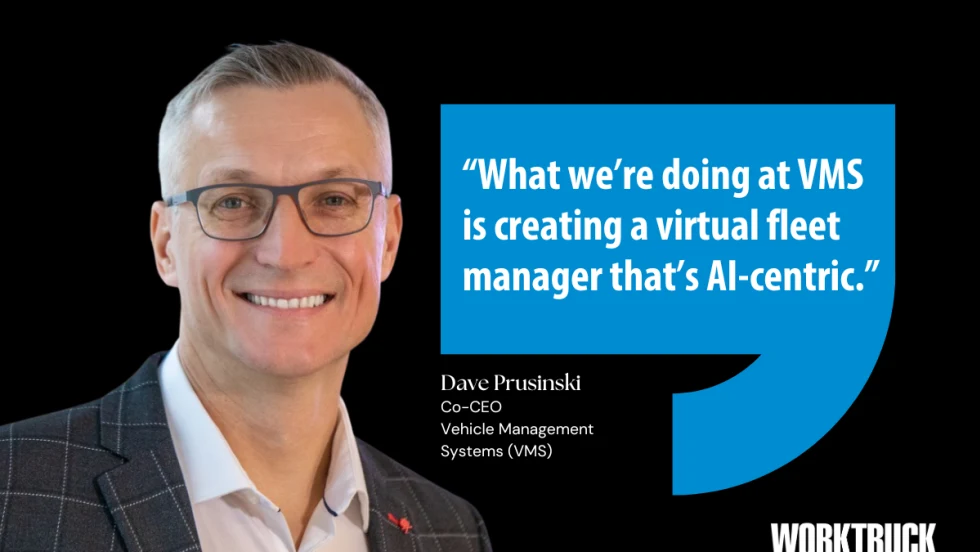
AI, Access, and Uptime: VMS’s Next Chapter with David Prusinski
VMS’s new Co-CEO, David Prusinski, shares how an AI-first approach will give small fleets and repair shops the tools to compete like big players.
Read More →