




GM to Replace Lock Cylinder During Ignition Switch Recall
The automaker is adding this second repair to the 2.2 million vehicles already recalled in the U.S.
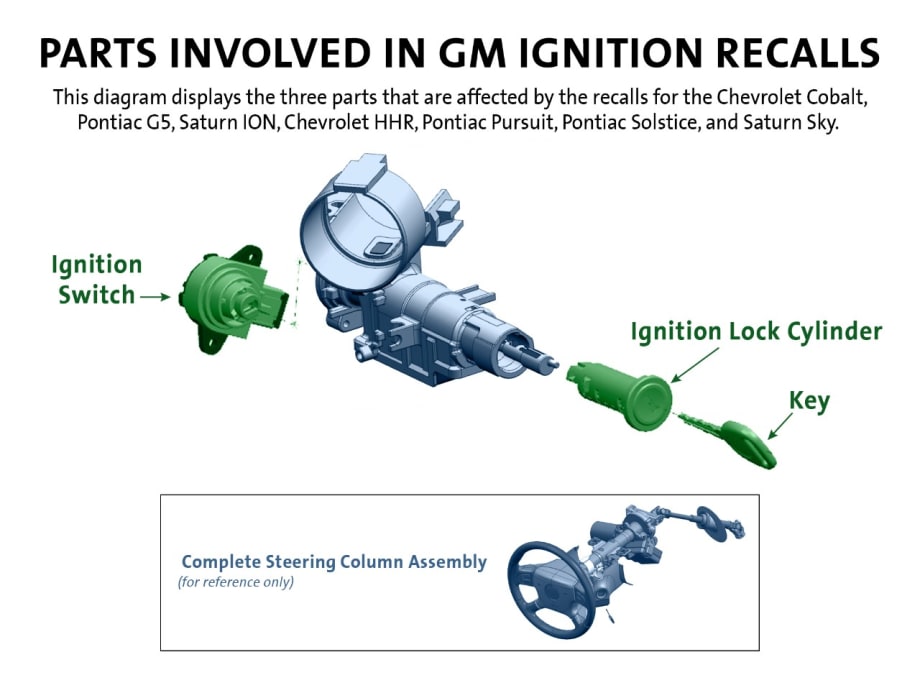
Diagram courtesy of General Motors.
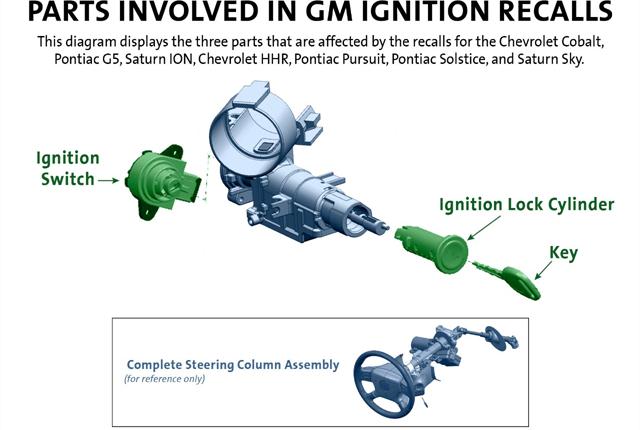
Diagram courtesy of General Motors.
General Motors has informed the National Highway Traffic Safety Administration of plans to replace the ignition lock cylinders in the 2.2 million cars covered by the ignition switch recall in the U.S.
The cylinders can allow removal of the ignition key while the engine is running, leading to a possible rollaway and increasing the likelihood of a crash.
“As always, owners of manual transmission vehicles should be sure the ignition is in the “off” position and set to reverse gear with the parking brake set before removing the key,” the company advised. “Owners of vehicles with automatic transmission should be sure the vehicle is in “park” before removing the key.”
GM said it is aware of several hundred complaints of keys coming out of ignitions. Searches of GM and government databases found one rollaway in a parking lot that resulted in a crash and one injury claim. The same searches turned up no fatalities, the automaker said.
GM has decided to replace the ignition lock cylinders and cut and, if necessary, reprogram new keys.
The cars covered are model years:
2003-2007 Saturn Ion
2005-2010 Chevrolet Cobalt
2006-2010 Pontiac Solstice
2007-2010 Pontiac G5
2007-2010 Saturn Sky
2006-2011 Chevrolet HHR.
All of these cars were recalled in recent weeks for ignition switches that may fail to meet GM’s torque specification. The ignition switch may unintentionally move from the “run” position to the “accessory” or “off” position, with a corresponding reduction or loss of power. This risk may be increased if the key ring is carrying added weight, or if the vehicle goes off the road or experiences some other jarring event.
The timing of the key movement out of the “run” position, relative to activation of the sensing algorithm of a crash, may result in the airbags not deploying. This condition increases the potential for occupant injury in certain kinds of crashes, GM said.
Until recall repairs are made, GM is advising owners of the recalled vehicles to remove all items except the vehicle key from their key rings. If there is a key fob, it also should be removed from the key ring.
Originally posted on Automotive Fleet
More Small Fleet


Developing Budget-Friendly Driver Safety Programs
From driver training and safety meetings to one-on-one coaching and incentive programs, several small fleets share how they have developed a safety culture with their drivers using low- to no-cost resources.
Read More →
Boosting Last-Mile Fleet Uptime, Safety, and Value with AI Vehicle Inspections
AI-powered inspections are transforming last-mile fleets by replacing manual checks with highly accurate automated scans that detect defects in seconds. By giving fleet operations visibility into the daily condition of their vehicles, you can identify trends over the vehicle’s lifecycle that enable improved procurement decisions, route management, driver training and accountability.
Read More →
Five Ways Seat Belts Help Prevent Injuries
There are five ways seat belts protect occupants from injuries, according to the Tennessee Department of Safety and Homeland Security.
Read More →
It’s here: The 2026 Fleet Technology Trends Report
What does AI mean for fleets? Get the answer — and learn other top tech trends.
Read More →
Small Fleets, Big Impact: How Independent Drivers Power Wreaths Across America
Check out how small fleets and independent drivers power Wreaths Across America each December and why their impact matters more than ever.
Read More →
VMS Survey Finds 65% of Small Fleet Managers Run Operations Alone
A new VMS survey shows small fleet managers are stretched thin, with most handling operations solo and eager to adopt digital tools for relief.
Read More →
Tips for Driving Safely on Halloween Night
This video features a reminder from the Connecticut Department of Transportation (DOT) and the Connecticut Police Chiefs Association, urging drivers to prioritize safety this Halloween.
Read More →
AI, Access, and Uptime: VMS’s Next Chapter with David Prusinski
VMS’s new Co-CEO, David Prusinski, shares how an AI-first approach will give small fleets and repair shops the tools to compete like big players.
Read More →
Fleet Managers Share Winter Prep Tips: It's Never Too Early!
Three fleets share best practices to prep vehicles for winter and prevent downtime when the cold sets in.
Read More →