




GM Acquires Stake in Nikola, Will Produce Badger Pickup
Nikola gets the manufacturing partner it needs to deliver on mass producing the electric and fuel cell variants of the Nikola Badger pickup truck.
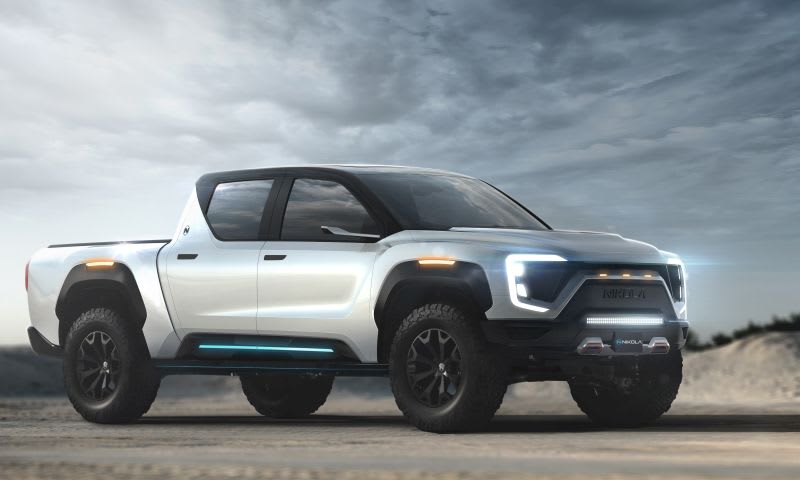
The Badger will have an estimated range of 300 miles as a BEV and 600 miles as an FCEV.
Photo courtesy of Nikola.
Nikola Corporation and General Motors today announced a strategic partnership in which GM gets a $2 billion equity stake in Nikola and 11% ownership in the hydrogen fuel cell electric vehicle (FCEV) startup.
GM will engineer, validate, and build the Nikola Badger for both the battery electric vehicle and fuel cell electric vehicle variants. As part of the agreement, Nikola will utilize General Motors’ Ultium battery system and Hydrotec fuel cell technology.
According to a press announcement, GM expects to receive in excess of $4 billion of benefits between the equity value of the shares, contract manufacturing of the Badger, supply contracts for batteries and fuel cells, and EV credits retained over the life of the contract. GM also gains the rights to be the exclusive supplier of fuel cells globally (outside of Europe) to Nikola for Class 7/8 trucks.
Nikola will be responsible for the sales and marketing for the Badger and will retain the Nikola Badger brand.
Nikola’s initial public offering in June saw the Phoenix-based company briefly surge to a valuation surpassing both Ford and Fiat Chrysler Automobiles (FCA). While Nikola announced the Badger will make its public debut in December at Nikola World 2020 in Arizona — and that Badger production would start in late 2022 — the company didn’t have a manufacturing partner. Until today.
Referencing GM’s recent partnership on battery and fuel cell technology with Honda, Michelle Krebs, executive analyst for Cox Automotive, said in a statement that strategic alliances are essential to accelerating electrification and fuel cell technology.
“What’s becoming clear is that no single company has enough resources to go it alone towards a future that is electrified, connected, and autonomous,” said Krebs.
Krebs said the deal will help proliferate GM’s newly developed Ultium battery systems and reduce costs through economies of scale.
Brian Moody, executive editor of Cox Automotive’s Autotrader, sees the partnership as fueling greater interest in fuel cells where attention has waned recently.
“Fuel cells aren’t getting the attention they deserve,” he said in a statement. “In other applications, fuel cells are seen as a reliable energy alternative, but only a handful of automakers seem interested. Right now, Honda, Hyundai and Toyota have fuel cell powered cars available to consumers in some regions.
… By GM forming a partnering with Honda and now Nikola, it shows they’re serious about alternative fuel vehicles.”
However, Jim Cramer, host of CNBC’s Mad Money, thinks the deal might make it easier for GM to spin off Ultium.
“All the things that GM gives them (Nikola) are worth a lot more than what Nikola gives to GM,” Cramer said on CNBC’s Squawk on the Street this morning. “At the end of the day, I want to know if GM is going to spin off this unit. If they spin off this unit, then we’ve got some value.”
Originally posted on Automotive Fleet
More Green Fleet

Fleet Forward Conference Introduces One-Day Passes for 2026
New one-day registration gives fleet professionals the flexibility to attend Tuesday, Wednesday, or Thursday, with passes available for $199 through Sept. 18.
Read More →
CALSTART Rebrands as Catalyst Mobility, Will Combine with Forth in 2027
CALSTART has rebranded as Catalyst Mobility and will combine with Forth at the start of 2027. The new organization said it is poised to become one of the world's largest, strongest, and most impactful clean transportation nonprofits.
Read More →
Electric Truck and Charging Programs to Boost Sustainability at NY & NJ Ports
Together, the Port Authority of New York and New Jersey and CALSTART will electrify drayage and terminal operations serving the East Coast’s busiest container port. A pair of incentive programs totaling $45 million has launched to accelerate adoption of zero-emission drayage trucks and terminal tractors.
Read More →

Xos Hub Surpasses One Gigawatt-Hour of Energy Delivered in the Field
A single Xos Hub has surpassed one gigawatt-hour of energy across more than 33,600 charging sessions in the field, demonstrating performance that supports Xos' expansion across new products and markets.
Read More →
Carrier Transicold Launches All-Electric Vector 8200 TRU for Diesel-Free On-Site Cold Storage
Carrier Transicold’s first engineless multi-temperature TRU helps fresh- and frozen-food fleets add supplemental cold storage capacity during seasonal peaks.
Read More →
Narro Trucks Introduces Electric Utility Vehicle
Narro Trucks officially launched its operations on Aug. 20 and hosted a ride and drive to showcase its electric truck, which will be produced in Virginia.
Read More →
Samsung SDI Takes Full Control of GM Battery JV as Indiana Plant Pivots to Energy Storage
Samsung SDI is taking full control of its Indiana battery plant with GM, marking a major shift from the EV-focused joint venture Charged Fleet first covered in 2023.
Read More →
NWSA Taps CALSTART to Administer Zero-Emission Drayage Assistance Program
CALSTART will provide free technical assistance services to drayage fleets serving the Ports of Seattle and Tacoma and looking to transition to cleaner technologies and help decarbonize freight hubs.
Read More →
EV Fleet Reality Check: What Operators Wish They Knew Before Electrifying Their Work Vans
Electric work truck upfits bring new compatibility questions. Learn how parts availability, OEM guidance, power demands, and route planning can affect fleet performance.
Read More →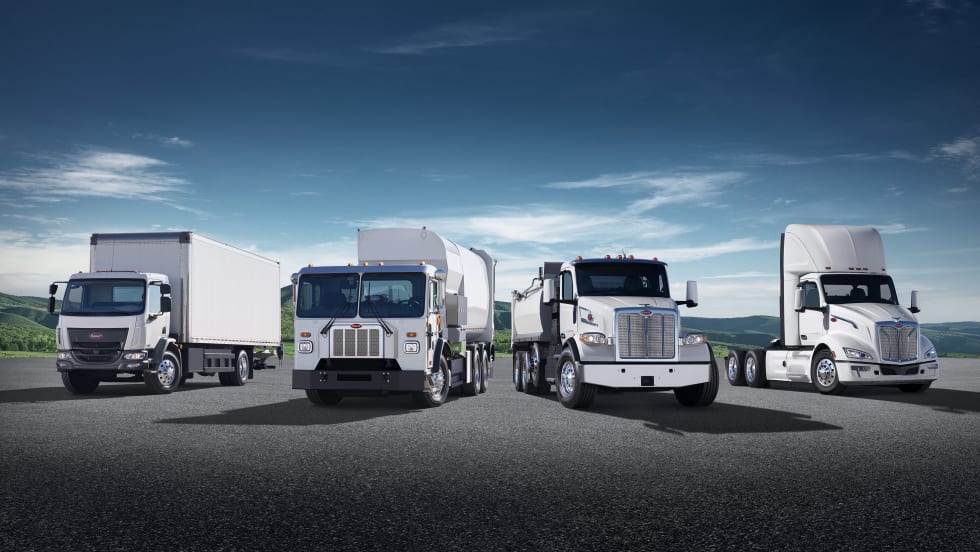
Peterbilt Expands Sourcewell Partnership with Electric Vehicle Lineup
Peterbilt Motors Company’s cooperative purchasing agreement with Sourcewell and its Canadian partner, Canoe Procurement Group, now includes including Peterbilt's battery-electric vehicle lineup.
Read More →