




European Automakers Expand Incentives But Not Market Share
Edmunds.com, an online resource for automotive information, reported Mar. 25 that the average manufacturer incentive per vehicle sold in the United States was $2,135 in February 2003, up 10 percent from $1,939 in January 2002. Even more dramatic is the year-over year comparison, as incentives are up 41.3 percent from February 2002 to February 2003.
This data and the rest of Edmunds.com's new monthly True Cost of Incentives report takes into account all manufacturers' various incentives programs, including subvented interest rates and lease programs as well as cash rebates to consumers and dealers. To assure the greatest possible accuracy, Edmunds.com says it bases its calculations on sales volume, including the mix of vehicle makes and models for each month, as well as on the proportion of vehicles for which each type of incentive was used.
According to the company, minivans offered the most significant increase in incentives per unit this month, jumping 18.2 percent to $2,739. The large light truck segment had the second highest increase, climbing 14 percent to $2,464 per unit in February.
European manufacturers expanded their incentives 27 percent from $1,120 in January to $1,422 in February. Despite incurring this expense, the total market share of the European manufacturers remained basically unchanged during the period, said the company.
According to the company, Chrysler, Ford and General Motors incentives increased an average of 5 percent overall from $2,749 in January to $2,886 in February. Of those, Chrysler's increase was the largest at ten percent or $245 per vehicle; Chrysler enjoyed a market share increase of 2.1 percentage points during the period.
An analysis of the incentives spending by the origin of manufacturers demonstrated that for every dollar the Japanese manufacturers spent on every vehicle they sold in February 2003, Korean manufacturers spent $1.15, Europeans spent $1.67, and domestics spent $3.39, said Edmunds.com.
"Looking individually at manufacturer's motivation to offer incentives, it seems some are pressured to subsidize older models and others that are not currently in high demand," stated Dr. Jane Liu, executive director of Data Analysis for Edmunds.com. "Other manufacturers seem driven by desire to increase market share at almost any cost."
About Edmunds.com True Cost of Incentives (TCISM)
Edmunds.com's TCISM is a comprehensive monthly report that measures automobile manufacturers' cost of incentives on vehicles sold in the United States. These costs are reported on a per vehicle basis for the industry as a whole, for each manufacturer, for each make sold by each manufacturer and for each model of each make. TCI covers all aspects of manufacturers' various incentives programs (except volume and similar bonus programs), including dealer cash, manufacturer rebates and consumer savings from subvented APR and lease programs (including subvented lease residual values used in manufacturer leasing programs). Data for the industry, the manufacturers and the makes are derived using weighted averages and are based on actual monthly sales and financing activity.
About Edmunds.com, Inc.
Edmunds.com (www.edmunds.com) is an online resource for automotive information. Its comprehensive set of data, tools and services, including Edmunds.com True Market Value® pricing, is generated by Edmunds Data Services and is licensed to third parties. For example, the company supplies over 800,000 pages of content for NYTimes.com's auto section and delivers monthly data reports to Morgan Stanley. The company is headquartered in Santa Monica, California and maintains a satellite office in Troy, Michigan.
More Small Fleet


Developing Budget-Friendly Driver Safety Programs
From driver training and safety meetings to one-on-one coaching and incentive programs, several small fleets share how they have developed a safety culture with their drivers using low- to no-cost resources.
Read More →
Boosting Last-Mile Fleet Uptime, Safety, and Value with AI Vehicle Inspections
AI-powered inspections are transforming last-mile fleets by replacing manual checks with highly accurate automated scans that detect defects in seconds. By giving fleet operations visibility into the daily condition of their vehicles, you can identify trends over the vehicle’s lifecycle that enable improved procurement decisions, route management, driver training and accountability.
Read More →
Five Ways Seat Belts Help Prevent Injuries
There are five ways seat belts protect occupants from injuries, according to the Tennessee Department of Safety and Homeland Security.
Read More →
It’s here: The 2026 Fleet Technology Trends Report
What does AI mean for fleets? Get the answer — and learn other top tech trends.
Read More →
Small Fleets, Big Impact: How Independent Drivers Power Wreaths Across America
Check out how small fleets and independent drivers power Wreaths Across America each December and why their impact matters more than ever.
Read More →
VMS Survey Finds 65% of Small Fleet Managers Run Operations Alone
A new VMS survey shows small fleet managers are stretched thin, with most handling operations solo and eager to adopt digital tools for relief.
Read More →
Tips for Driving Safely on Halloween Night
This video features a reminder from the Connecticut Department of Transportation (DOT) and the Connecticut Police Chiefs Association, urging drivers to prioritize safety this Halloween.
Read More →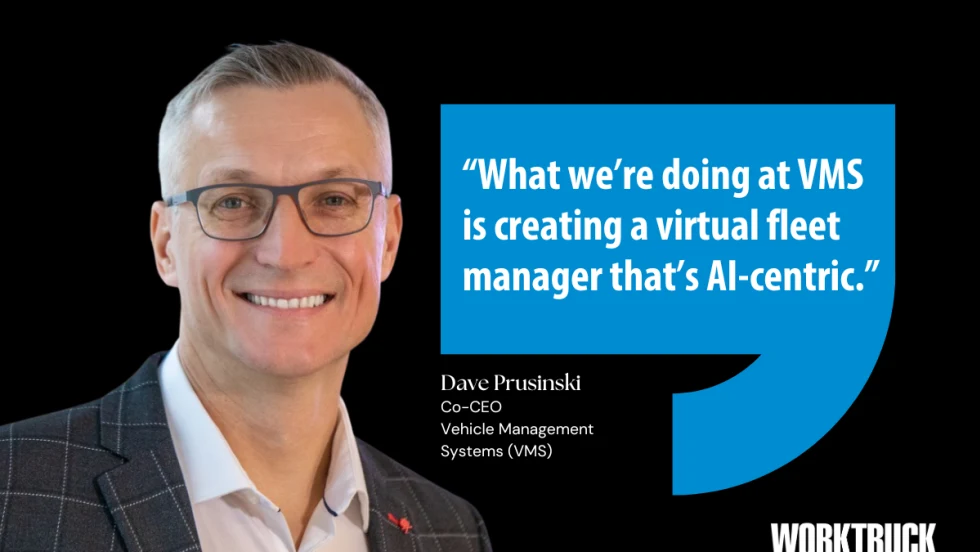
AI, Access, and Uptime: VMS’s Next Chapter with David Prusinski
VMS’s new Co-CEO, David Prusinski, shares how an AI-first approach will give small fleets and repair shops the tools to compete like big players.
Read More →
Fleet Managers Share Winter Prep Tips: It's Never Too Early!
Three fleets share best practices to prep vehicles for winter and prevent downtime when the cold sets in.
Read More →