




Enjoythedrive.com Suggests Ways to Save Money at the Gas Pump
As gas prices rise, enjoythedrive.com suggests several ways drivers can save money at the gas pump. "Everybody has become uncomfortably aware of their vehicles’ fuel economy," says Chris Horn, vice president of communications for SEMA, the Specialty Equipment Market Association. "While you can save money by driving fewer miles, that isn't an option for most of us. Fortunately, it's easy for practically any vehicle to get better gas mileage. And there's a bonus: Many modifications that enhance fuel economy also improve your vehicle's performance, and they reduce emissions." Enjoythedrive.com offers the following money-saving tips: 1. Check your tires. Low tires not only reduce fuel economy, they wear out faster. If you're not diligent about using a tire pressure gauge, you might consider installing a tire monitoring system to alert you whenever it's time to add air. 2. Make life easier for your engine. Engines hate friction, so anything you can do to reduce it will make your motor--and your wallet--happier. For starters, change your oil regularly, and use a high-quality or synthetic motor oil to further reduce internal friction. Oil additives can reduce friction, too. 3. Light a fire. Is your engine overdue for a tune-up? If so, new spark plugs and wires will make a huge difference. Even if you're not behind in maintenance, an upgrade to high-performance spark plugs and low- resistance plug wires can improve fuel economy and performance, as well as reduce emissions. 4. Breathe deeply. If you've ever tried to drink a thick milkshake through a straw, you know how hard it is to pull fluid through an opening that's too small. Your engine may be trying to gulp air through a small intake system-- or through a dirty air filter. Something as simple as changing to a new high- flow air filter can help your engine inhale more easily. 5. Let it out. If your engine is trying to exhale through an exhaust system that’s too small, a high-flow muffler or headers can help. Also, make sure your catalytic converter isn't clogged (you'll know, because your exhaust will smell like rotten eggs). When it's time to change, a high-flow "cat" will further increase your fuel economy. 6. Don't idle while you're waiting. When you aren't moving and the engine's running, you're getting 0 miles per gallon. If you're going to be sitting still for more than a couple minutes, shut off the engine. 7. Don't floor it. It may be fun to see how fast your vehicle can accelerate, but it’s definitely not the way to optimize your fuel economy. For more information on improving gas mileage and other automotive tips, visit www.enjoythedrive.com. SEMA’s consumer Web site has articles on everything from wheels and tires to driving with children and pets, as well as information on the latest specialty auto accessories. SEMA, the Specialty Equipment Market Association, represents the $26 billion specialty automotive industry. Founded in 1963, the trade association has more than 4,500 member companies. It is a source of research data, trends and market growth information for automakers and the specialty auto products industry. The industry provides appearance, performance, comfort, convenience and technology products for passenger cars, minivans, trucks, SUVs and recreational vehicles. For more information, contact SEMA at 1575 S. Valley Vista Dr., Diamond Bar, CA, 91765-3914; call 909/396-0289.
More Small Fleet


Developing Budget-Friendly Driver Safety Programs
From driver training and safety meetings to one-on-one coaching and incentive programs, several small fleets share how they have developed a safety culture with their drivers using low- to no-cost resources.
Read More →
Boosting Last-Mile Fleet Uptime, Safety, and Value with AI Vehicle Inspections
AI-powered inspections are transforming last-mile fleets by replacing manual checks with highly accurate automated scans that detect defects in seconds. By giving fleet operations visibility into the daily condition of their vehicles, you can identify trends over the vehicle’s lifecycle that enable improved procurement decisions, route management, driver training and accountability.
Read More →
Five Ways Seat Belts Help Prevent Injuries
There are five ways seat belts protect occupants from injuries, according to the Tennessee Department of Safety and Homeland Security.
Read More →
It’s here: The 2026 Fleet Technology Trends Report
What does AI mean for fleets? Get the answer — and learn other top tech trends.
Read More →
Small Fleets, Big Impact: How Independent Drivers Power Wreaths Across America
Check out how small fleets and independent drivers power Wreaths Across America each December and why their impact matters more than ever.
Read More →
VMS Survey Finds 65% of Small Fleet Managers Run Operations Alone
A new VMS survey shows small fleet managers are stretched thin, with most handling operations solo and eager to adopt digital tools for relief.
Read More →
Tips for Driving Safely on Halloween Night
This video features a reminder from the Connecticut Department of Transportation (DOT) and the Connecticut Police Chiefs Association, urging drivers to prioritize safety this Halloween.
Read More →
AI, Access, and Uptime: VMS’s Next Chapter with David Prusinski
VMS’s new Co-CEO, David Prusinski, shares how an AI-first approach will give small fleets and repair shops the tools to compete like big players.
Read More →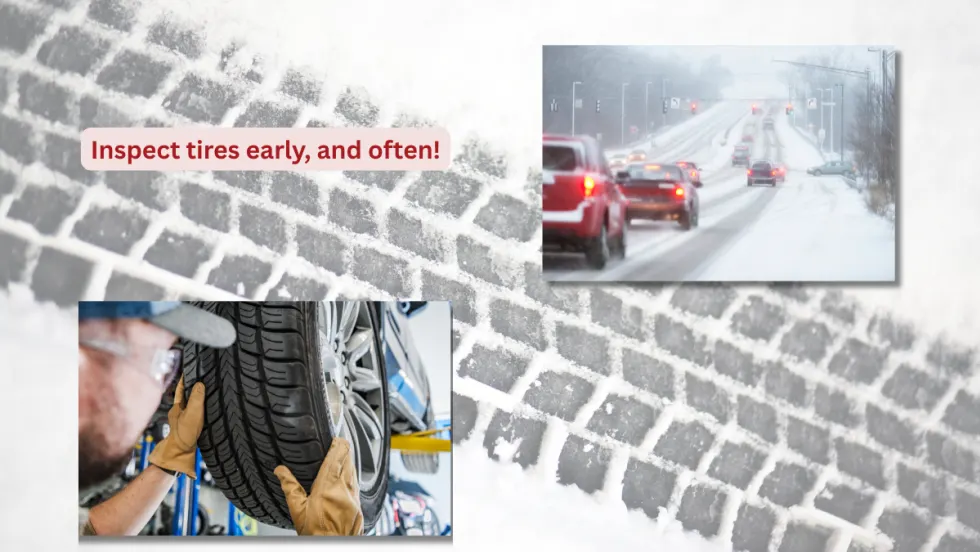
Fleet Managers Share Winter Prep Tips: It's Never Too Early!
Three fleets share best practices to prep vehicles for winter and prevent downtime when the cold sets in.
Read More →