




Emissions-based Tax Schemes Becoming the Norm in Europe
An increasing number of European countries are switching to an emissions-based car tax system due to global pressure to reduce carbon emissions, according to the 2014 edition of the annual "Fleet Europe" Taxation Guide.


An increasing number of European countries are switching to an emissions-based car tax system due to global pressure to reduce carbon emissions, according to the 2014 edition of the annual Fleet EuropeTaxation Guide.
This year’s Guide, produced by Nexus Communication, publishers of Fleet Europe, has again been developed in conjunction with global accountancy firm PwC and sponsored by Opel/Vauxhall. The eighth edition of the Taxation Guide, reviews the company car tax situation in 23 European countries in print and 28 digitally.The Guide shows that the company car is already linked to carbon emissions-based taxes in more than 20 Member States across Europe, while other countries are keen to follow suit as governments come under increasing pressure to cut carbon emissions.
The G8 has agreed to reduce global greenhouse gas emissions by 50 percent by 2050, and this puts the automotive sector firmly in the firing line as it contributes more than 15 percent of annual global emissions, according to the World Resources Institute.
As a result, much attention has focussed on the production of electric vehicles (EVs), as the carbon emissions from the production of electricity are not accounted for in vehicle taxation schemes, says the report.
Many countries in Europe have introduced tax incentives for EVs to try and stimulate sales, ranging from buying subsidies, special allowances for company purchases of such vehicles, exemption from road taxes, and reduction of the taxable value of company cars for the purposes of calculating benefit-in-kind tax.
But some governments are now beginning to limit such incentives. In the UK, for example, the 100 percent First Year Allowance for company purchases of EVs is scheduled to end in April 2015.
And, in Germany, a newly introduced rule that provides for a reduction of the taxable value of the company car using lump sums for the calculation of the benefit-in-kind, will be totally phased out by 2020.
The use of incentives is of concern to governments for good reason, says the report. As the number of new and used EVs grows, so, too, will countries’ risk of losing indirect taxes such as value-added tax (VAT) and special fuel taxes, according to the authors of the Taxation Guide.
As a result, fleet managers should expect that tax incentives for EVs, and for the electricity used to power them, will only be available for the short term, the report warns.
PwC’s own Autofacts report anticipates that hybrids and EVs will achieve a global market share of 5.5 percent by 2020 - up from roughly 3.1 percent in 2013. On the basis of a 108 million unit global industry volume, that equates to almost six million EV and hybrid cars being sold in that year - the size of the UK, French, and German markets combined.
The traditional hybrid applications will still comprise the bulk of alternative propulsion vehicles (3.4 percent), with Plug-in Hybrid EVs in second place at 1.2 percent and pure EVs at around 0.9 percent, according to the report.
Beyond 2020, these technologies will continue to gain incremental market share, ramping up at an accelerated rate as even more ambitious emission standards take effect and the pace of technological innovation quickens, according to the report's authors.
The 23 countries covered in the printed version of the 2014 Taxation Guide are: Austria, Belgium, Czech Republic, Denmark, Finland, France, Germany, Greece, Hungary, Ireland, Italy, Luxembourg, Netherlands, Norway, Poland, Portugal, Romania, Russia, Spain, Sweden, Switzerland, Turkey and the United Kingdom. The digital version expands this to 28, with those from the printed version plus Estonia, Latvia, Lithuania, Slovakia and Slovenia.
The Fleet Europe Taxation Guide 2014 can be ordered at a price of €95 (VAT Excl.) for printed version and €85 (VAT Excl.) for digital version. Digital versions per country can be also ordered at a price of €45 (VAT Excl.) Both the print and digital editions are available through the Fleet Europe e-Shop at www.fleeteurope.com.
Originally posted on Automotive Fleet
More Vehicle Insights

Mack Defense Achieves Cybersecurity Maturity Model Certification Level 2
After an assessment conducted by an authorized Certified Third-Party Assessment Organization (C3PAO), Mack Defense has achieved Cybersecurity Maturity Model Certification (CMMC) Level 2.
Read More →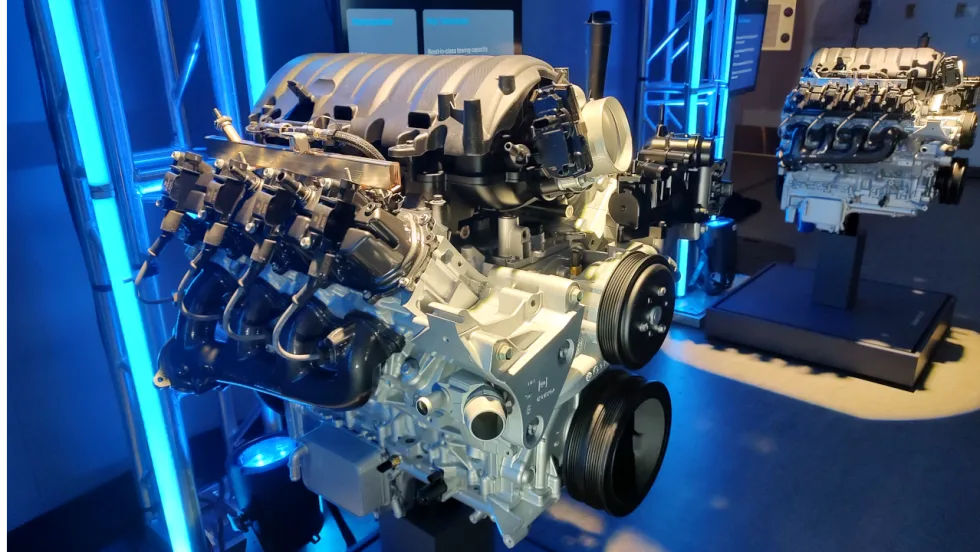
GM Unveils New Sixth-Generation Small Block Engines for 2027 Light-Duty Pickups
General Motors unveiled two new small-block engines, backed by extensive real-world validation and more than 70 years of small-block V8 manufacturing experience, as part of the engine portfolio for the 2027 Chevrolet Silverado 1500 and GMC Sierra 1500.
Read More →
Chevrolet Silverado 1500 Fleet Guide Specs Capability and 2027 Model-Year Updates
The next-generation 2027 Chevrolet Silverado 1500 brings new V-8 engines, updated technology, expanded safety features, and a fleet-focused Work Truck. Here’s what commercial fleets need to know so far.
Read More →
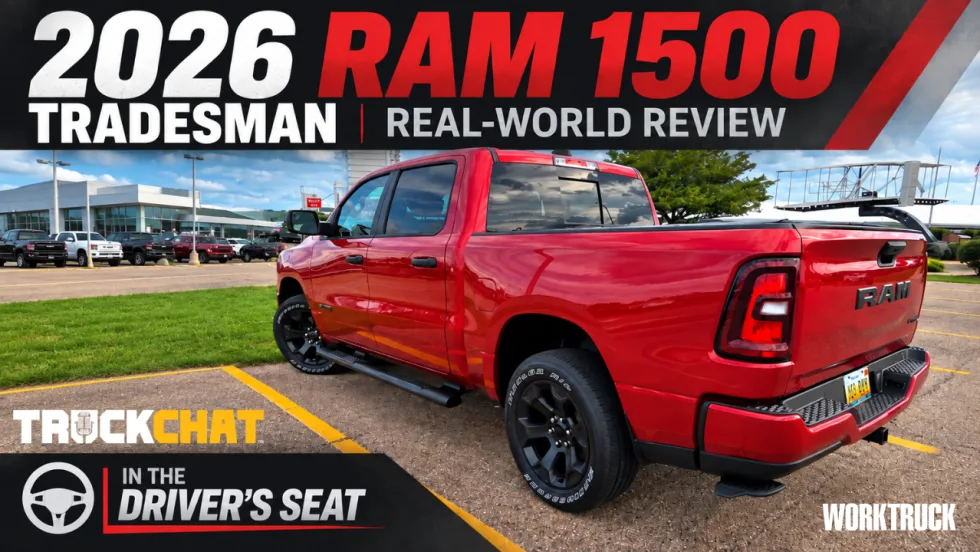
2026 Ram 1500 Tradesman Put to a Real-World Fleet Test
A few days behind the wheel of a 2026 Ram 1500 Tradesman turned into a test of visibility, parking, work-ready features, and even severe-weather driving.
Read More →
Isuzu N-Series Gas Fleet Guide: Specs, Capability and 2027 Model-Year Updates
Explore Isuzu Truck North America’s N-Series Gas fleet specs, engine performance, GVWR and payload capability, configurations, chassis dimensions, work-focused features, and 2027 model-year information.
Read More →
Ram ProMaster City Fleet Guide Specs Cargo Capacity and 2027 Updates
Work Truck’s Ram ProMaster City Fleet Guide tracks the latest specifications, cargo capability, configurations, fleet technology, pricing, and model-year updates for Ram’s mid-size commercial van.
Read More →
Ford F-150 Fleet Guide Specs Capability and 2026 Model-Year Updates
Explore 2026 Ford F-150 fleet specs, engines, towing and payload capability, configurations, work features, technology, and model-year updates.
Read More →
TCI Now Sells & Supports Battle Motors’ Vocational Trucks
Midwest truck dealer Truck Centers, Inc. (TCI) has expanded its transportation solutions with sales and service support for Battle Motors’ heavy-duty vocational trucks at locations in locations in Indiana, Illinois, and Missouri
Read More →
Ram 1500 Fleet Guide Specs, Capability and 2027 Model-Year Updates
Explore always up-to-date Ram 1500 fleet specs, engines, towing and payload capability, configurations, technology, pricing updates, and model-year changes.
Read More →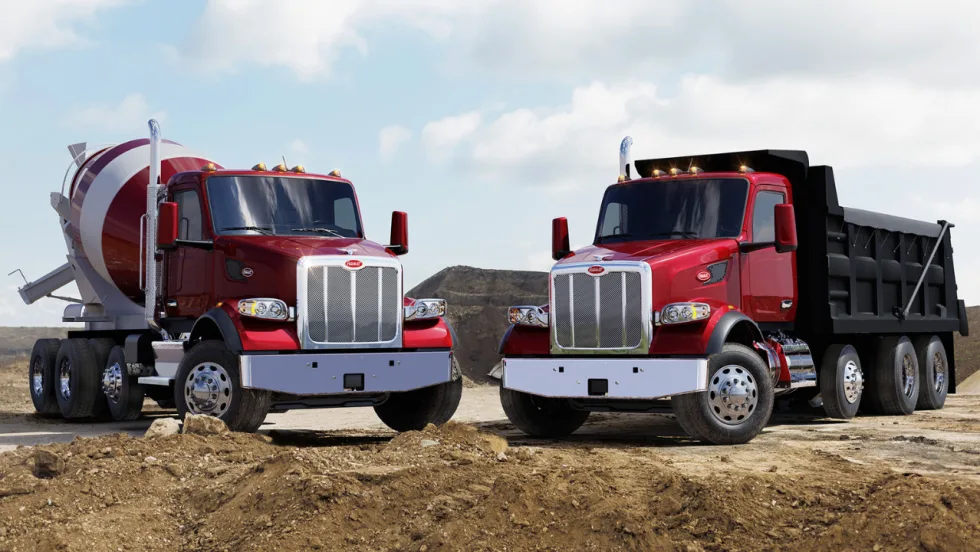
Peterbilt Trucks Equipped with Paccar TX-18 Pro Boost Efficiency for Maryland Fleet
Patuxent Companies is replacing aging trucks with the Peterbilt Model 567 and Model 589, specified with the Paccar TX-18 Pro 18-speed automated transmissions, and is reporting an 8% to 10% improvement in fuel economy.
Read More →