





Related article: How Payload and Towing Affect Commercial EV Range
ELMS Prepares to Bring Class 2-3 Electric Truck to Fleet Market
The EV manufacturer will expose the vehicle later this summer and says it’s drawing strong interest from fleet operators and FMCs.
June 1, 2021

So far, ELMS has only suggested a design with a silhouetted image it posted on social media, with actual photos and images of the truck still to come.
Photo: ELMS
3 min to read
The maker of a Class 1 electric delivery van ready to roll out this fall plans to unveil its next, larger electric vehicle designed to compete in the Class 2 and 3 vehicle categories.
Electric Last Mile Solutions will reveal a new truck and begin customer testing this summer. It plans mass production and deliveries during the second half of 2022.
The small truck is designed and engineered to compete with cargo vans such as the Ford Transit, Mercedes-Benz eSprinter, and the Canoo MPDV as well as cab-forward trucks from Isuzu and Chevrolet.
ELMS says the truck already has drawn strong interest from leading fleet operators and fleet management companies. It will be produced at the former Hummer plant in Mishawaka, Indiana, which has been converted to build the ELMS Urban Delivery Class 1 van starting in the third quarter.
The truck will have a Class 3 cab chassis with at least a 14-foot cargo box on the back, and potentially a 16-foot box, said Erik Grossman, director of communications and investor relations for ELMS. Its range will be at least 150 miles, just like the Urban Delivery van. Grossman said the payload capacity will be competitive with those of longer wheelbase Sprinter and Transit vans.
The ELMS electric truck will straddle the Class 2 and 3 niches, just like the Urban Delivery is Class 1 but competes in the Class 1 and 2 categories, Grossman said.
“The demand has been extremely strong from large fleet operators for the Class 3,” Grossman said. “With the Class 3, we are opening customer access for those who don’t have Class 1 in their portfolio with their use cases.”
The truck can accommodate a wide range of client uses, such as delivery services, moving truck rentals, and parcel deliveries. “It will have a bigger footprint in last-mile delivery,” Grossman said. Other customers could include utilities, municipalities, retail outlets such as flower shops, and food deliverers.
The ELMS truck will have the potential for upfitting equipment and tools, such as temporary cold storage solutions, wire harnesses, shelving, and ladder racking.
So far, ELMS has only suggested a design with a silhouetted image it posted on social media, with actual photos and images of the truck still to come.
ELMS Urban Delivery Van Scheduled for Fall 2021
Since the ELMS Urban Delivery Van prototype was released late last fall, the van model has gained 45,000 non-binding preorders, Grossman said. ELMS has not announced the size of its first production order yet. The manufacturing plant has the capacity to build 100,000 vehicles per year.
Randy Marion Automotive Group’s commercial division is ELMS’ first distributor to help launch the Urban Delivery van. Marion Group will be scheduled to receive 6,000 of the vans once the parties finalize the deal.
“We’re not selling one at a time; these all have to go through a dealer,” Grossman said. The first customers will be fleets, not one-off buyers.
ELMS so far has not identified any near-term competitors to its Class 1 van in the EV space and believes it has an advantage among customers interested in an affordable Class 1 electric van.
ELMS will import the van bodies and chassis from China, which have already been used for vans running there and can provide millions of miles of data on usage and performance, Grossman said.
“We don’t have the expensive tooling, re-tooling, or engineering of a platform from the ground up,” he said. “This is a fast way to get to market in a way that’s proven and reliable.” Such a production set up can lead to a lower total cost of ownership for customers, he added.
Colliers Securities recently hosted a plant tour/test drive of the Urban Delivery vehicle, noting “the vehicle is real” and the factory is “ready to go,” according to ELMS.
Topics:Electric VansElectric TrucksMedium-Duty TrucksElectric Last Mile SolutionsDelivery FleetsGreen FleetSmall Fleet
Originally posted on Charged Fleet
More Green Fleet

Fleet Forward Conference Introduces One-Day Passes for 2026
New one-day registration gives fleet professionals the flexibility to attend Tuesday, Wednesday, or Thursday, with passes available for $199 through Sept. 18.
Read More →
CALSTART Rebrands as Catalyst Mobility, Will Combine with Forth in 2027
CALSTART has rebranded as Catalyst Mobility and will combine with Forth at the start of 2027. The new organization said it is poised to become one of the world's largest, strongest, and most impactful clean transportation nonprofits.
Read More →
Electric Truck and Charging Programs to Boost Sustainability at NY & NJ Ports
Together, the Port Authority of New York and New Jersey and CALSTART will electrify drayage and terminal operations serving the East Coast’s busiest container port. A pair of incentive programs totaling $45 million has launched to accelerate adoption of zero-emission drayage trucks and terminal tractors.
Read More →

Xos Hub Surpasses One Gigawatt-Hour of Energy Delivered in the Field
A single Xos Hub has surpassed one gigawatt-hour of energy across more than 33,600 charging sessions in the field, demonstrating performance that supports Xos' expansion across new products and markets.
Read More →
Carrier Transicold Launches All-Electric Vector 8200 TRU for Diesel-Free On-Site Cold Storage
Carrier Transicold’s first engineless multi-temperature TRU helps fresh- and frozen-food fleets add supplemental cold storage capacity during seasonal peaks.
Read More →
Narro Trucks Introduces Electric Utility Vehicle
Narro Trucks officially launched its operations on Aug. 20 and hosted a ride and drive to showcase its electric truck, which will be produced in Virginia.
Read More →
Samsung SDI Takes Full Control of GM Battery JV as Indiana Plant Pivots to Energy Storage
Samsung SDI is taking full control of its Indiana battery plant with GM, marking a major shift from the EV-focused joint venture Charged Fleet first covered in 2023.
Read More →
NWSA Taps CALSTART to Administer Zero-Emission Drayage Assistance Program
CALSTART will provide free technical assistance services to drayage fleets serving the Ports of Seattle and Tacoma and looking to transition to cleaner technologies and help decarbonize freight hubs.
Read More →
EV Fleet Reality Check: What Operators Wish They Knew Before Electrifying Their Work Vans
Electric work truck upfits bring new compatibility questions. Learn how parts availability, OEM guidance, power demands, and route planning can affect fleet performance.
Read More →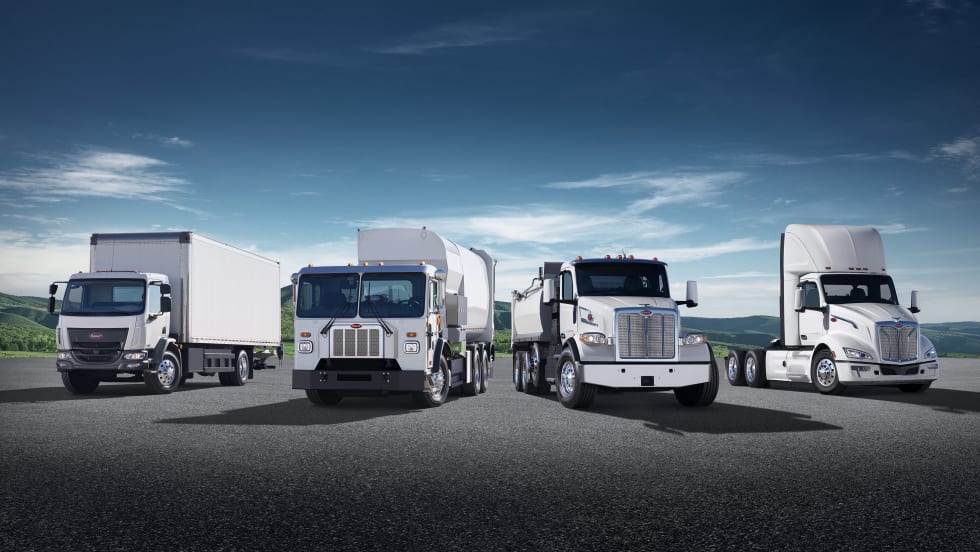
Peterbilt Expands Sourcewell Partnership with Electric Vehicle Lineup
Peterbilt Motors Company’s cooperative purchasing agreement with Sourcewell and its Canadian partner, Canoe Procurement Group, now includes including Peterbilt's battery-electric vehicle lineup.
Read More →