




Edmunds.com Reports Automakers' True Cost of Incentives Down More Than 5%
Edmunds.com, an online resource for automotive information, reported Dec. 18 that the average manufacturer incentive per vehicle sold in the United States was $2,386 in November 2003, up $518 or 27.7 percent from November 2002, but down 5.4 percent from October 2003. Edmunds.com’s monthly True Cost of Incentives(SM) (TCI) report takes into account all of the manufacturers’ various United States incentives programs, including subvented interest rates and lease programs as well as cash rebates to consumers and dealers. To ensure the greatest possible accuracy, Edmunds.com says it bases its calculations on sales volume, including the mix of vehicle makes and models for each month, as well as on the proportion of vehicles for which each type of incentive was used. Incentives spending for domestic Chrysler, Ford and General Motors nameplates fell 2.6 percent from $3,445 in October to $3,355 in November. Chrysler reduced incentives spending by 6.0 percent to $3,365 per vehicle and experienced a market share decrease of 0.3 percent. General Motors reduced incentives spending by 0.9 percent to $3,611 per vehicle and gained almost 1 percent of market share. Ford reduced incentives spending by 4.0 percent to $2,964 per unit, its lowest level in seven months, and saw its market share decrease in November to 18.6 percent of the total U.S. market – one of its lowest levels ever - compared to 19.9 percent in October. In contrast, Mini and Scion had essentially no incentives in November, while Lexus spent only $153 per unit, Land Rover spent $321 and Acura spent $330. “Scion is new to the marketplace, while Mini closely manages supply in relationship to demand,” said Dr. Jane Liu, executive director of data analysis for Edmunds.com. “The three other manufacturers with low incentives costs each introduced a major redesign of a vehicle that comprises more than a third of its total sales volume, and priced it at a level the market is willing to accept, capturing new car buyers without the need for incentives.” In November, European automakers spent $1,608, Korean automakers spent $1,440, and Japanese automakers spent $749 per vehicle sold, according to Edmunds.com. Among vehicle segments, large cars had the highest average incentives last month at $3,775, followed by large SUVs at $3,665 and vans at $2,820. Luxury SUVs had the lowest average incentives at $1,366, followed by sports cars at $1,638 and compact SUVs at $1,806. Large trucks have gained the most market share since November 2002, increasing from 12.3 percent to 13.9 percent of the market, while midsize cars have lost the most market share during that period, down from 18.6 percent to 16.4 percent. Industry average ‘days-to-turn,’ which measures how many days on average it took to sell vehicles after they arrived at dealerships, was 62 days in November, compared to 69 in October 2003 and 54 in November 2002. The quickest inventory turnaround was for Mini and Scion at 16 days, followed by Lexus at 21 days. About Edmunds.com True Cost of Incentives Edmunds.com’s TCI(SM) is a monthly report that measures automobile manufacturers’ cost of incentives on vehicles sold in the United States. These costs are reported on a per vehicle basis for the industry as a whole, for each manufacturer, for each make sold by each manufacturer and for each model of each make. TCI covers all aspects of manufacturers’ various incentives programs (except volume and similar bonus programs), including dealer cash, manufacturer rebates and consumer savings from subvented APR and lease programs (including subvented lease residual values used in manufacturer leasing programs). Data for the industry, the manufacturers and the makes are derived using weighted averages and are based on actual monthly sales and financing activity. About Edmunds.comEdmunds.com is an online resource for automotive information. Its set of data, tools and services, including Edmunds.com True Market Value® pricing, is generated by Edmunds Data Services and is licensed to third parties. For example, the company supplies over 800,000 pages of content for AOL's auto channel and NYTimes.com's auto section and delivers monthly data reports to Wall Street analysts. Edmunds.com was named "best car research" site by Forbes ASAP, has been selected by consumers as the "most useful Web site" according to every J.D. Power and Associates New Autoshopper.com Study(SM) and was ranked first in the Survey of Car-Shopping Web Sites as reported by The Wall Street Journal. The company is headquartered in Santa Monica, Calif., and maintains a satellite office in Troy, Mich.
More Small Fleet


Developing Budget-Friendly Driver Safety Programs
From driver training and safety meetings to one-on-one coaching and incentive programs, several small fleets share how they have developed a safety culture with their drivers using low- to no-cost resources.
Read More →
Boosting Last-Mile Fleet Uptime, Safety, and Value with AI Vehicle Inspections
AI-powered inspections are transforming last-mile fleets by replacing manual checks with highly accurate automated scans that detect defects in seconds. By giving fleet operations visibility into the daily condition of their vehicles, you can identify trends over the vehicle’s lifecycle that enable improved procurement decisions, route management, driver training and accountability.
Read More →

Five Ways Seat Belts Help Prevent Injuries
There are five ways seat belts protect occupants from injuries, according to the Tennessee Department of Safety and Homeland Security.
Read More →
Basic Tracking vs Next Generation Fleet Technology
Fleet software is getting more sophisticated and effective than ever, tying big data models together to transform maintenance, safety, and the value of your existing tech stack. Fleet technology upgrades are undoubtedly an investment, but updated technology can offer a much higher return. Read how upgrading your fleet technology can increase the return on your investment.
Read More →
It’s here: The 2026 Fleet Technology Trends Report
What does AI mean for fleets? Get the answer — and learn other top tech trends.
Read More →
Small Fleets, Big Impact: How Independent Drivers Power Wreaths Across America
Check out how small fleets and independent drivers power Wreaths Across America each December and why their impact matters more than ever.
Read More →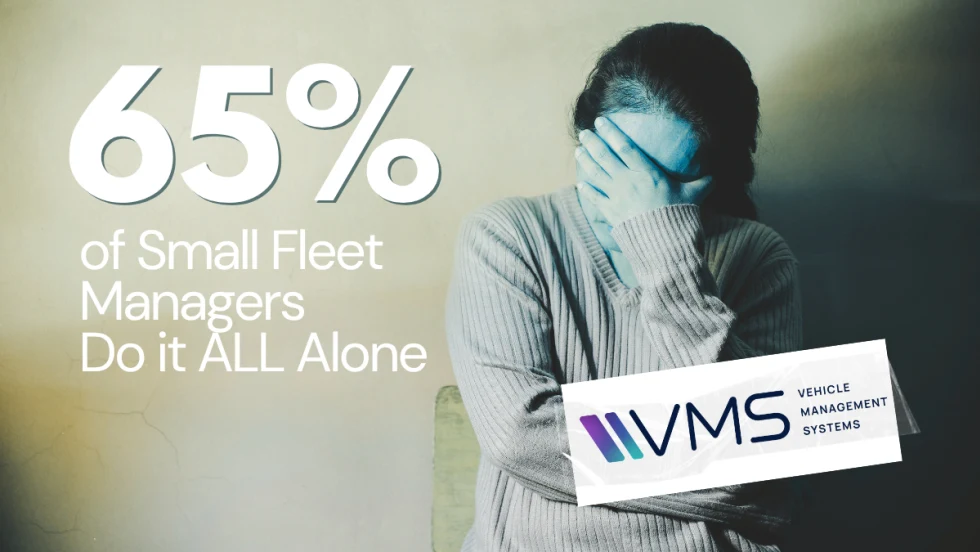
VMS Survey Finds 65% of Small Fleet Managers Run Operations Alone
A new VMS survey shows small fleet managers are stretched thin, with most handling operations solo and eager to adopt digital tools for relief.
Read More →
Tips for Driving Safely on Halloween Night
This video features a reminder from the Connecticut Department of Transportation (DOT) and the Connecticut Police Chiefs Association, urging drivers to prioritize safety this Halloween.
Read More →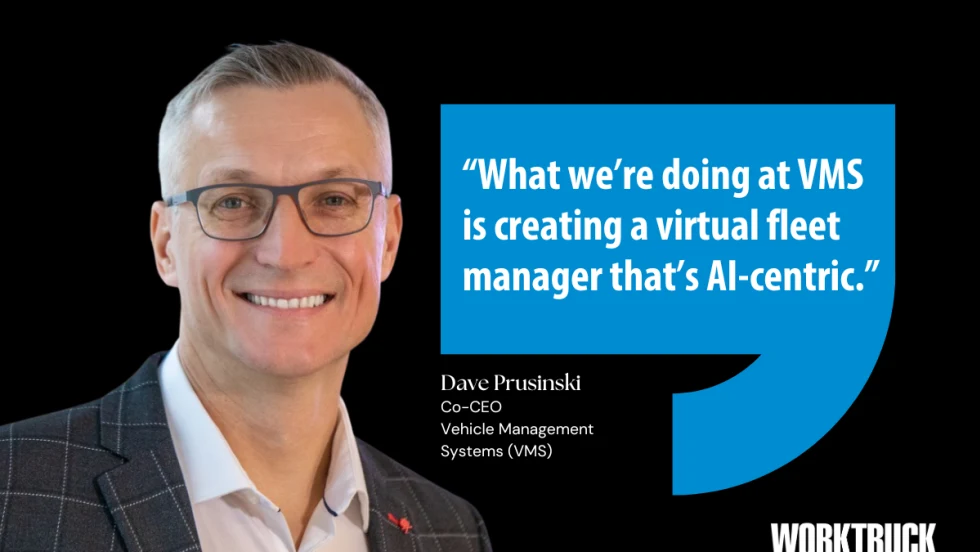
AI, Access, and Uptime: VMS’s Next Chapter with David Prusinski
VMS’s new Co-CEO, David Prusinski, shares how an AI-first approach will give small fleets and repair shops the tools to compete like big players.
Read More →