




Eaton Discontinues Diesel-Electric Hybrid Trucks
Eaton has confirmed that it's out of the diesel-electric hybrid business in North America, after government incentives and stabilizing diesel prices contributed to a market largely drying up.
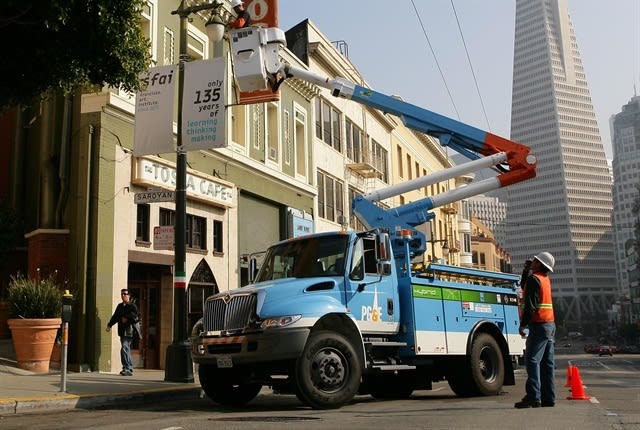
Utilities were a popular application for the Eaton diesel-electric hybrid.
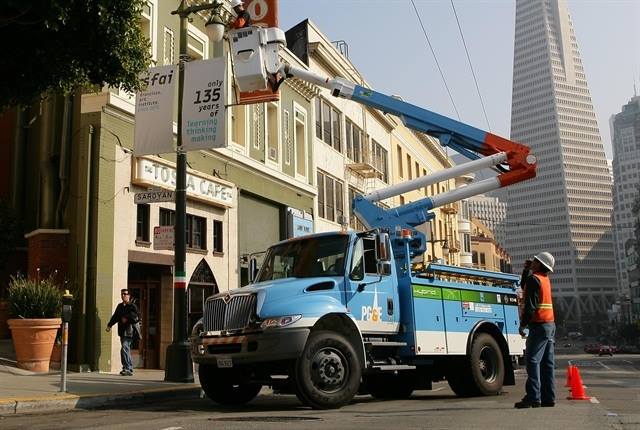
Utilities were a popular application for the Eaton diesel-electric hybrid.
Eaton has confirmed that it's out of the diesel-electric hybrid business in North America, after government incentives and stabilizing diesel prices contributed to a market largely drying up.
Jim Michels, global business communications manager for Eaton's vehicle group, told HDT on the eve of a press event at its facilities in Kalamazoo, Mich.
"We are no longer selling hybrid units in North America," Michels said. "The reason we're not selling in North America any longer is there really isn't a market for those products. If the market comes back we'll re-enter."
The market started drying up when federal credits expired, Michels explained. "We began to see a downturn in orders and it's progressively gotten lower and lower."
Diesel prices that have stabilized as well as an increased interest in natural gas as an alternative fuel have contributed to the decline in demand.
"On the flip side our hybrid business in China is doing fantastic," Michels said. "City bus is a huge opportunity for us in china, and same thing in Europe."
Michels wouldn't speculate on what it might take to see demand increase enough to re-enter the market. "We stay close to our customers and obviously if we see customer demand starting to pick back up we'll get right back into it."
Both Daimler Trucks North America and Kenworth recently told HDT they were no longer building any new diesel-electric hybrids because they could no longer get the systems from their supplier – Eaton.
Other companies are venturing into the medium-duty commercial truck hybrid market, many with bolt-on conversion systems, including Odyne and BAE HybriDrive, and Hino offers a hybrid version of its Class 5 cabover.
A hybrid history
In 2002, Eaton announced it intended to become a primary supplier of hybrid-electric vehicle powertrain technology and products to the commercial vehicle industry. That year, FedEx Express chose three finalists - including Eaton - to participate in its search for a hybrid electric Class 4 step-van to become its delivery truck in 2004.
By 2003, FedEx had chosen Eaton as the supplier and agreed to order 20 of the hybrids.
In 2005, electric utility Commonwealth Edison announced it was testing new diesel-electric hybrid bucket trucks from International using Eaton's technology.
In 2006, Paccar announced an ambitious goal of 30 percent improvement in vehicle fuel efficiency for selected medium-duty applications over the next seven years using hybrid technology as a key contributor, and Eaton was chosen to provide hybrid power systems for 50 step-van delivery vehicles made by International Truck and Engine and Freightliner Custom Chassis Corp., to be purchased by UPS.
By spring of 2010, Eaton announced that it had more than 2,400 hybrid systems in use, with customers collectively accumulating more than 30 million miles of service throughout the world, and UPS expanded its alt-fuel fleet with the deployment of 200 next-generation hybrid electric delivery trucks in eight U.S. cities.
The same year, Frost & Sullivan said that demand for hybrid trucks was expected to grow over the next six years across North America and Europe, especially in medium-duty, predicting the number of hybrid trucks being manufactured in North America and Europe would grow from 4,100 units in 2009 to 222,000 in 2016. In 2010, Frost & Sullivan predicted that by 2015, hybrids would represent 8% of all Class 6 to 8 trucks manufactured.
However, as Frost & Sullivan's Sandeep Kar noted at the time, "Currently, the high upfront cost associated with hybrids is countered with federal grants, incentives, and tax rebates," said Kar. "Although such incentives offer relief in the short term, for hybrids to be commercially viable in the long term, the upfront cost difference should reduce considerably."
That same year, T. Boone Pickens provided the keynote address during the National Natural Gas Vehicle Fleet Summit on the eve of the Mid-America Trucking Show and touted his Pickens Plan and converting the commercial trucking fleet to natural gas to reduce dependence on foreign oil.
By mid 2012, Eaton was addressing the issue of return on investment, announcing enhancements it said would increase the fuel economy, performance and payback of its hybrid drive system for commercial trucks, including a new high-capacity battery.
The same year, a report from Indiana University's School of Public and Environmental Affairs said the fuel savings and environmental benefits from medium-duty diesel-electric hybridsmight not be enough to recover their higher investment costs.
More Operations
Family Ties Inside the Fleet Families Building Careers Across Generations
Three fleet families share what it really takes to work together, learn across generations, and keep business from following them home.
Read More →
Shades of Fleet Call for Voices: Fleet's Hidden Heroes
Fleet’s hidden heroes are often the ones keeping everything moving behind the scenes. September’s Shades of Fleet is looking for dispatchers, coordinators, parts specialists, and other support pros to share their stories.
Read More →
Truck Centers, Inc. Celebrates National Truck Driver Appreciation Week with $1,000 Fuel Card Giveaways
During National Truck Driver Appreciation Week, Truck Centers, Inc. is offering customers a chance to fuel up for free. Customers at all Truck Centers locations can enter to win one of four $1,000 fuel cards from Sept. 14 - 18.
Read More →
Fleet Guides, AI Time-Savers, Truck Tariffs & Fuel Strategy Lead the News
This week’s Truck Chat Cheat Sheet covers new fleet vehicle guides, practical AI use cases, U.S.-Canada truck production, mixed-energy strategy, and more.
Read More →
What Fleet Employers Are Missing When Hiring Veterans
What if some of the strongest candidates for fleet are already out there, but their experience is written in a language our industry does not always recognize?
Read More →
Automotive Fleet Opens 2026 Personal Use Survey for Commercial Fleet Managers
Less than two weeks left! Commercial and corporate fleet managers are invited to share how their organizations handle company vehicle personal-use policies, charges, and driver eligibility.
Read More →
What Resilient Fleets Do Differently When Conditions Change
Fleet resilience is about more than reacting to disruption. Lauren Fletcher talks with AP Fleet’s Alex Coveney about flexibility, planning, scaling, and what helps fleets adapt when business conditions shift.
Read More →
If We Want the Next Generation in Automotive, We Have to Give Them a Reason to Care
The automotive industry talks constantly about its workforce shortage. But before we can recruit the next generation, we may need to do a better job giving kids a reason to care about automotive in the first place.
Read More →
Ram ProMaster City Under $40K, Truck Tariffs, and AI Maintenance Lead the News
A sub-$40K commercial van, tariff questions, AI-powered maintenance, and a new EV production strategy headline this week’s Truck Chat Cheat Sheet.
Read More →
Bob Adamsky Shares the Fleet Lessons You Usually Learn the Hard Way
After more than 30 years in fleet, Arrow International’s Bob Adamsky has learned that the job is about far more than vehicles. He shares the lessons he wishes every fleet manager could learn a little earlier.
Read More →