




Distracted Driving Causes 14% to 17% of All Crashes
In 2018, distracted driving contributed to 2,841 deaths and 938,000 accidents, according to data from the U.S. Department of Transportation and NHTSA.

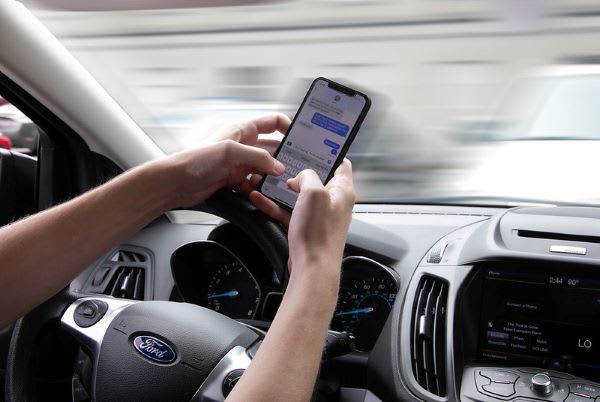
The District of Columbia and 48 states now have hand-held cell phone bans while driving.
Photo: Flickr/Virgina DOT.
In 2018, 2,841 people were killed in motor vehicle crashes involving distracted drivers, according to the Centers of Disease Control and Prevention (CDC). Among those deaths, the 20-29 age group had the highest number of fatalities.
The 2,841 deaths included the fatalities of 506 nonoccupants: pedestrians, bicyclists, and others, Bankrate recently reported.
Distracted driving caused 938,000 driving accidents in 2018, according to data from the U.S. Department of Transportation (DOT) and the National Highway Traffic Safety Administration (NHTSA). With 6.7 million car crashes taking place in 2018, distracted driving contributed to 15% of that total number.
According to data from the last 10 years, between 14% and 17% of all crashes are due to distracted driving. To reduce the occurrences of distracted driving, 48 states and the District of Columbia now have hand-held cell phone bans while driving.
Distracted driving can include visual distraction (your eyes move away from the road), auditory distraction (sound causing your attention to be taken away from driving), manual distraction (your hands move away from the steering wheel), and cognitive distraction (your mind wanders and you are no longer focused on driving).
Cell phone use can be a manual, cognitive, and visual distraction for drivers. For example, texting can take your eyes off the road for about five seconds – the length of a football field when you are driving 55 mph on the road. Texting increases the risk of a car accident by 23 times, according to a study by the Virginia Tech Transportation Institute.
While cell phone usage (and texting) has led to car accidents and fatalities, there are other distractions as dangerous when driving, including drowsiness, smoking, other passengers, a moving object in the vehicle, adjusting the radio or air conditioning, reaching for a device or item in the vehicle, eating and drinking, and daydreaming.
More Small Fleet


Developing Budget-Friendly Driver Safety Programs
From driver training and safety meetings to one-on-one coaching and incentive programs, several small fleets share how they have developed a safety culture with their drivers using low- to no-cost resources.
Read More →
Boosting Last-Mile Fleet Uptime, Safety, and Value with AI Vehicle Inspections
AI-powered inspections are transforming last-mile fleets by replacing manual checks with highly accurate automated scans that detect defects in seconds. By giving fleet operations visibility into the daily condition of their vehicles, you can identify trends over the vehicle’s lifecycle that enable improved procurement decisions, route management, driver training and accountability.
Read More →
Five Ways Seat Belts Help Prevent Injuries
There are five ways seat belts protect occupants from injuries, according to the Tennessee Department of Safety and Homeland Security.
Read More →
It’s here: The 2026 Fleet Technology Trends Report
What does AI mean for fleets? Get the answer — and learn other top tech trends.
Read More →
Small Fleets, Big Impact: How Independent Drivers Power Wreaths Across America
Check out how small fleets and independent drivers power Wreaths Across America each December and why their impact matters more than ever.
Read More →
VMS Survey Finds 65% of Small Fleet Managers Run Operations Alone
A new VMS survey shows small fleet managers are stretched thin, with most handling operations solo and eager to adopt digital tools for relief.
Read More →
Tips for Driving Safely on Halloween Night
This video features a reminder from the Connecticut Department of Transportation (DOT) and the Connecticut Police Chiefs Association, urging drivers to prioritize safety this Halloween.
Read More →
AI, Access, and Uptime: VMS’s Next Chapter with David Prusinski
VMS’s new Co-CEO, David Prusinski, shares how an AI-first approach will give small fleets and repair shops the tools to compete like big players.
Read More →
Fleet Managers Share Winter Prep Tips: It's Never Too Early!
Three fleets share best practices to prep vehicles for winter and prevent downtime when the cold sets in.
Read More →