




DaimlerChrysler Features Future Fuels Research at 2003 Detroit Science Center Gala
Environmentally friendly hydrogen production and storage technologies that could be used to power future automobiles are the focus of three university studies partially funded by the DaimlerChrysler Challenge Fund. These biotechnologies were part of the Life Sciences technology display at the 2003 Detroit Science Center Gala May 16 in Detroit. "We are proud to support these and other academic projects through the DaimlerChrysler Challenge Fund," said Bernard Robertson, senior vice president, Engineering Technologies and Regulatory Affairs. "This technology is complementary to our core business, and completes the zero emissions cycle for vehicles that can run on clean, renewable energy sources." The three featured technologies are: Hydrogen Production from Algae and Bacteria, Prof. Tasios Melis, PhD., University of California, Berkeley. In this experimental program, hydrogen is produced by algae and bacteria using sunlight and water. Research in biotechnology provides green algae that releases hydrogen through photosynthesis. The by-product from the photosynthesis provides food for the bacteria which also produces hydrogen through photosynthesis. This may prove to be an ecologically friendly, renewable source of hydrogen. Hydrogen Production from Sugar, Prof. James A. Dumesic, PhD., University of Wisconsin, Randy D. Cortright, PhD., Mary-Rose de Valladares and Damon Bresenham, Virent Energy Systems, LLC., Madison, Wisconsin. Hydrogen can be produced from water-soluble carbohydrates such as sugars and alcohols. This is a renewable source of hydrogen, and this process offers the opportunity to reform the fuel to make hydrogen on-board the vehicle in a manner that is safe and nontoxic. Higher Efficiency Packaging for Compressed Hydrogen, Prof. Lawrence T. Drzal, PhD., Michigan State University. Spider Silk fiber may solve several challenges for high-pressure gas storage necessary with compressed hydrogen. Spider silk is environmentally friendly, and for its weight, it is one of the strongest materials found in nature. Spider silk used in this university program to develop high-strength, lightweight composites has a strength-to-weight ratio, or specific strength, that is 20 to 45 times stronger than steel. It is roughly the same as Kevlar or Carbon fiber. "As important as the fuel cell vehicle itself, is the issue of how the fuel for these vehicles is produced, " said Thomas S. Moore, vice president and head of the Liberty & Technical Affairs research group at DaimlerChrysler. "These research projects, which we are pleased to support through the DaimlerChrysler Challenge Fund, are addressing two important questions: How do we produce hydrogen fuel for automobiles using renewable, non-polluting resources, and how do we store hydrogen fuel onboard the vehicle?" The DaimlerChrysler Challenge Fund supports a variety of academic research activities including these aimed at developing and storing hydrogen in environmental, ecological and renewable methods. This program challenges select universities to apply their creative resources to targeted automotive research projects in order to create closer working relationships with leading universities.
More Small Fleet


Developing Budget-Friendly Driver Safety Programs
From driver training and safety meetings to one-on-one coaching and incentive programs, several small fleets share how they have developed a safety culture with their drivers using low- to no-cost resources.
Read More →
Boosting Last-Mile Fleet Uptime, Safety, and Value with AI Vehicle Inspections
AI-powered inspections are transforming last-mile fleets by replacing manual checks with highly accurate automated scans that detect defects in seconds. By giving fleet operations visibility into the daily condition of their vehicles, you can identify trends over the vehicle’s lifecycle that enable improved procurement decisions, route management, driver training and accountability.
Read More →
Five Ways Seat Belts Help Prevent Injuries
There are five ways seat belts protect occupants from injuries, according to the Tennessee Department of Safety and Homeland Security.
Read More →
It’s here: The 2026 Fleet Technology Trends Report
What does AI mean for fleets? Get the answer — and learn other top tech trends.
Read More →
Small Fleets, Big Impact: How Independent Drivers Power Wreaths Across America
Check out how small fleets and independent drivers power Wreaths Across America each December and why their impact matters more than ever.
Read More →
VMS Survey Finds 65% of Small Fleet Managers Run Operations Alone
A new VMS survey shows small fleet managers are stretched thin, with most handling operations solo and eager to adopt digital tools for relief.
Read More →
Tips for Driving Safely on Halloween Night
This video features a reminder from the Connecticut Department of Transportation (DOT) and the Connecticut Police Chiefs Association, urging drivers to prioritize safety this Halloween.
Read More →
AI, Access, and Uptime: VMS’s Next Chapter with David Prusinski
VMS’s new Co-CEO, David Prusinski, shares how an AI-first approach will give small fleets and repair shops the tools to compete like big players.
Read More →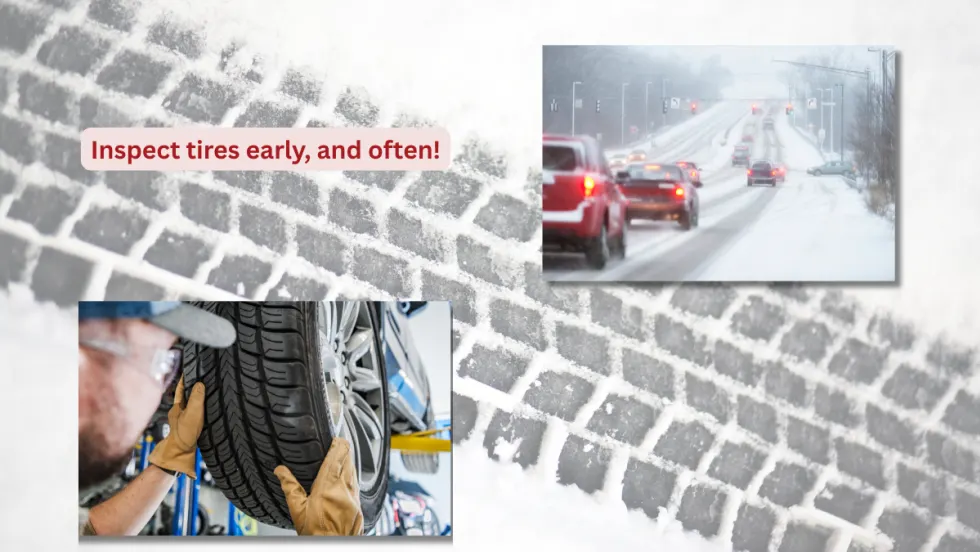
Fleet Managers Share Winter Prep Tips: It's Never Too Early!
Three fleets share best practices to prep vehicles for winter and prevent downtime when the cold sets in.
Read More →