




Cummins Recieves $54M in Federal Funding for Light-Duty and SuperTruck Porjects
COLUMBUS, IN - United States Secretary of Energy Dr. Steven Chu today announced that Cummins will receive nearly $54 million in funding from the U.S. Department of Energy (USDOE) for two projects aimed at improving fuel efficiency in heavy-duty and light-duty vehicles.
COLUMBUS, IN - United States Secretary of Energy Dr. Steven Chu today announced that Cummins will receive nearly $54 million in funding from the U.S. Department of Energy (USDOE) for two projects aimed at improving fuel efficiency in heavy-duty and light-duty vehicles.
The Cummins awards were among nine project awards totaling more than $187 million, announced at an event held at Cummins Columbus Technical Center, which also was attended by U.S. Sen. Evan Bayh, U.S. Rep. Baron Hill and state and local officials.
Cummins will receive nearly $39 million in funding to support systems level technology development, integration and demonstration for highly efficient Class 8 trucks (SuperTruck). The Company will receive an additional $15 million in funding to support advanced-technology powertrains for light-duty vehicles (ATP-LD). In addition to the benefits of reduced fuel consumption and petroleum usage, the improvements in engine system efficiency will deliver a significant reduction in greenhouse gas emissions.
Cummins will partner with Peterbilt Motors Company, a division of PACCAR, for its SuperTruck project. The Cummins project will develop and demonstrate a highly efficient and clean diesel engine, an advanced waste heat recovery system, an aerodynamic Peterbilt tractor-and-trailer combination and a fuel cell auxiliary power unit to reduce engine idling.
"Cummins has long enjoyed a collaborative partnership with the DOE. These R&D programs have helped us develop the best products for our customers and the environment," said Cummins President and Chief Operating Officer Tom Linebarger. "We appreciate the funding provided by the DOE for the Cummins SuperTruck and Light-Duty programs, which will create jobs, help address climate change and reduce oil consumption. This public-private partnership is a win for our economy, a win for the environment and a win for energy challenges. We are looking forward to working closely with Peterbilt on this important technology project."
The goal of the SuperTruck program initiated by the DOE is to improve Class 8 vehicle freight efficiency by 50 percent through advanced and highly efficient engine systems and vehicle technologies that also meet prevailing emissions and Class 8 tractor-trailer vehicle safety and regulatory requirements. Every facet of energy consumption of a Class 8 tractor and trailer will be addressed through the development and integration of advanced technologies.
The ATP-LD program will develop a fuel-efficient, low emissions diesel engine that achieves a 40 percent fuel economy improvement over conventional gasoline technology and significantly exceeds 2010 EPA emissions requirements. The project will develop and demonstrate an advanced, highly integrated combustion engine and aftertreatment system to achieve Tier 2 Bin 2 emission compliance while maintaining vehicle performance and driveability. The project will also develop the system architecture to accommodate on-board diagnostic regulations from the design stage to better enable product commercialization.
During the program development, over 60 technical positions will be dedicated to the project work at Cummins. Successful production implementation will result in additional long-term positions.
"The DOE has provided strong leadership in establishing an advanced combustion engine research and development partnership between industry and government," said Cummins Vice President and Chief Technical Officer Dr. John Wall. "Cummins looks forward to continuing our partnership with DOE to develop advanced diesel, hybrid and natural gas engine technologies that will deliver more efficient and cleaner combustion engines to our customers."
Previous Cummins programs funded by the DOE have succeeded in creating both evolutionary and breakthrough technologies and analytical approaches allowing for a reduced timeline for the commercialization of vehicles powered by advanced combustion engines.
In 2007, Cummins introduced its 6.7 liter Turbo Diesel engine, which met 2010 emissions standards three years early. The 6.7 liter Turbo Diesel utilizes a NOx Adsorber Catalyst, which was first developed and demonstrated in collaboration with the DOE. Other key technologies such as Selective Catalytic Reduction (SCR), cooled Exhaust Gas Recirculation (EGR), Diesel Particulate Filters, and Diesel Oxidation Catalysts all have been outcomes of the collaborative work funded by these programs.
Cummins current product lineup, its cleanest and most fuel-efficient engines ever, applies all of these key technologies, validating the importance of the programs like the DOE SuperTruck and ATP-LD programs.
More Operations

Family Ties Inside the Fleet Families Building Careers Across Generations
Three fleet families share what it really takes to work together, learn across generations, and keep business from following them home.
Read More →
Shades of Fleet Call for Voices: Fleet's Hidden Heroes
Fleet’s hidden heroes are often the ones keeping everything moving behind the scenes. September’s Shades of Fleet is looking for dispatchers, coordinators, parts specialists, and other support pros to share their stories.
Read More →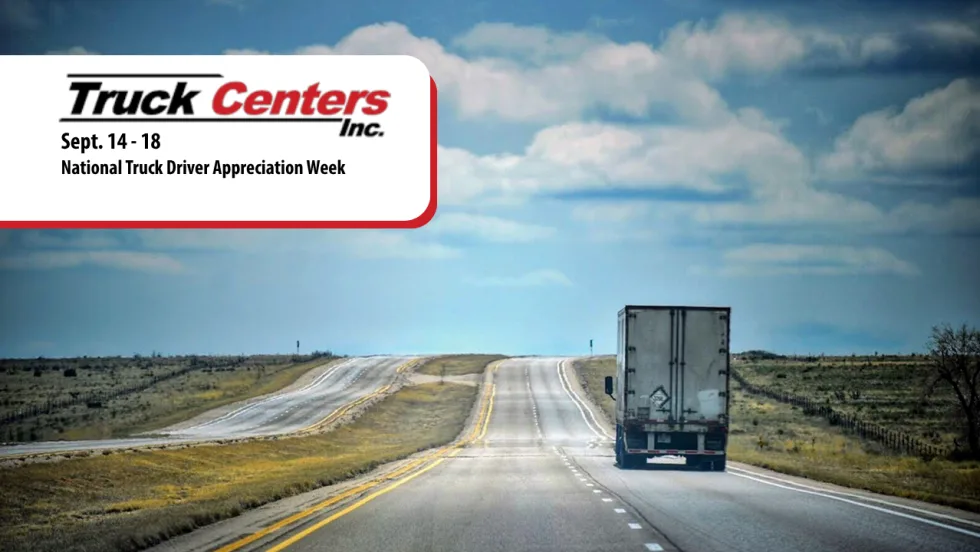
Truck Centers, Inc. Celebrates National Truck Driver Appreciation Week with $1,000 Fuel Card Giveaways
During National Truck Driver Appreciation Week, Truck Centers, Inc. is offering customers a chance to fuel up for free. Customers at all Truck Centers locations can enter to win one of four $1,000 fuel cards from Sept. 14 - 18.
Read More →
Fleet Guides, AI Time-Savers, Truck Tariffs & Fuel Strategy Lead the News
This week’s Truck Chat Cheat Sheet covers new fleet vehicle guides, practical AI use cases, U.S.-Canada truck production, mixed-energy strategy, and more.
Read More →
What Fleet Employers Are Missing When Hiring Veterans
What if some of the strongest candidates for fleet are already out there, but their experience is written in a language our industry does not always recognize?
Read More →
Automotive Fleet Opens 2026 Personal Use Survey for Commercial Fleet Managers
Less than two weeks left! Commercial and corporate fleet managers are invited to share how their organizations handle company vehicle personal-use policies, charges, and driver eligibility.
Read More →
What Resilient Fleets Do Differently When Conditions Change
Fleet resilience is about more than reacting to disruption. Lauren Fletcher talks with AP Fleet’s Alex Coveney about flexibility, planning, scaling, and what helps fleets adapt when business conditions shift.
Read More →
If We Want the Next Generation in Automotive, We Have to Give Them a Reason to Care
The automotive industry talks constantly about its workforce shortage. But before we can recruit the next generation, we may need to do a better job giving kids a reason to care about automotive in the first place.
Read More →
Ram ProMaster City Under $40K, Truck Tariffs, and AI Maintenance Lead the News
A sub-$40K commercial van, tariff questions, AI-powered maintenance, and a new EV production strategy headline this week’s Truck Chat Cheat Sheet.
Read More →
Bob Adamsky Shares the Fleet Lessons You Usually Learn the Hard Way
After more than 30 years in fleet, Arrow International’s Bob Adamsky has learned that the job is about far more than vehicles. He shares the lessons he wishes every fleet manager could learn a little earlier.
Read More →