




Concern for Dangers of Red Light Running Focuses on 'National Stop on Red Week'
Because a growing number of Americans -- approximately 250 per day -- are killed or injured by red light runners, more and more communities are moving aggressively against this behavior. To support their efforts, the National Campaign to Stop Red Light Running (SRLR), an independent advocacy initiative targeting both the national and grassroots levels, joins other traffic safety groups in celebrating the fifth annual National Stop on Red Week. National Stop on Red Week, September 1-7, 2001, is designed to raise awareness of the growing phenomenon of red light running, its consequences, and ways to combat the problem. "There is a great deal of well-justified concern for this problem around the nation," said Judith Lee Stone, president of Advocates for Highway and Auto Safety. "Studies have shown that red light running is one of the most frequent and unpunished traffic offenses, occurring as frequently as once every five minutes at some intersections." Red light running is a national traffic safety problem with deadly consequences. According to the American Trauma Society, in 1999, 90,000 injuries and approximately 950 deaths in the U.S. were attributed to red light running. Between 1992 and 1998, fatal motor vehicle crashes at traffic signals increased 18 percent, outpacing the six percent rise in all other fatal crashes. Public costs exceed $7 billion per year. The National Campaign to Stop Red Light Running was created in response to a groundswell of concern from many areas of the country struggling to reverse this disturbing trend. The goal of the Campaign is to reduce the incidence of red light running in the United States and the fatalities and injuries it causes. The Campaign is guided by a national advisory board that includes Barbara Harsha, executive director, National Association of Governors' Highway Safety Representative; Millie I. Webb, national president, Mothers Against Drunk Driving (MADD); Brian O'Neil, president, Insurance Institute for Highway Safety; Harry Teter, executive director, American Trauma Society; and Stone. "The problem of red light running needs to be addressed through public awareness and public policy change," Stone said. "Increased enforcement and technology such as red light cameras can make a big difference in deterring this deadly behavior." According to Stone, red light cameras are a low-cost common sense way to prevent the numerous yearly deaths and injuries resulting from red light violations. The cameras are operational in eleven states and abroad. A recent in-depth study in Oxnard, Calif., found a 42 percent reduction in red light violations at intersections equipped with this technology. By overwhelming majorities, Americans want cameras to protect their intersections. In a recent survey, Americans nationwide favored red light cameras by a 3:1 margin.
More Small Fleet


Developing Budget-Friendly Driver Safety Programs
From driver training and safety meetings to one-on-one coaching and incentive programs, several small fleets share how they have developed a safety culture with their drivers using low- to no-cost resources.
Read More →
Boosting Last-Mile Fleet Uptime, Safety, and Value with AI Vehicle Inspections
AI-powered inspections are transforming last-mile fleets by replacing manual checks with highly accurate automated scans that detect defects in seconds. By giving fleet operations visibility into the daily condition of their vehicles, you can identify trends over the vehicle’s lifecycle that enable improved procurement decisions, route management, driver training and accountability.
Read More →
Five Ways Seat Belts Help Prevent Injuries
There are five ways seat belts protect occupants from injuries, according to the Tennessee Department of Safety and Homeland Security.
Read More →
It’s here: The 2026 Fleet Technology Trends Report
What does AI mean for fleets? Get the answer — and learn other top tech trends.
Read More →
Small Fleets, Big Impact: How Independent Drivers Power Wreaths Across America
Check out how small fleets and independent drivers power Wreaths Across America each December and why their impact matters more than ever.
Read More →
VMS Survey Finds 65% of Small Fleet Managers Run Operations Alone
A new VMS survey shows small fleet managers are stretched thin, with most handling operations solo and eager to adopt digital tools for relief.
Read More →
Tips for Driving Safely on Halloween Night
This video features a reminder from the Connecticut Department of Transportation (DOT) and the Connecticut Police Chiefs Association, urging drivers to prioritize safety this Halloween.
Read More →
AI, Access, and Uptime: VMS’s Next Chapter with David Prusinski
VMS’s new Co-CEO, David Prusinski, shares how an AI-first approach will give small fleets and repair shops the tools to compete like big players.
Read More →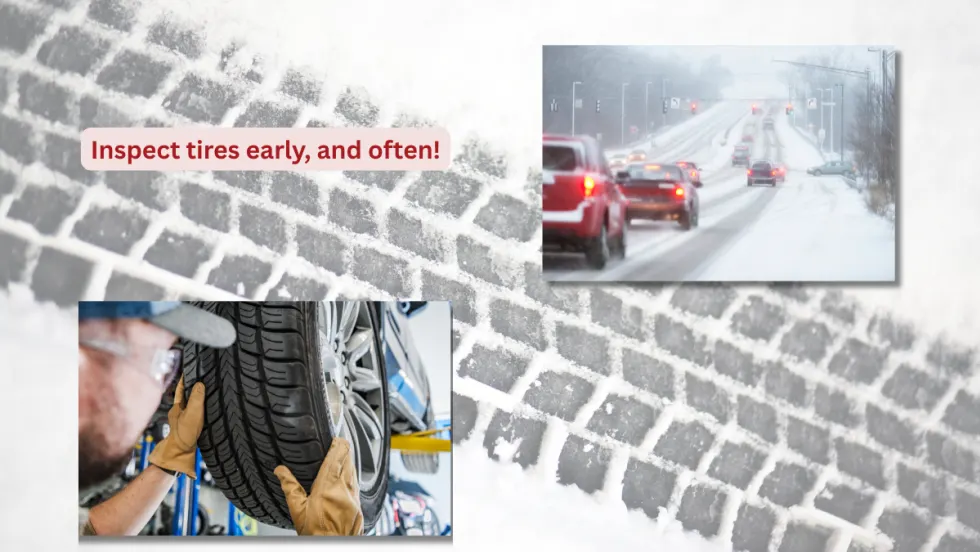
Fleet Managers Share Winter Prep Tips: It's Never Too Early!
Three fleets share best practices to prep vehicles for winter and prevent downtime when the cold sets in.
Read More →