




Chevrolet Volt Battery Gets Standard Eight-Year, 100,000-Mile Warranty
The Volt’s comprehensive battery warranty covers all 161 battery components, 95 percent of which are designed and engineered by GM, in addition to the thermal management system, charging system and electric drive components.
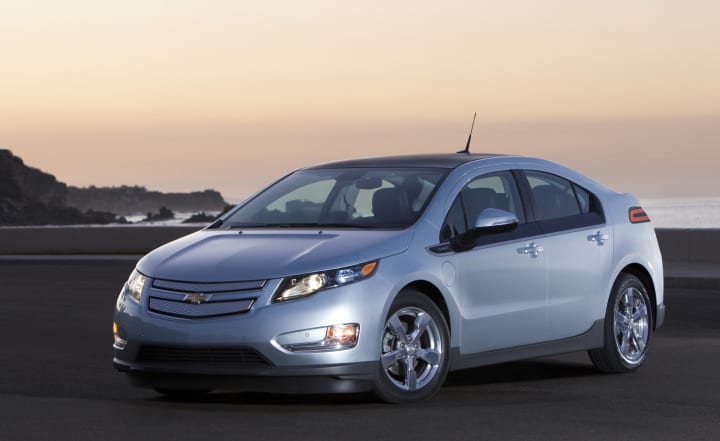
2011 Chevrolet Volt
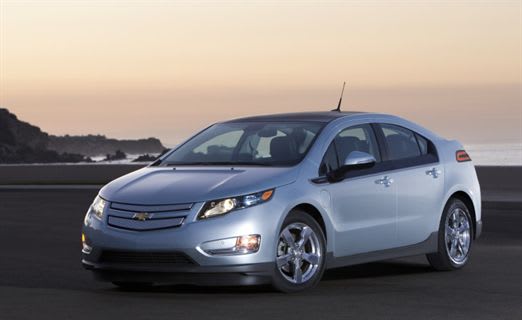
The Chevrolet Volt electric vehicle will provide customers with a standard, eight-year/100,000-mile warranty on its advanced, lithium-ion battery. The comprehensive battery warranty is transferable at no cost to other vehicle owners.
"The Chevrolet Volt's batteries have exceeded our performance targets and are ready to hit the road," said Micky Bly, GM executive director, global electrical systems. "We are making a commitment to our customers to deliver the highest standards for value, safety, quality, performance and reliability for an unprecedented eight years/100,000 miles."
The Volt's comprehensive battery warranty covers all 161 battery components, 95 percent of which are designed and engineered by GM, in addition to the thermal management system, charging system and electric drive components.
The Volt is the only electric vehicle that can operate under a full range of climates and driving conditions without limitations or concern about being stranded by a depleted battery. It has a range of about 340 miles and is powered with electricity at all times. For up to the first 40 miles, the Volt is powered solely by electricity stored in its 16-kWh lithium-ion battery, using no fuel and producing no emissions. When the Volt's lithium-ion battery runs low, an engine/generator seamlessly operates to extend the driving range another 300 miles on a full tank of fuel. (See Volt Freedom Drive.)
The Volt's battery features include:
- Thermal management for durability and reliability: The Volt is the only mass-market electric vehicle with a battery that can be warmed or cooled. The battery is designed to provide reliable operation, when plugged in, at temperatures as low as -13 degrees Fahrenheit (-25 C) and as high as 122 degrees Fahrenheit (+50 C). In cold weather, the battery will be preheated during charging to provide full power capability. In hot weather - the most challenging environment for a battery - the Volt's battery can be chilled during charging. The Volt's liquid thermal management system can also be powered during driving by the battery or engine/generator.
- Diagnostics for safety and performance: The Volt's battery management system continuously monitors the battery real-time for optimum operations. More than 500 diagnostics run at 10 times per second, keeping track of the Volt's battery pack; 85 percent of the diagnostics ensure the battery pack is operating safely, while the remaining 15 percent keep track of battery performance and life.
- Cell design and chemistry for performance and efficiency: GM's selection of a prismatic cell design and LG Chem's manganese spinel lithium-ion chemistry is designed to provide long life and high power output, with a properly maintained temperature. This enables better vehicle acceleration and increased regenerative braking capability for improved vehicle efficiency.
- Energy management for durability: Fully charging or fully depleting a battery shortens its life. The Volt's energy management system never fully charges or depletes the battery. The Volt's battery has top and bottom "buffer zones" to help ensure long life.
Testing for durability, reliability, safety and performance
GM engineers have completed more than 1 million miles and 4 million hours of validation testing of Volt battery packs since 2007, as well as each pack's nine modules and 288 cells. The development, validation and test teams have met thousands of specifications and validated each of the Volt battery's components.
Tests include short circuit, corrosion, dust, impact, water submersion, crush and penetration, and extreme temperature swings combined with aggressive drive cycles, also known as "Shake, Bake and Roll."
Ready for production
GM's Brownstown Township plant, which began building prototype batteries in January, soon will begin regular battery production. (See GM First Battery Build.)
"We're moving fast to deliver for the customer and ensure the Volt launch stays on track," said Nancy Laubenthal, plant manager of the Brownstown Battery Plant. "Last August we announced the investment in the Brownstown facility and in January built our first completed battery pack. Now we are finishing pre-production batteries and soon we will begin building production batteries for Chevrolet Volts that will be delivered to dealers before the end of the year."
More Small Fleet


Developing Budget-Friendly Driver Safety Programs
From driver training and safety meetings to one-on-one coaching and incentive programs, several small fleets share how they have developed a safety culture with their drivers using low- to no-cost resources.
Read More →
Boosting Last-Mile Fleet Uptime, Safety, and Value with AI Vehicle Inspections
AI-powered inspections are transforming last-mile fleets by replacing manual checks with highly accurate automated scans that detect defects in seconds. By giving fleet operations visibility into the daily condition of their vehicles, you can identify trends over the vehicle’s lifecycle that enable improved procurement decisions, route management, driver training and accountability.
Read More →
Five Ways Seat Belts Help Prevent Injuries
There are five ways seat belts protect occupants from injuries, according to the Tennessee Department of Safety and Homeland Security.
Read More →
It’s here: The 2026 Fleet Technology Trends Report
What does AI mean for fleets? Get the answer — and learn other top tech trends.
Read More →
Small Fleets, Big Impact: How Independent Drivers Power Wreaths Across America
Check out how small fleets and independent drivers power Wreaths Across America each December and why their impact matters more than ever.
Read More →
VMS Survey Finds 65% of Small Fleet Managers Run Operations Alone
A new VMS survey shows small fleet managers are stretched thin, with most handling operations solo and eager to adopt digital tools for relief.
Read More →
Tips for Driving Safely on Halloween Night
This video features a reminder from the Connecticut Department of Transportation (DOT) and the Connecticut Police Chiefs Association, urging drivers to prioritize safety this Halloween.
Read More →
AI, Access, and Uptime: VMS’s Next Chapter with David Prusinski
VMS’s new Co-CEO, David Prusinski, shares how an AI-first approach will give small fleets and repair shops the tools to compete like big players.
Read More →
Fleet Managers Share Winter Prep Tips: It's Never Too Early!
Three fleets share best practices to prep vehicles for winter and prevent downtime when the cold sets in.
Read More →