




BMW Named “Energy Partner of the Year” by EPA
Less than two weeks after being named 2006's "Top Plant" by Plant Engineering magazine, The United States Environmental Protection Agency (EPA) named BMW Manufacturing Co. LLC, and partner Dürr Systems, Inc., as joint recipients of the Landfill Methane Outreach Program (LMOP) "Energy Partner of the Year" award. The award was presented at today's 10th Annual LMOP Conference and Project Expo in Baltimore. The prestigious award was given to BMW Manufacturing and Dürr in recognition of their achievements in implementing one of the most ambitious Landfill Gas to Energy Projects in North America – recycling landfill methane gas from the Palmetto Landfill to provide energy to BMW's paint shop. Dürr built the paint shop. By utilizing the previously unused energy from landfill gas, BMW was able to reduce area emissions of carbon dioxide, a greenhouse gas, by approximately 60,000 tons and recover enough energy to heat 15,000 homes per year. Landfills are the largest human-made methane source in the United States. Methane is produced as waste decomposes. When released into the air, it is a greenhouse gas and contributes to local air pollution. Currently, 63 percent of BMW Manufacturing's energy is now provided by this renewable resource, saving the company at least $1 million per year in energy costs. The additional use of methane gas also reduces greenhouse gases the equivalent of driving a car around the globe 4,300 times, or more than 100 million miles. "Three of our core principles are innovation, protecting the environment, and being a good corporate citizen," said Briggs Hamilton, BMW Manufacturing's environmental section manager. "This is such a positive for everyone involved. There literally hasn't been a downside to this project. This project allows us to take a previously wasted energy source and use it to generate electricity and heat for our plant, this results in lower emissions, which helps to protect the environment and the community." "The usage of renewable fuel significantly reduces the economic and ecological footprint of a Dürr paint shop," said Ralf Dieter, CEO of the Dürr AG Board of Management. "Projects such as these assure our future generations of the natural resources they rightfully deserve and we consider it our duty and responsibility to continue to provide cutting edge energy efficiency solutions." BMW Manufacturing gained international recognition in 2002, when the automotive manufacturer first announced that it would use recycled landfill methane gas as an energy source in its automotive manufacturing facility. In order to do so, the company had to construct an unprecedented 9.5-mile pipeline from the landfill to its facility. The system went online in February 2003. The Dürr Group is one of the world's leading suppliers of products, systems, and services for automobile manufacturing. Its range of products and services covers important stages of vehicle production. As a systems supplier, Dürr plans and builds complete paint shops and final assembly facilities. Dürr also delivers cleaning and filtration systems for the manufacture of engine and transmission components as well as diagnostic and balancing systems for vehicle components. Around 90% of Group sales relate to business with automobile manufacturers and their suppliers. The machinery, chemical, pharmaceutical, coating and aviation industries are also major customers of Dürr. BMW Manufacturing Co., a subsidiary of the BMW Group based in Munich, Germany, is the exclusive manufacturer of the Z4 and M Roadster, Z4 and M Coupe in addition to the X5. Its website address is www.bmwusfactory.com. In addition to the South Carolina manufacturing facility, BMW’s North American subsidiaries include sales, marketing and financial services operations in the United States, Canada and throughout Latin America, and a design firm in California.
More Small Fleet


Developing Budget-Friendly Driver Safety Programs
From driver training and safety meetings to one-on-one coaching and incentive programs, several small fleets share how they have developed a safety culture with their drivers using low- to no-cost resources.
Read More →
Boosting Last-Mile Fleet Uptime, Safety, and Value with AI Vehicle Inspections
AI-powered inspections are transforming last-mile fleets by replacing manual checks with highly accurate automated scans that detect defects in seconds. By giving fleet operations visibility into the daily condition of their vehicles, you can identify trends over the vehicle’s lifecycle that enable improved procurement decisions, route management, driver training and accountability.
Read More →
Five Ways Seat Belts Help Prevent Injuries
There are five ways seat belts protect occupants from injuries, according to the Tennessee Department of Safety and Homeland Security.
Read More →
It’s here: The 2026 Fleet Technology Trends Report
What does AI mean for fleets? Get the answer — and learn other top tech trends.
Read More →
Small Fleets, Big Impact: How Independent Drivers Power Wreaths Across America
Check out how small fleets and independent drivers power Wreaths Across America each December and why their impact matters more than ever.
Read More →
VMS Survey Finds 65% of Small Fleet Managers Run Operations Alone
A new VMS survey shows small fleet managers are stretched thin, with most handling operations solo and eager to adopt digital tools for relief.
Read More →
Tips for Driving Safely on Halloween Night
This video features a reminder from the Connecticut Department of Transportation (DOT) and the Connecticut Police Chiefs Association, urging drivers to prioritize safety this Halloween.
Read More →
AI, Access, and Uptime: VMS’s Next Chapter with David Prusinski
VMS’s new Co-CEO, David Prusinski, shares how an AI-first approach will give small fleets and repair shops the tools to compete like big players.
Read More →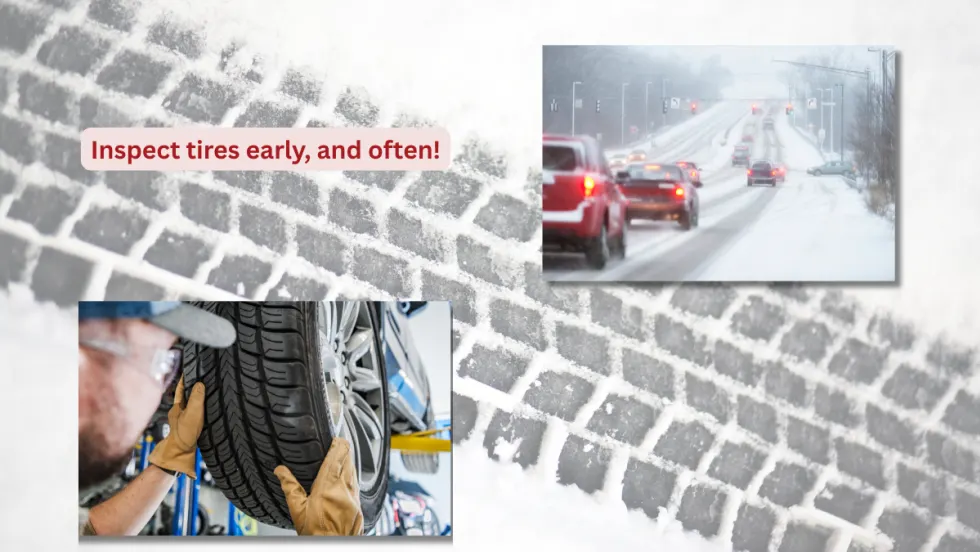
Fleet Managers Share Winter Prep Tips: It's Never Too Early!
Three fleets share best practices to prep vehicles for winter and prevent downtime when the cold sets in.
Read More →