




Automakers, Environmentalists Support Tax Credits for Green Cars
Several major automakers and environmental groups have joined forces for the first time ever to support tax credits to promote cleaner vehicles and reduce fuel consumption. Ford Motor Company, Toyota Motor Corporation and Honda Motor Company, along with the Union of Concerned Scientists, Natural Resources Defense Council and other environmental groups, announced support April 24 for legislation offering credits to people who buy cleaner motor vehicles. The credits range from $1,000 for hybrid passenger vehicles that use electricity to supplement a gas engine, to $40,000 for a heavy-duty truck that runs on electricity or fuel cells with no harmful emissions. The bill also provides credits for people to buy alternative fuels such as natural gas and hydrogen and for companies to install alternative fueling stations. According to Sen. Orrin Hatch, R-Utah, the legislation "leaves it up to the consumer to choose from among the lowest-emitting and most fuel-efficient vehicles available." Hatch was joined at a news conference by Sens. Jay Rockefeller, D-W.Va., and Jim Jeffords, R-Vt. Supporters estimate the cost at $8 billion to $10 billion over 10 years. According to Ford President Jacques Nasser the bill "will help accelerate demand for cleaner, more fuel-efficient vehicles in the marketplace and put them on the road earlier and in higher volumes." Environmentalists signed onto the plan because a vehicle that gets more miles per gallon would get a bigger tax credit. Officials from General Motors Corporation and DaimlerChrysler AG said they support tax incentives, but disagree with the way the bill calculates fuel improvements. For instance, DaimlerChrysler plans to begin selling a hybrid version of its Durango sport utility vehicle in 2003, which will use an electric motor tied to a battery pack to increase mileage 20 percent from 15.5 miles per gallon to about 18.6. The hybrid technology costs about $3,000 more than a regular engine. Under the plan announced Tuesday, the hybrid Durango would qualify for the $1,000 base tax credit, but none of the additional $3,000 performance-based credit. Only two hybrid passenger vehicles are sold in the United States -- Toyota's Prius, which gets 61 mpg in the city, and Honda's Insight, which gets 52 mpg. Ford plans to sell a hybrid version of its Escape in 2003. Not all environmental groups support the Hatch bill. The Sierra Club supports higher requirements for gas mileage rather than tax credits. In the midst of the oil crisis of the 1970s, federal standards were set at 27.5 miles per gallon on new passenger cars and 20.7 mpg for light trucks, including pickups, minivans and sport utility vehicles. The automakers do not have to meet the standard for each vehicle but their entire fleet must average the standard.
More Small Fleet


Developing Budget-Friendly Driver Safety Programs
From driver training and safety meetings to one-on-one coaching and incentive programs, several small fleets share how they have developed a safety culture with their drivers using low- to no-cost resources.
Read More →
Boosting Last-Mile Fleet Uptime, Safety, and Value with AI Vehicle Inspections
AI-powered inspections are transforming last-mile fleets by replacing manual checks with highly accurate automated scans that detect defects in seconds. By giving fleet operations visibility into the daily condition of their vehicles, you can identify trends over the vehicle’s lifecycle that enable improved procurement decisions, route management, driver training and accountability.
Read More →
Five Ways Seat Belts Help Prevent Injuries
There are five ways seat belts protect occupants from injuries, according to the Tennessee Department of Safety and Homeland Security.
Read More →
It’s here: The 2026 Fleet Technology Trends Report
What does AI mean for fleets? Get the answer — and learn other top tech trends.
Read More →
Small Fleets, Big Impact: How Independent Drivers Power Wreaths Across America
Check out how small fleets and independent drivers power Wreaths Across America each December and why their impact matters more than ever.
Read More →
VMS Survey Finds 65% of Small Fleet Managers Run Operations Alone
A new VMS survey shows small fleet managers are stretched thin, with most handling operations solo and eager to adopt digital tools for relief.
Read More →
Tips for Driving Safely on Halloween Night
This video features a reminder from the Connecticut Department of Transportation (DOT) and the Connecticut Police Chiefs Association, urging drivers to prioritize safety this Halloween.
Read More →
AI, Access, and Uptime: VMS’s Next Chapter with David Prusinski
VMS’s new Co-CEO, David Prusinski, shares how an AI-first approach will give small fleets and repair shops the tools to compete like big players.
Read More →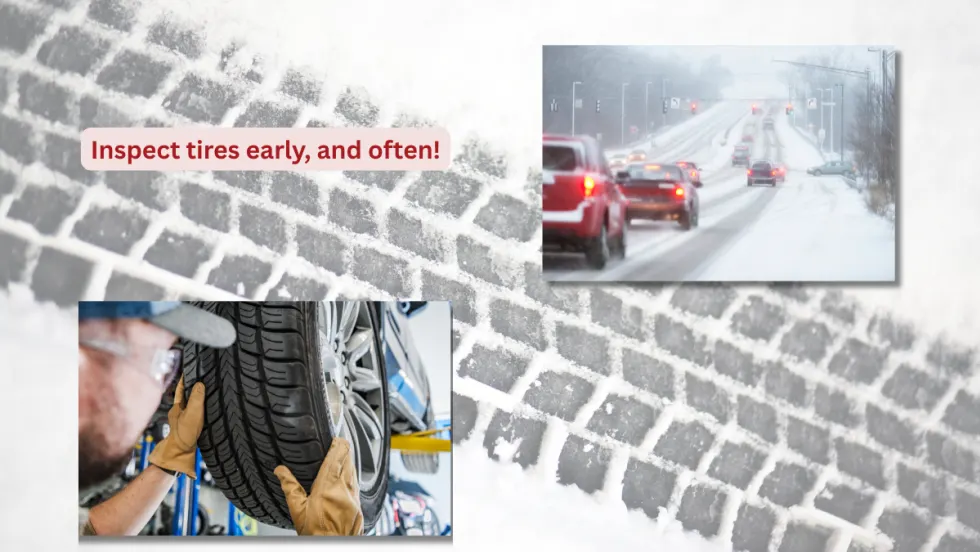
Fleet Managers Share Winter Prep Tips: It's Never Too Early!
Three fleets share best practices to prep vehicles for winter and prevent downtime when the cold sets in.
Read More →