




Auto Emissions Tests May Be Easier in the Future
An emissions test done in half a second as a car whizzes by at 60 mph? How about a car that tattles on itself by placing a phone call to the Division of Motor Vehicles? Or no smog check at all for cars less than six years old? These are all options the U.S. Environmental Protection Agency and many states -- including New Jersey -- are studying to make the every-other-year ritual of car inspection easier on drivers and more accurate for the environment, according to an Aug. 19 story by Daniel Sforza in the Bergen (N.J.) Record. New Jersey is just emerging from the highly public failings of its 1999 switch to the treadmill test -- which broke down in cold weather, created three-hour waiting lines, and spawned an investigation into how the contractor was selected. Now the EPA has asked New Jersey to switch gears again, moving from the treadmill to a computerized test that relies on a car's own computers to diagnose emissions problems. Officials from the state Department of Environmental Protection are skeptical, though. They say the new test may fail vehicles that should pass, costing drivers money for unnecessary repairs. But few alternatives are available. Two relatively new systems -- drive-by testing and self-reporting vehicles -- rely on technology that is not yet perfected. Another option is to extend the exemption for new cars. Some states are experimenting with the alternatives. New Jersey officials have yet to embrace them, citing their cost and spotty track records. But they hope to incorporate some of the technology on a limited basis. Until now, emissions testing nationwide has been considered a failure. A report commissioned by Congress and released last month said current and past emissions tests mandated by the EPA have done a poor job in identifying high polluters. Specifically, the research council found that too many "clean" cars had to be inspected to find one "dirty" car. Only about 5 percent of vehicles nationwide are high polluters, Lawson said. Using Lawson's ratio, it costs New Jersey about $500 to find one dirty car. That's why officials are looking at alternatives, according to the Record. On-Road Testing Put simply, the test samples a car's emissions as it drives by a random checkpoint that could be located at a tollbooth or on an exit ramp. The system works much like a TV remote control: A beam of light is projected across the road at the level of the car's tailpipe. A computer then determines how much light is blocked by a car's pollutants. If enough is blocked, the car is flagged as a high emitter and a photograph is snapped of the license plate. The systems can be operated by computer, without any personnel. Soon after, the car's owner would receive notification that the vehicle failed inspection and must be repaired. Drivers would, in theory, return to a central inspection station to prove the car was repaired. Clean cars would never have to report to a station. The EPA sees drive-by testing not as a replacement for current methods, but as a way to gauge how well the regular inspection program is working, by taking on-road samples of exhaust. The agency does advocate using the test in another capacity -- to "clean screen." Drivers would voluntarily go to a designated street in town where their cars would be tested without stopping or slowing down. If they passed, the car would be exempt from inspection. If they failed, they would have to go to an inspection station. California has experimented with such a system, but not yet embraced it. Model-Year Exemption New Jersey drivers are exempt from getting a new car inspected for two years. Other states, such as California and Colorado, have exemptions of four years. Arizona has a five-year exemption. In California, discussions are under way to extend the exemption beyond four years. On-Board Diagnostics III Another way to do remote emissions testing is to rely on a car's on-board computers to report irregularities in the emissions system, something the EPA is requiring all states to use within two years. But a new twist -- still in the future -- would have the car's computers report the findings without having to go to an inspection station. A cell phone-like device would be plugged into a car's computer. If the computer found a problem, it would automatically call the Division of Motor Vehicles and report it. The driver would receive notification that the car needed to be fixed. Unlike on-road testing, if the car were fixed and reported no problems to the DMV afterward, no follow-up inspection would be needed. If no repairs were made, the driver would be required to bring the car into a central inspection station, where presumably the car would fail and repairs would be ordered. Some states are already using the system's precursor, OBD II, to diagnose emissions problems. But OBD III is still on the drawing board. OBD II uses a car's own computer to diagnose emissions problems. During inspection, the state's central computer is plugged into the car and determines if all the emissions components are working. If not, the car will fail. OBD III simply adds, in effect, a cell phone to the system. California, which is researching OBD III, has found the biggest stumbling block so far to be a privacy issue: How do you protect the anonymity of the driver while the car is designed to rat on itself?
More Small Fleet


Developing Budget-Friendly Driver Safety Programs
From driver training and safety meetings to one-on-one coaching and incentive programs, several small fleets share how they have developed a safety culture with their drivers using low- to no-cost resources.
Read More →
Boosting Last-Mile Fleet Uptime, Safety, and Value with AI Vehicle Inspections
AI-powered inspections are transforming last-mile fleets by replacing manual checks with highly accurate automated scans that detect defects in seconds. By giving fleet operations visibility into the daily condition of their vehicles, you can identify trends over the vehicle’s lifecycle that enable improved procurement decisions, route management, driver training and accountability.
Read More →
Five Ways Seat Belts Help Prevent Injuries
There are five ways seat belts protect occupants from injuries, according to the Tennessee Department of Safety and Homeland Security.
Read More →
It’s here: The 2026 Fleet Technology Trends Report
What does AI mean for fleets? Get the answer — and learn other top tech trends.
Read More →
Small Fleets, Big Impact: How Independent Drivers Power Wreaths Across America
Check out how small fleets and independent drivers power Wreaths Across America each December and why their impact matters more than ever.
Read More →
VMS Survey Finds 65% of Small Fleet Managers Run Operations Alone
A new VMS survey shows small fleet managers are stretched thin, with most handling operations solo and eager to adopt digital tools for relief.
Read More →
Tips for Driving Safely on Halloween Night
This video features a reminder from the Connecticut Department of Transportation (DOT) and the Connecticut Police Chiefs Association, urging drivers to prioritize safety this Halloween.
Read More →
AI, Access, and Uptime: VMS’s Next Chapter with David Prusinski
VMS’s new Co-CEO, David Prusinski, shares how an AI-first approach will give small fleets and repair shops the tools to compete like big players.
Read More →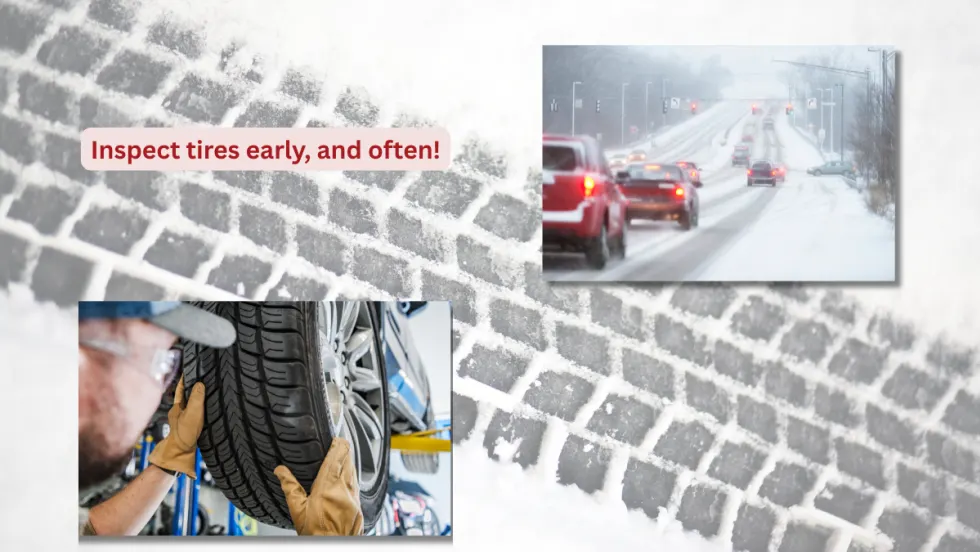
Fleet Managers Share Winter Prep Tips: It's Never Too Early!
Three fleets share best practices to prep vehicles for winter and prevent downtime when the cold sets in.
Read More →