




Are Your Drivers Pencil Whipping Their DVIRs?
It’s important for drivers to do a proper walk-around of their vehicles and to complete a driver vehicle inspection report (DVIR) every day. This way, your maintenance provider can be on top of needed repairs before they become catastrophic failures.
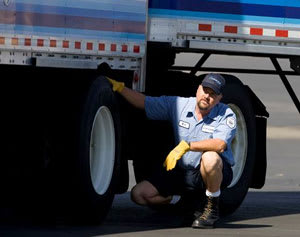
A small fleet I visited recently was not having its drivers write driver vehicle inspection reports (DVIRs) at all — much less reviewing them for needed/requested repairs that would have saved a considerable amount of money. Had a front wheel bearing failed on a medium-duty truck?
When your truck driver brings your truck to a smoking, grinding halt, the resulting repair will most likely be in the $7,500 to $8,000 range for the parts and labor. Don’t tell me the driver couldn’t have checked the front seals during his walk-around prior to starting on his route. If the truck hub was low on oil, this would have been readily apparent with visible oil-hub windows — if the driver had checked this. If your trucks are not so equipped, there would have been a leak visible on the ground over a period of days, if not weeks, indicating a leak that should have been diagnosed and repaired.
You say to yourself, that can’t be happening; we run a tight ship. The above scenario was one that happened to a small fleet before it called me to ask for help when its maintenance costs became excessive. When I say excessive, the fleet’s average truck maintenance cost for repairs — not preventative maintenance — was enough to pay for a new truck and body monthly.
When was the last time the hoods of your trucks were opened prior to starting the trucks?
I once walked out to a district fleet of six trucks and one tractor on a winter morning in Michigan. All the drivers had their trucks running. Why? It was cold and they wanted those heaters to warm their cabs as quickly as possible. I walked up to a driver who was standing beside his truck talking to his buddy from the truck parked next to it. Both were drinking coffee from white Styrofoam cups. Yes, they were all on duty and on the payroll at that point in time.
I asked the first driver if he had completed his DVIR. He said that he was just about to do his walk-around and write up the DVIR. I asked him how he was going to pull the dip stick and check the oil level in the engine now that the motor was running. He gave me a sheepish look, and I said that my father taught me a long time ago that the only way to check the oil was with the motor off and a cold engine.
Obviously, I was not the most popular person in that yard that morning. However, the point was made not only to the driver, but to the district manager (who was inside enjoying his coffee and conversation with his cronies) and to the regional vice president who was also on-site.
The moral of the story? Here are some tips:
- Make your drivers do a proper walk-around every day.
- Drivers need to write up a driver vehicle inspection report every day. Send copies of the DVIRs to your maintenance provider. That way, your maintenance provider can be on top of needed repairs before they become catastrophic failures.
- Make sure drivers check all fluids prior to starting the truck — the reservoirs for radiator antifreeze and windshield washer fluid should be plastic and the fluid levels visible without having to pull reservoir caps.
- Look underneath the truck for leaks.
- Have the drivers check all the lights. Drivers can check each other’s brake light function.
- Check all safety systems for proper operation.
Finally, walk the yard yourself at shift start every so often. I know it’s early and cold in season, but it’s your investment of time and money.
Les Smart is president of Smart Fleet Management, a small and medium fleet consulting company. He can be reached at smart5010@atlasok.com.
More Small Fleet


Developing Budget-Friendly Driver Safety Programs
From driver training and safety meetings to one-on-one coaching and incentive programs, several small fleets share how they have developed a safety culture with their drivers using low- to no-cost resources.
Read More →
Boosting Last-Mile Fleet Uptime, Safety, and Value with AI Vehicle Inspections
AI-powered inspections are transforming last-mile fleets by replacing manual checks with highly accurate automated scans that detect defects in seconds. By giving fleet operations visibility into the daily condition of their vehicles, you can identify trends over the vehicle’s lifecycle that enable improved procurement decisions, route management, driver training and accountability.
Read More →
Five Ways Seat Belts Help Prevent Injuries
There are five ways seat belts protect occupants from injuries, according to the Tennessee Department of Safety and Homeland Security.
Read More →
It’s here: The 2026 Fleet Technology Trends Report
What does AI mean for fleets? Get the answer — and learn other top tech trends.
Read More →
Small Fleets, Big Impact: How Independent Drivers Power Wreaths Across America
Check out how small fleets and independent drivers power Wreaths Across America each December and why their impact matters more than ever.
Read More →
VMS Survey Finds 65% of Small Fleet Managers Run Operations Alone
A new VMS survey shows small fleet managers are stretched thin, with most handling operations solo and eager to adopt digital tools for relief.
Read More →
Tips for Driving Safely on Halloween Night
This video features a reminder from the Connecticut Department of Transportation (DOT) and the Connecticut Police Chiefs Association, urging drivers to prioritize safety this Halloween.
Read More →
AI, Access, and Uptime: VMS’s Next Chapter with David Prusinski
VMS’s new Co-CEO, David Prusinski, shares how an AI-first approach will give small fleets and repair shops the tools to compete like big players.
Read More →
Fleet Managers Share Winter Prep Tips: It's Never Too Early!
Three fleets share best practices to prep vehicles for winter and prevent downtime when the cold sets in.
Read More →