




Americans Worry About Vehicle Hacking
A University of Michigan survey finds that more than three-quarters of people are at least slightly concerned about autonomous vehicle hacking that could threaten safety.
Graphic courtesy of U-M Transportation Research Institute.
Graphic courtesy of U-M Transportation Research Institute.
Most Americans are concerned that self-driving cars might be hacked to cause crashes, disable the vehicle in some way or even be used as weapons by terrorists, according to researchers at the University of Michigan.
What’s more, many people are at least a little worried that autonomous vehicles could be hacked to gain access to personal data. But most Americans have these same cybersecurity concerns about conventional vehicles, according to Michael Sivak and Brandon Schoettle of the U-M Transportation Research Institute.
Using an online survey of more than 500 Americans, the researchers asked respondents how concerned they are about hackers gaining access to personally owned self-driving and conventional vehicles.
The researchers found that 76% to 88% of people are at least slightly concerned that self-driving vehicles could be hacked to cause crashes, or to disable many vehicles simultaneously or disable the vehicles’ main traffic-management systems. More than 40% reported they are very or extremely concerned.
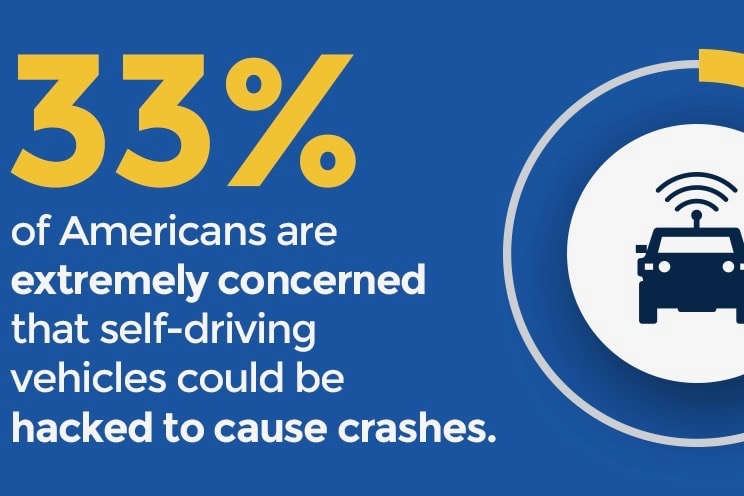
A total of 33% of survey respondents indicated they are extremely concerned that self-driving vehicles could be hacked to cause crashes.
About a third of respondents also indicated they are at least somewhat concerned that hackers of conventional vehicles could cause crashes, disable vehicles or use them for acts of terror, or to gain access to personal data.
“Hacking of vehicles is even a concern for conventional vehicles,” Sivak said. “But hacking of self-driving vehicles with controls is of greater concern, and hacking of self-driving vehicles without controls is an even greater concern.”
The researchers also found that women and older people are more likely to have strong concerns about cybersecurity than others.
Originally posted on Automotive Fleet
More Small Fleet


Developing Budget-Friendly Driver Safety Programs
From driver training and safety meetings to one-on-one coaching and incentive programs, several small fleets share how they have developed a safety culture with their drivers using low- to no-cost resources.
Read More →
Boosting Last-Mile Fleet Uptime, Safety, and Value with AI Vehicle Inspections
AI-powered inspections are transforming last-mile fleets by replacing manual checks with highly accurate automated scans that detect defects in seconds. By giving fleet operations visibility into the daily condition of their vehicles, you can identify trends over the vehicle’s lifecycle that enable improved procurement decisions, route management, driver training and accountability.
Read More →
Five Ways Seat Belts Help Prevent Injuries
There are five ways seat belts protect occupants from injuries, according to the Tennessee Department of Safety and Homeland Security.
Read More →
It’s here: The 2026 Fleet Technology Trends Report
What does AI mean for fleets? Get the answer — and learn other top tech trends.
Read More →
Small Fleets, Big Impact: How Independent Drivers Power Wreaths Across America
Check out how small fleets and independent drivers power Wreaths Across America each December and why their impact matters more than ever.
Read More →
VMS Survey Finds 65% of Small Fleet Managers Run Operations Alone
A new VMS survey shows small fleet managers are stretched thin, with most handling operations solo and eager to adopt digital tools for relief.
Read More →
Tips for Driving Safely on Halloween Night
This video features a reminder from the Connecticut Department of Transportation (DOT) and the Connecticut Police Chiefs Association, urging drivers to prioritize safety this Halloween.
Read More →
AI, Access, and Uptime: VMS’s Next Chapter with David Prusinski
VMS’s new Co-CEO, David Prusinski, shares how an AI-first approach will give small fleets and repair shops the tools to compete like big players.
Read More →
Fleet Managers Share Winter Prep Tips: It's Never Too Early!
Three fleets share best practices to prep vehicles for winter and prevent downtime when the cold sets in.
Read More →