





Related: Expert to Show Marijuana’s Effect on the Brain While Driving
AAA: Marijuana Involved Fatal Crashes on the Rise in Washington
The latest AAA Foundation research found that between 2008 and 2012 — the five-year period before the drug was legal — an estimated 8.8% of Washington drivers involved in fatal crashes were positive for THC.
January 30, 2020
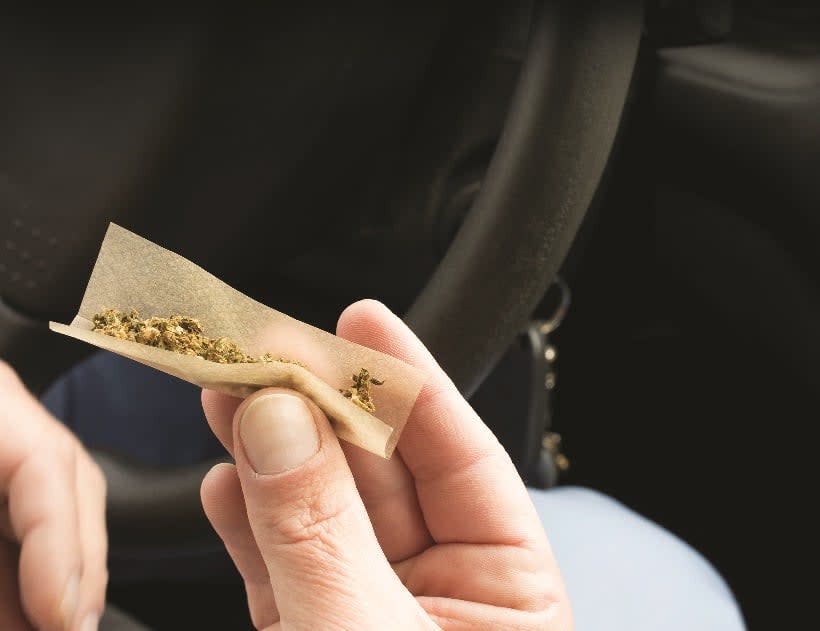
Marijuana use can inhibit concentration, slow reaction times, and cloud judgment.
Photo courtesy of iStockphoto via Jasondoiy.
3 min to read
A significant number of Washington state drivers involved in fatal crashes are testing positive for recent use of marijuana, according to new research from the AAA Foundation for Traffic Safety.
The share of drivers who, after a fatal crash, tested positive for active THC — the drug’s main psychoactive ingredient — has doubled since the state legalized marijuana in December 2012. AAA believes the increase raises important traffic safety concerns for drivers across the country, because recreational marijuana use is now legal in 11 states and Washington, D.C.
The latest AAA Foundation research found that between 2008 and 2012 — the five-year period before the drug was legal — an estimated 8.8% of Washington drivers involved in fatal crashes were positive for THC. That rate rose to 18% between 2013 and 2017.
The average number of THC-positive drivers increased, too. In the five years before legalization, an average of 56 drivers involved in fatal crashes each year were THC-positive. In the five years after legalization, the average jumped to 130. The new numbers bolster the findings of a similar report the AAA Foundation released in 2016. The study did not attempt to determine if marijuana contributed to the crashes included in its latest research. It focused only on the prevalence of drivers who tested positive for active THC.
“This study enabled us to review a full 10-years’ worth of data about the potential impact of marijuana on driving safety — and it raises significant concerns,” Dr. David Yang, executive director of the AAA Foundation for Traffic Safety, said in a statement. “Results from the analysis suggest that legalization of recreational use of marijuana may increase the rate of THC-positive drivers involved in fatal crashes.”
Marijuana use can inhibit concentration, slow reaction times, and cloud judgment. Its effects vary by individual, but a number of studies have concluded that marijuana use impairs the ability to drive safely. Previous research suggests that users who drive high are up to twice as likely to be involved in a crash.
Eleven states and Washington, D.C. have legalized marijuana for both recreational and medical use. Another 22 states have legalized it for medical use only. State legislative sessions for 2020 are getting underway and recreational use is expected to be a popular topic. The legislative interest combined with likely November ballot measures could result in additional states taking a hard look at the issue.
AAA opposes the legalization of marijuana for recreational use because of its inherent traffic safety risks and because of the difficulties in writing legislation that protects the public and treats drivers fairly.
In an attempt to curtail drug-impaired driving, seven states have set legal non-zero, or “per se,” limits on the amount of THC drivers can have in their system. While well-intended, AAA believes imposing such limits is problematic because no data reliably shows what level of THC impairs driving, the chemical’s effects vary by user, and THC testing often cannot be done until hours after a crash.
AAA believes that states that have legalized the drug should not rely solely on an arbitrary legal limit to determine if a driver is impaired.
They should adopt a two-pronged approach that requires:
A positive test for recent marijuana use
Behavioral and physiological evidence of driver impairment
“Simply put, if you’ve used marijuana, don’t drive,” said Jake Nelson, AAA’s director of traffic safety advocacy and research. “And if you plan to drive, don’t use marijuana.”
Last year, a Foundation survey found that nearly 70% of Americans think it’s unlikely a driver will get caught by police for driving shortly after using marijuana. The survey also revealed that an estimated 14.8 million drivers report getting behind the wheel within one hour after using marijuana in the past 30 days.
More Small Fleet


Developing Budget-Friendly Driver Safety Programs
From driver training and safety meetings to one-on-one coaching and incentive programs, several small fleets share how they have developed a safety culture with their drivers using low- to no-cost resources.
Read More →
Sponsored•March 9, 2026
Boosting Last-Mile Fleet Uptime, Safety, and Value with AI Vehicle Inspections
AI-powered inspections are transforming last-mile fleets by replacing manual checks with highly accurate automated scans that detect defects in seconds. By giving fleet operations visibility into the daily condition of their vehicles, you can identify trends over the vehicle’s lifecycle that enable improved procurement decisions, route management, driver training and accountability.
Read More →
Five Ways Seat Belts Help Prevent Injuries
There are five ways seat belts protect occupants from injuries, according to the Tennessee Department of Safety and Homeland Security.
Read More →
Sponsored•January 14, 2026
It’s here: The 2026 Fleet Technology Trends Report
What does AI mean for fleets? Get the answer — and learn other top tech trends.
Read More →
Small Fleets, Big Impact: How Independent Drivers Power Wreaths Across America
Check out how small fleets and independent drivers power Wreaths Across America each December and why their impact matters more than ever.
Read More →
VMS Survey Finds 65% of Small Fleet Managers Run Operations Alone
A new VMS survey shows small fleet managers are stretched thin, with most handling operations solo and eager to adopt digital tools for relief.
Read More →
Tips for Driving Safely on Halloween Night
This video features a reminder from the Connecticut Department of Transportation (DOT) and the Connecticut Police Chiefs Association, urging drivers to prioritize safety this Halloween.
Read More →
AI, Access, and Uptime: VMS’s Next Chapter with David Prusinski
VMS’s new Co-CEO, David Prusinski, shares how an AI-first approach will give small fleets and repair shops the tools to compete like big players.
Read More →
Fleet Managers Share Winter Prep Tips: It's Never Too Early!
Three fleets share best practices to prep vehicles for winter and prevent downtime when the cold sets in.
Read More →