




2015 Silverado Offers Trio of EcoTec3 Engines
The 2015 Chevrolet Silverado offers three EcoTec3 engines with advanced fuel-saving technologies that enable fleets to choose the performance and fuel efficiency that best meets their needs.
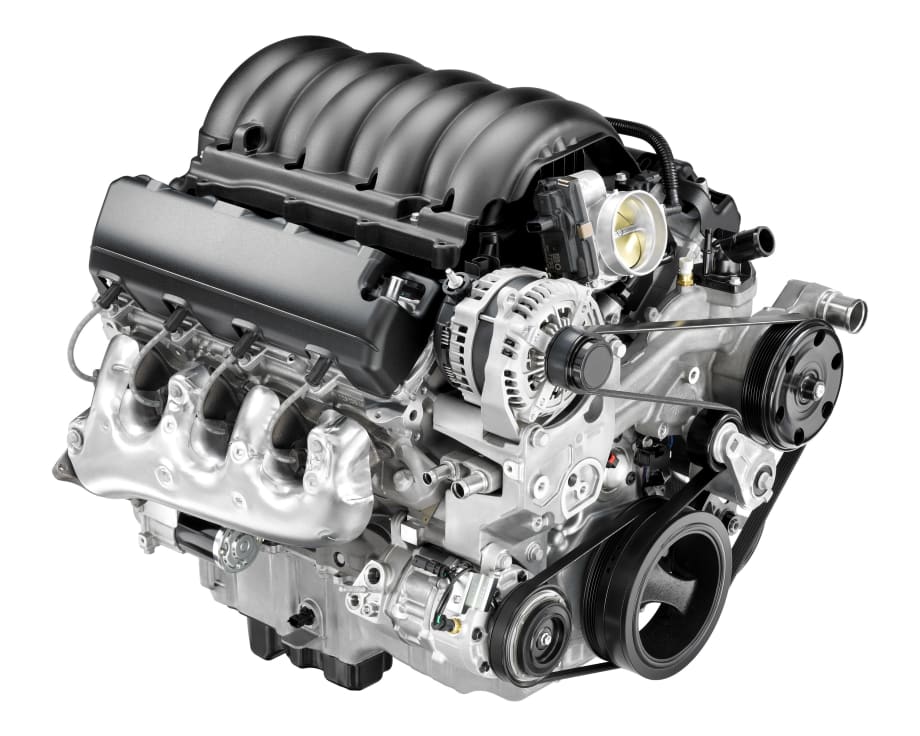
2014 5.3L V-8 EcoTec3 AFM VVT DI (L83) for Chevrolet Silverado and GMC Sierra. (PHOTO: General Motors)
2014 5.3L V-8 EcoTec3 AFM VVT DI (L83) for Chevrolet Silverado and GMC Sierra. (PHOTO: General Motors)
The 2015 Chevrolet Silverado offers three EcoTec3 engines with advanced fuel-saving technologies that enable fleets to choose the performance and fuel efficiency that best meets their needs, according to General Motors, and are:
4.3L V-6; 285 horsepower; 305 lb.-ft. of torque; up to 24 mpg EPA highway
5.3L V-8; 355 horsepower; 383 lb.-ft. of torque; up to 23 mpg EPA highway
6.2L V-8; 420 horsepower; 460 lb.-ft. of torque; up to 21 mpg EPA highway
Every EcoTec3 engine features advanced technologies such as direct fuel injection, continuously variable valve timing, and Active Fuel Management (cylinder deactivation) to provide power, torque, and efficiency across a broad range of operating conditions, according to the automaker.
“The latest Small Block engines are ideally suited to Silverado and to the tough jobs that pickup customers do every day,” said Jordan Lee, global chief engineer and program manager for Small Block engines at General Motors. “We give customers the power and torque of a full-size truck engine when they need it, then use Active Fuel Management and other advanced technologies to seamlessly shift to four-cylinder operation when the truck is under light loads, making the most of fuel efficiency.”
Silverado’s EcoTec3 engines are direct descendants of the original Small Block Chevy V-8, and benefit from more than 60 years – and more than 100 million engines’ worth – of continuous improvement.
The latest Gen 5 Small Block engine has endured tough testing, including a grueling performance durability procedure, where it was subjected to a high-speed/high-load torture session that simulated full-throttle blasts from the equivalent of 0 to 120 mph. With simulated transmission shift points inserted during the high-load test, the engine cycles non-stop between peak torque and peak horsepower for hundreds of hours – the equivalent of thousands of miles.
Testing on the Gen 5 Small Block engines include:
Severe thermal cycle testing, which quickly cycles the engine between extreme cold and hot coolant temperatures to validate the durability of engine components such as the head gaskets, exhaust manifolds and more.
The “hot scuff” test, in which a brand-new engine – or “green” engine to the engineers – is run at wide-open throttle with no break-in period, helping test critical engine parts such as bearings, piston ring sealing and bore scuffing.
Active Fuel Management (AFM) validation, which cycled the engine in and out of the cylinder-deactivating feature hundreds of thousands of times at a variety of engine speeds to ensure the performance and durability of its unique valve lifters.
Additionally, 2015 marks the 10th anniversary of AFM, the cylinder deactivation technology that improves fuel economy in trucks by seamlessly switching to four-cylinder mode to help save fuel during light-load driving. Introduced in 2005, it is currently available on the 2015 Chevrolet Silverado, Tahoe, Suburban, Camaro and Corvette.
Originally posted on Automotive Fleet
More Operations
Family Ties Inside the Fleet Families Building Careers Across Generations
Three fleet families share what it really takes to work together, learn across generations, and keep business from following them home.
Read More →
Shades of Fleet Call for Voices: Fleet's Hidden Heroes
Fleet’s hidden heroes are often the ones keeping everything moving behind the scenes. September’s Shades of Fleet is looking for dispatchers, coordinators, parts specialists, and other support pros to share their stories.
Read More →
Truck Centers, Inc. Celebrates National Truck Driver Appreciation Week with $1,000 Fuel Card Giveaways
During National Truck Driver Appreciation Week, Truck Centers, Inc. is offering customers a chance to fuel up for free. Customers at all Truck Centers locations can enter to win one of four $1,000 fuel cards from Sept. 14 - 18.
Read More →From Our Partners




Fleet Guides, AI Time-Savers, Truck Tariffs & Fuel Strategy Lead the News
This week’s Truck Chat Cheat Sheet covers new fleet vehicle guides, practical AI use cases, U.S.-Canada truck production, mixed-energy strategy, and more.
Read More →
What Fleet Employers Are Missing When Hiring Veterans
What if some of the strongest candidates for fleet are already out there, but their experience is written in a language our industry does not always recognize?
Read More →
Automotive Fleet Opens 2026 Personal Use Survey for Commercial Fleet Managers
Less than two weeks left! Commercial and corporate fleet managers are invited to share how their organizations handle company vehicle personal-use policies, charges, and driver eligibility.
Read More →
What Resilient Fleets Do Differently When Conditions Change
Fleet resilience is about more than reacting to disruption. Lauren Fletcher talks with AP Fleet’s Alex Coveney about flexibility, planning, scaling, and what helps fleets adapt when business conditions shift.
Read More →
If We Want the Next Generation in Automotive, We Have to Give Them a Reason to Care
The automotive industry talks constantly about its workforce shortage. But before we can recruit the next generation, we may need to do a better job giving kids a reason to care about automotive in the first place.
Read More →
Ram ProMaster City Under $40K, Truck Tariffs, and AI Maintenance Lead the News
A sub-$40K commercial van, tariff questions, AI-powered maintenance, and a new EV production strategy headline this week’s Truck Chat Cheat Sheet.
Read More →
Bob Adamsky Shares the Fleet Lessons You Usually Learn the Hard Way
After more than 30 years in fleet, Arrow International’s Bob Adamsky has learned that the job is about far more than vehicles. He shares the lessons he wishes every fleet manager could learn a little earlier.
Read More →