




2014 Fiat 500L, Jeep Cherokee Named Top Safety Picks
In recent IIHS crash tests, the vehicles recorded the highest-possible rating of “good.”
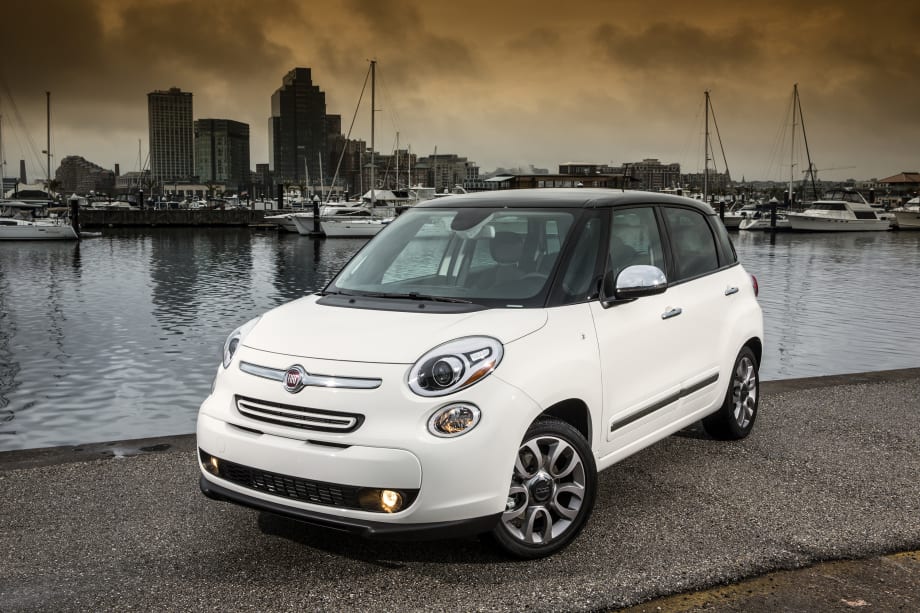
2014 Fiat 500L
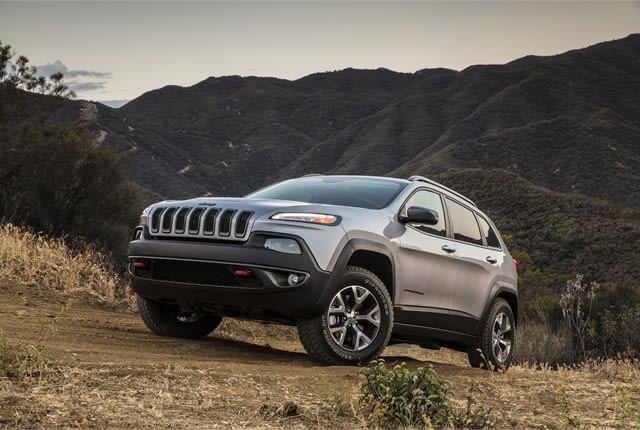
2014 Jeep Cherokee
The Insurance Institute of Highway Safety (IIHS) this week designated both the 2014 model-year Fiat 500L and the 2014 model-year Jeep Cherokee as “Top Safety Picks,” based on their performance in recent crash tests.
In the past 10 months, a total of 14 Chrysler Group vehicles have earned the Top Safety Pick designation. Top Safety Pick testing simulates a side impact, front moderate-overlap impact, roof-crush consistent with a rollover, and a rear collision capable of inducing whiplash. In each of these tests, both the 2014 MY Fiat 500L and Jeep Cherokee recorded the highest-possible rating of “good.”
The other Chrysler Group vehicles that have drawn the Top Safety Pick honor in the past 10 months include:
• The 2013 Fiat 500 minicar
• 2013 Chrysler 300 and Dodge Charger large family cars
• 2013 Chrysler Town & Country and Dodge Grand Caravan minivans
• 2013 Dodge Journey, 2014 Durango and 2014 Jeep Grand Cherokee mid-size SUVs
• 2014 Jeep Patriot small SUV.
2014 Fiat 500L
[PAGEBREAK]
Three additional 2013 vehicles – the Dodge Dart in the IIHS small-car category and the Dodge Avenger and Chrysler 200 sedans among mid-size, moderately priced cars – share not only Top Safety Pick ratings but also the new IIHS Top Safety Pick+ award for superior performance in a small overlap front-crash test.
Among the more than 40 available safety and security features on the all-new 2014 Fiat 500L are technologies designed to mitigate the impact of collisions, such as:
• Advanced multistage air bags, which inflate with a force appropriate to the severity of the impact. The design includes tethers to shape the air bag (standard).
• Full-length side-curtain air bags, which extend protection to all outboard front- and rear-seat passengers. Each side air bag has its own impact sensor that triggers deployment on the side where an impact occurs (standard).
• Driver’s-side knee air bag, which deploys with the driver’s advanced multistage air bag. Located below the instrument panel, this air bag is designed to properly position the occupant during impact and offer additional lower leg protection (standard).
• Seat-mounted side pelvic-thorax air bags, which provide enhanced protection to the driver and front outboard passenger in certain impacts. Each side air bag has its own impact sensor that triggers deployment on the side where an impact occurs (standard).
• Reactive head restraints, which deploy in the event of a rear collision by minimizing the gap between the heads of the driver and front passenger and their respective head restraints (standard).
• Three second-row head restraints (standard).
• Seat belt pretensioners, which remove slack from the seat belt system to reduce forward movement of the occupant’s body, thereby maximizing the system’s efficiency. They are activated by impact sensors (standard).
• Digressive load limited retractors, which regulate force exerted on the occupant by the seat belt and then gradually release seat belt webbing in a controlled manner. The system features a digressive load limiter for the driver and the front passenger (standard).
• Three-point seat belts for front occupants. All rear-seating positions have lap and shoulder belts (standard).
• Energy management system of three front load paths designed from high-strength steel manage vehicle crush and minimize cabin intrusion.
• Crumple zones designed to deform during an accident to absorb energy from an impact, which decreases transfer of that energy to occupants.
• Safety cage body structure, which protects occupants by managing and controlling energy in the event of an impact (standard).
• Side guard door beams, which provide occupant protection during a side impact.
• Daytime running lamps for additional forward illumination. The all-new 2014 Jeep Cherokee boasts more than 70 available safety and security features, many of which – such as the Cherokee’s 65-percent content-ratio of advanced-technology steel and 10 standard air bags – help protect in the event of collision.
[PAGEBREAK]
The 2014 Jeep Cherokee safety features include:
• Advanced multistage driver and front passenger air bags, which inflate with force appropriate to the severity of the impact. They meet FMVSS 208 advanced air bag requirements for smaller, out-of-position occupants.
• All-row full-length side-curtain air bags, which extend protection to all outboard front- and rear-seat passengers. Housed in the headliner above the side windows, each side air bag has its own impact sensor that triggers deployment on the side where an impact occurs.
• Front-seat and rear-seat-mounted side pelvic thorax bags, which provide enhanced protection to the driver and front and rear outboard passenger in certain impacts. Each side air bag has its own impact sensor that triggers deployment on the side where an impact occurs.
• Driver’s-side knee air bag deploys with the advanced multistage driver air bag. Located below the instrument panel, this air bag is designed to properly position the occupant during impact and offer additional lower leg protection.
• Front-passenger knee air bag deploys with the advanced multistage front passenger air bag. Located below the instrument panel, this air bag is designed to properly position the occupant during impact and offer additional lower leg protection.
• Front and rear crumple zones comprising specially formed structural members that absorb energy in a collision, helping protect the occupant cabin.
• Safety cage body structure to help protect occupants by managing and controlling energy in the event of an impact.
• Side guard door beams, consisting of reinforcement beams inside the doors that increase occupant protection in a side collision.
• Front seat-belt adaptive/active load limiters, which are designed to optimize chest loading in an impact event.
• Reactive head restraints that deploy in the event of a rear collision. They are designed to reduce injuries by minimizing the gap between the head restraint and the occupant’s head.
• Front seat-belt pretensioners, which remove slack in the seat belt system, thereby reducing the forward movement of the occupant’s head and torso. They are activated by impact sensors.
• Energy-absorbing steering column, which uses two hydroformed coaxial tubes that can move relative to each other, allowing the column to move forward for enhanced energy absorption during a crash. The feature employs a calibrated bending element that deforms during column stroke for optimal energy management.
Originally posted on Automotive Fleet
More Small Fleet


Developing Budget-Friendly Driver Safety Programs
From driver training and safety meetings to one-on-one coaching and incentive programs, several small fleets share how they have developed a safety culture with their drivers using low- to no-cost resources.
Read More →
Boosting Last-Mile Fleet Uptime, Safety, and Value with AI Vehicle Inspections
AI-powered inspections are transforming last-mile fleets by replacing manual checks with highly accurate automated scans that detect defects in seconds. By giving fleet operations visibility into the daily condition of their vehicles, you can identify trends over the vehicle’s lifecycle that enable improved procurement decisions, route management, driver training and accountability.
Read More →
Five Ways Seat Belts Help Prevent Injuries
There are five ways seat belts protect occupants from injuries, according to the Tennessee Department of Safety and Homeland Security.
Read More →
It’s here: The 2026 Fleet Technology Trends Report
What does AI mean for fleets? Get the answer — and learn other top tech trends.
Read More →
Small Fleets, Big Impact: How Independent Drivers Power Wreaths Across America
Check out how small fleets and independent drivers power Wreaths Across America each December and why their impact matters more than ever.
Read More →
VMS Survey Finds 65% of Small Fleet Managers Run Operations Alone
A new VMS survey shows small fleet managers are stretched thin, with most handling operations solo and eager to adopt digital tools for relief.
Read More →
Tips for Driving Safely on Halloween Night
This video features a reminder from the Connecticut Department of Transportation (DOT) and the Connecticut Police Chiefs Association, urging drivers to prioritize safety this Halloween.
Read More →
AI, Access, and Uptime: VMS’s Next Chapter with David Prusinski
VMS’s new Co-CEO, David Prusinski, shares how an AI-first approach will give small fleets and repair shops the tools to compete like big players.
Read More →
Fleet Managers Share Winter Prep Tips: It's Never Too Early!
Three fleets share best practices to prep vehicles for winter and prevent downtime when the cold sets in.
Read More →