




2013-MY Chevrolet Malibu Continues to Attract High Safety Scores Worldwide
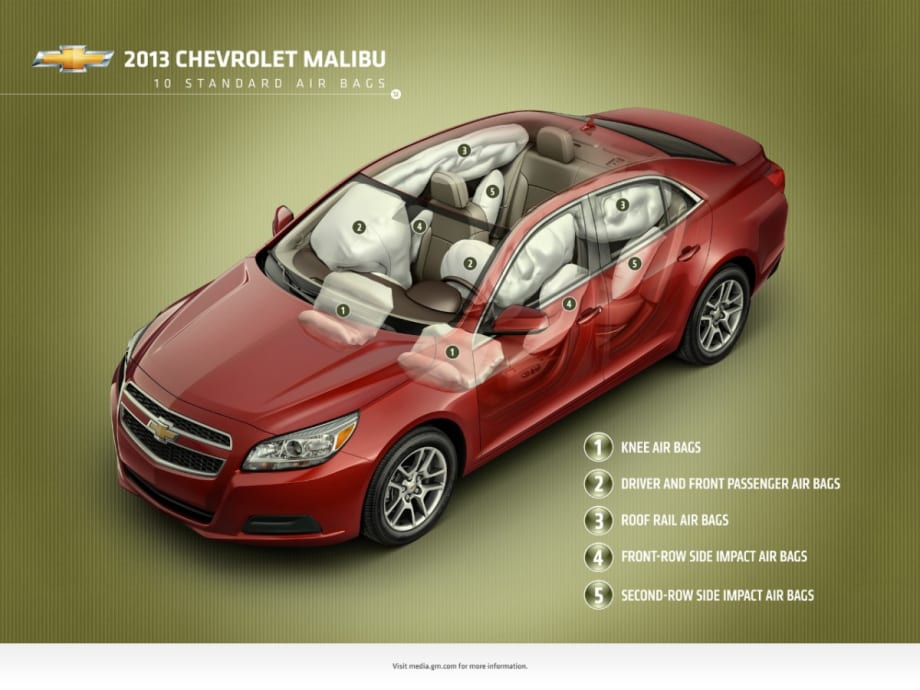
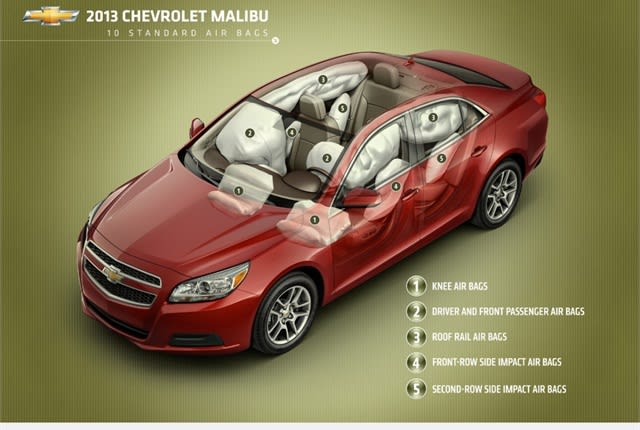
The midsize sedan offers a wide range of standard and available safety features, including pelvic/thorax side-impact air bags for all outboard occupants -- front and rear.
The 2013 Chevrolet Malibumidsize sedan recently added to its list of top safety rankings around the world, attracting a maximum five-star rating from the China New Car Assessment Program.
Chevrolet engineered the Malibu to meet occupant safety requirements of customers in more than 100 countries. The vehicle earlier received the highest ratings for safety in independent crash tests conducted in Europe, North America, South Korea and Australia.
In the U.S., Malibu was the first 2013 midsize car to earn a 5-Star Overall Vehicle Score from the National Highway Traffic Safety Administration and a 2013 Top Safety Pick by the Insurance Institute for Highway Safety. Both are the highest ratings possible.
The Malibu offers these standard and available safety features:
Dual-stage driver and front passenger air bags
Pelvic/thorax side-impact air bags for all outboard occupants, front and rear
Driver and passenger knee air bags
Roof rail air bags with rollover protection
Available second-row head/thorax side-impact air bags
Available lane departure warning system with forward collision alert
Available rearview camera system.
In the event of a crash, Malibu provides a structure that is 20% stiffer than the model it replaced. It comprises 65% high-strength and ultra-high-strength steels, full-length frame rails, a reinforced safety cage and impact-absorbing crush zones. This structure is designed to absorb the energy created in a crash and help preserve the structural integrity of the occupant compartment.
Malibu has three powertrains including the Malibu Eco, which uses fuel-saving eAssist technology to enable EPA-estimated fuel economy of 25 city / 37 highway. Malibu also offers a fuel-efficient and powerful Ecotec 2.5L four-cylinder engine and an Ecotec 2.0L turbo that makes 259 horsepower and 260 lb-ft of torque.
Originally posted on Automotive Fleet
More Small Fleet


Developing Budget-Friendly Driver Safety Programs
From driver training and safety meetings to one-on-one coaching and incentive programs, several small fleets share how they have developed a safety culture with their drivers using low- to no-cost resources.
Read More →
Boosting Last-Mile Fleet Uptime, Safety, and Value with AI Vehicle Inspections
AI-powered inspections are transforming last-mile fleets by replacing manual checks with highly accurate automated scans that detect defects in seconds. By giving fleet operations visibility into the daily condition of their vehicles, you can identify trends over the vehicle’s lifecycle that enable improved procurement decisions, route management, driver training and accountability.
Read More →
Five Ways Seat Belts Help Prevent Injuries
There are five ways seat belts protect occupants from injuries, according to the Tennessee Department of Safety and Homeland Security.
Read More →
It’s here: The 2026 Fleet Technology Trends Report
What does AI mean for fleets? Get the answer — and learn other top tech trends.
Read More →
Small Fleets, Big Impact: How Independent Drivers Power Wreaths Across America
Check out how small fleets and independent drivers power Wreaths Across America each December and why their impact matters more than ever.
Read More →
VMS Survey Finds 65% of Small Fleet Managers Run Operations Alone
A new VMS survey shows small fleet managers are stretched thin, with most handling operations solo and eager to adopt digital tools for relief.
Read More →
Tips for Driving Safely on Halloween Night
This video features a reminder from the Connecticut Department of Transportation (DOT) and the Connecticut Police Chiefs Association, urging drivers to prioritize safety this Halloween.
Read More →
AI, Access, and Uptime: VMS’s Next Chapter with David Prusinski
VMS’s new Co-CEO, David Prusinski, shares how an AI-first approach will give small fleets and repair shops the tools to compete like big players.
Read More →
Fleet Managers Share Winter Prep Tips: It's Never Too Early!
Three fleets share best practices to prep vehicles for winter and prevent downtime when the cold sets in.
Read More →