




Work Truck 2025 Forecast: Operational Challenges and Trends
From supply chain shifts to fleet outsourcing, 2025 is shaping up to redefine fleet operations. Are you ready for these key trends and challenges?

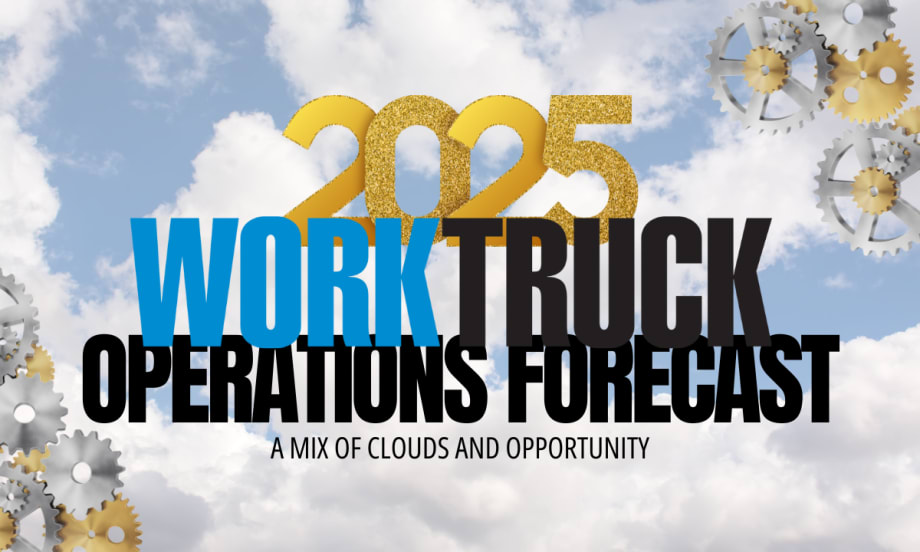
Success in 2025 will require fleet managers to stay agile, monitor economic conditions, address labor shortages, and evaluate third-party service providers to ensure alignment with their goals.
Photo: Work Truck
The operational side of fleet management is no stranger to change, and 2025 is shaping up to be no different. From evolving upfitting capacity to the rising reliance on outsourcing, fleet managers face new challenges that demand creativity and adaptability. Economic uncertainty, labor shortages, and shifting production schedules add complexity to an already dynamic industry.
In this second installment of our three-part 2025 forecast series, we’re diving into the operational trends set to shape the year ahead. We’ll explore how supply chain dynamics and upfitting are evolving and why outsourcing fleet management services is becoming a go-to solution for many organizations.
Buckle up: it’s time to tackle the road ahead with confidence.
Upfitting and Supply Chain Trends Signal a New Horizon
Upfitting capacity and production schedules are expected to stabilize heading into 2025, offering opportunities and challenges.
“Now, as we head into 2025, upfit capacity and production schedules are poised to continue to improve. Looking ahead, upfit production volume may wane slightly in mid-2025,” shared Ted Davis, SVP & COO of Fleet Management Upfitting at Holman. “Higher vehicle pricing and economic uncertainty led several vocational fleet operators to lower their order volume during the second half of 2024. This slight downturn in ordering will likely lead to pockets of open upfit production capacity in the second and third quarters of the year ahead.”
This pause in production could benefit fleets requiring highly complex builds, which often face longer lead times.
Davis noted, “The open production capacity may positively impact vocational fleet operators who traditionally have highly complex builds that require longer lead times.”
Looking ahead, the impending 2027 emissions deadline is already influencing fleet purchasing strategies, as operators work to stay ahead of regulatory shifts.
“As we approach the 2027 emissions deadline, there is an anticipated prebuy that will affect the demand on trucks and bodies,” said Mike Willey, Assistant General Manager at PacLease. “Fleets have already begun to strategize to ensure their needs are met prior to the deadline, setting their fleets up for future success.”
The supply chain is also stabilizing, bringing some relief to fleet operators, but potential adjustments in manufacturing could impact inventory levels in 2025.
“Following the supply chain disruptions and COVID-related shutdowns in 2020, inventory of work trucks and vans has slowly started to rebound,” said Mac Molli, account supervisor for Commercial Truck Trader. “Both medium- and heavy-duty vehicle supply saw growth in 2024, with production increasing in the third and fourth quarters. However, according to ACT Research, there could be a reduction in manufacturing in 2025, which would stabilize the market and reduce excess capacity.”
In addition to production challenges, regulatory shifts are creating significant concerns for fleet operators trying to make strategic purchasing decisions.
“The uncertainty surrounding regulations, whether at the state or federal level, will make it difficult for fleets to determine if pre-buys are necessary to meet future compliance needs,” explained Shaun Skinner, president of Isuzu Commercial Truck of America, Inc.
The industry continues to grapple with labor shortages, but efforts are underway to prepare for an anticipated production increase later in the year.
“In anticipation of an uptick in production volume in late 2025, Holman is diligently working to hire and train skilled technicians to continue strengthening our workforce,” Davis explained.
But, the driver shortage remains a critical concern for fleet operators heading into 2025.
“The commercial trucking industry’s ongoing driver shortage is the third most important industry issue according to stakeholders surveyed by the American Transportation Research Institute (ATRI) in 2024,” Molli explained. “According to ATRI, there are an estimated 60,000 driver job openings, and this number is expected to grow as freight demand increases and aging drivers look to retirement. Other factors like driver retention, low wages, and lack of skills also affect this driver shortage.”
Trends Weather Forecast: Partly Cloudy. Stabilization is on the horizon, but economic uncertainty and labor shortages remain key challenges.
Outsourcing Fleet Management Gains Momentum
Outsourcing is becoming an increasingly popular solution for fleet operators aiming to streamline operations and reduce costs.
Tony Yankovich, Director of Fleet Consulting at RTA, said, “To streamline operations and reduce headcount on organizational charts, a growing number of companies, government agencies, school districts, and other entities are turning to third-party service providers to manage their fleets.”
Yankovich outlined the range of services these providers offer, including fleet renewal plans, vehicle acquisition assistance, utilization studies, predictive analytics, performance reporting, risk management, and comprehensive fleet services.
“This outsourcing model offers several advantages. Organizations can benefit from the specialized expertise of fleet management professionals while reducing the administrative burden and overhead costs associated with maintaining an internal team,” he added.
Another advantage is access to advanced technologies and analytics that enhance decision-making and operational performance.
However, Yankovich cautioned, “As this trend gains momentum, organizations must evaluate potential service providers carefully. Factors such as industry experience, technology capabilities, and alignment with organizational goals should guide the selection process.”
For fleet managers considering outsourcing, the key is to weigh the benefits of expertise and efficiency against the importance of maintaining control over certain aspects of fleet operations.
Trends Weather Forecast: Mostly Sunny. Outsourcing provides significant opportunities but requires careful planning and vetting of service providers.
Opportunities and Challenges Define 2025’s Road Ahead
Challenges and opportunities will define the operational landscape in 2025. Upfitting capacity and production schedules are stabilizing, offering relief to fleets with complex build needs, while outsourcing fleet management presents a strategic option for optimizing resources.
Success in 2025 will require fleet managers to stay agile, monitor economic conditions, address labor shortages, and evaluate third-party service providers to ensure alignment with their goals.
Want more? Check out the full series!
Dive into the full Work Truck 2025 Forecast series to gain a complete view of the trends shaping fleet management in the year ahead:
Tech Advancements Driving Fleet Transformation: Explore how AI, telematics, and data privacy are revolutionizing fleet operations and setting the stage for 2025. Read more!
Regulatory and Sustainability Challenges in 2025: Uncover how emissions compliance, alternative fuels, and infrastructure innovations influence fleet strategies and long-term goals. Read more!
How is your fleet preparing for operational challenges in 2025? Share your insights in the comments below!
More Operations
Family Ties Inside the Fleet Families Building Careers Across Generations
Three fleet families share what it really takes to work together, learn across generations, and keep business from following them home.
Read More →
Shades of Fleet Call for Voices: Fleet's Hidden Heroes
Fleet’s hidden heroes are often the ones keeping everything moving behind the scenes. September’s Shades of Fleet is looking for dispatchers, coordinators, parts specialists, and other support pros to share their stories.
Read More →
Truck Centers, Inc. Celebrates National Truck Driver Appreciation Week with $1,000 Fuel Card Giveaways
During National Truck Driver Appreciation Week, Truck Centers, Inc. is offering customers a chance to fuel up for free. Customers at all Truck Centers locations can enter to win one of four $1,000 fuel cards from Sept. 14 - 18.
Read More →
Fleet Guides, AI Time-Savers, Truck Tariffs & Fuel Strategy Lead the News
This week’s Truck Chat Cheat Sheet covers new fleet vehicle guides, practical AI use cases, U.S.-Canada truck production, mixed-energy strategy, and more.
Read More →
What Fleet Employers Are Missing When Hiring Veterans
What if some of the strongest candidates for fleet are already out there, but their experience is written in a language our industry does not always recognize?
Read More →
Automotive Fleet Opens 2026 Personal Use Survey for Commercial Fleet Managers
Less than two weeks left! Commercial and corporate fleet managers are invited to share how their organizations handle company vehicle personal-use policies, charges, and driver eligibility.
Read More →
What Resilient Fleets Do Differently When Conditions Change
Fleet resilience is about more than reacting to disruption. Lauren Fletcher talks with AP Fleet’s Alex Coveney about flexibility, planning, scaling, and what helps fleets adapt when business conditions shift.
Read More →
If We Want the Next Generation in Automotive, We Have to Give Them a Reason to Care
The automotive industry talks constantly about its workforce shortage. But before we can recruit the next generation, we may need to do a better job giving kids a reason to care about automotive in the first place.
Read More →
Ram ProMaster City Under $40K, Truck Tariffs, and AI Maintenance Lead the News
A sub-$40K commercial van, tariff questions, AI-powered maintenance, and a new EV production strategy headline this week’s Truck Chat Cheat Sheet.
Read More →
Bob Adamsky Shares the Fleet Lessons You Usually Learn the Hard Way
After more than 30 years in fleet, Arrow International’s Bob Adamsky has learned that the job is about far more than vehicles. He shares the lessons he wishes every fleet manager could learn a little earlier.
Read More →