Truck Chat’s Fleet 101 series talked with Ex-Guard Industries to unpack the facts behind grille guards and why vocational fleets are increasingly adopting them.
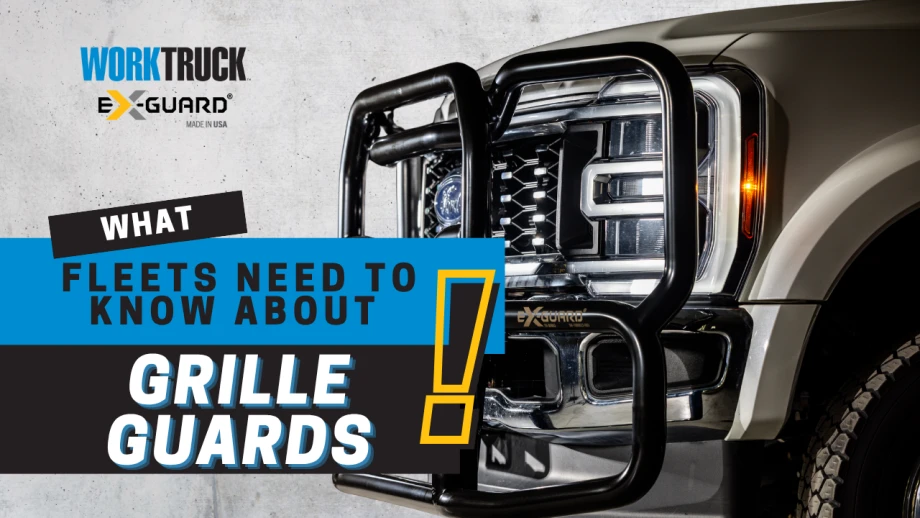
Truck Chat’s Fleet 101 series breaks down what fleets need to know about grille guards, with real-world advice from Ex-Guard.
Photo: Work Truck | Ex-Guard Industries
5 min to read
Grille guards are more than just a rugged aesthetic. For work truck fleets, they represent a practical investment in uptime, asset protection, and overall operating efficiency. With so many options available — bull bars, push bars, brush guards, bumper replacements — it’s important for fleet professionals to clearly understand the differences and select the right protection for their vehicles.
Ad Loading...
Truck Chat’s Fleet 101 series talked with Adam Roorda, head of marketing for Ex-Guard Industries, who helped unpack the facts behind grille guards and why vocational fleets are increasingly adopting them.
Ad Loading...
Defining the Differences
Grille guards are designed to protect a truck’s front end from both daily dings and more serious impacts like animal strikes or collisions. These units shield critical components, including bumpers, radiators, headlights, and fog lights, from costly damage.
Roorda explained, “What you'll find is a lot of different descriptions. We have cattle catchers, bull bars, grille guards, and bumper replacements. It gets confusing, but there are real differences.”
Brush Guards are lightweight and primarily keep brush or debris out of the radiator. They offer minimal structural protection.
Bull Bars typically only protect the center of the front end, often just the license plate area.
Push Bars are small and narrow, most often used by law enforcement, offering limited coverage and low collision protection.
Bumper Replacements are extremely heavy-duty solutions, designed for the most severe impacts, but can be expensive and significantly increase vehicle weight.
Grille guards fall into the middle ground. They provide strong protection against everyday fleet risks without overloading the front end or requiring extensive modification.
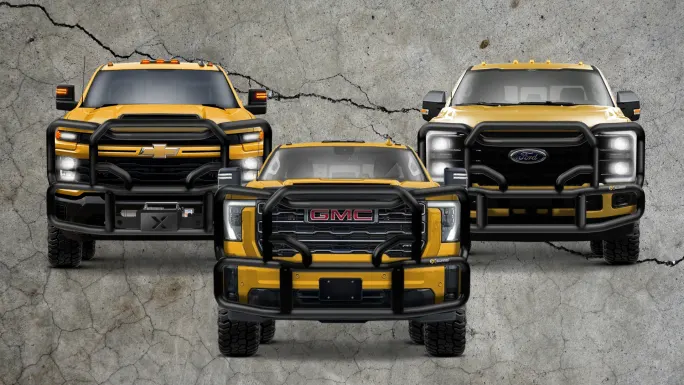
Built tough for work crews — grille guards shown on Chevrolet, GMC, and Ford heavy-duty trucks deliver serious front-end defense and durability.
Photo: Work Truck | Ex-Guard Industries
Mitigating Damage and Downtime
The visible benefit is impact protection, but grille guards also help reduce costs tied to downtime, lost deliveries, and vehicle turnover delays. Ex-Guard takes a holistic approach by assisting fleets to track and analyze front-end incident patterns.
“It’s not just about protection,” Roorda said. “We go in and talk with fleets about what’s causing the damage and help them find the root cause. We’ve seen fleets reduce truck downtime by up to 80% and front-end part replacement costs by 97%.”
Ad Loading...
That kind of reduction doesn’t just save money. It keeps vehicles on the road, maintains service schedules, and improves resale value. A vehicle with a visibly intact grille guard gives confidence to both the seller and the buyer.
Installation and Fitment Considerations
Most Ex-Guard grille guards mount using a vehicle’s existing tow hook locations and standard tools found in any work truck maintenance shop. No bumper or hood removal is required in most cases, and installation time is about 45 to 90 minutes.
“There are a few scenarios where you need to loosen the bumper or trim some plastic,” Roorda explained. “But generally, it’s straightforward. Once you’ve done it once, an experienced tech can do the job in about half an hour.”
Installation isn’t just about speed, it’s also about safety. Roorda emphasized the importance of following torque specifications. “If there’s ever a problem, it usually comes back to someone who didn’t torque it properly. These are impact-rated guards, and they have to be mounted to spec.”
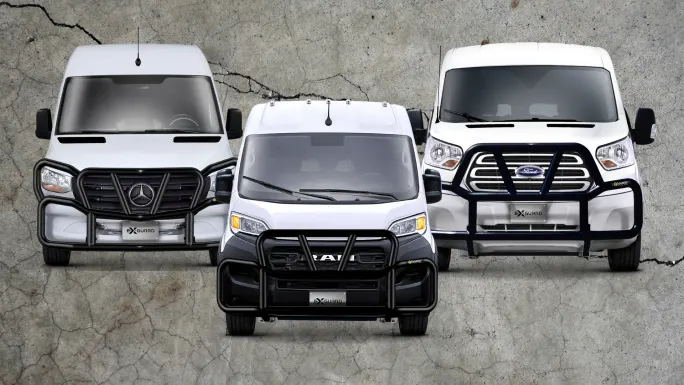
Grille guards for vans are gaining traction — shown here on Mercedes-Benz, Ram, and Ford models, offering strong front-end protection for light-duty fleets.
Photo: Work Truck | Ex-Guard Industries
Built to Last for Working Fleets
Ex-Guard’s grille guards are built from 11-gauge high-tensile steel and finished with a proprietary 3-millimeter Evercoat PVC coating. Unlike thinner powder coatings used in many imported products, this finish resists corrosion and retains durability over time—even after repeated impacts.
Ad Loading...
“It’s not uncommon to see our guards still going strong after 10 or 15 years,” said Roorda. “If the coating stays intact and there’s no major impact, they keep performing and don’t rust out like thinner powder-coated options.”
Fleet managers can expect performance, not polish. “Our happiest customers have the roughest-looking guards. They’re scratched and dinged because they’ve done their job. They’ve protected the vehicle.”
Designed for Modern Vehicles
Today’s work trucks are packed with technology, and Ex-Guard designs its products to accommodate sensors, radar systems, adaptive cruise control, and other ADAS features. Each model goes through extensive fitment testing using OEM schematics and live vehicle trials.
“We have to test-run a lot of vehicles,” Roorda said. “Sometimes we think we’re done, and then we realize another system needs clearance. It’s just part of the process, and it’s why we’re very intentional about rollout timelines.”
The company works closely with OEMs, upfitters, and large fleets to ensure compatibility, even with rapidly evolving vehicle models.
Ad Loading...
Minimal Impact on Work Truck Performance
Fleet professionals often ask about the weight and fuel impact of front-end guards. Most Ex-Guard units fall between 100 and 150 pounds, which has a negligible effect on fuel economy or handling for light- and medium-duty trucks.
“The weight is comparable to carrying a passenger or turning up the A/C a couple of notches,” Roorda noted. “It’s not the same as adding a 600-pound bumper replacement.”
The tubular design also keeps drag low. “Our guards don’t significantly affect aerodynamics. For pickups, the impact on fuel is essentially zero.”
One of the biggest benefits of PVC-coated grille guards is the low maintenance requirement. In most cases, regular washing is all that’s needed, even after an animal strike or minor incident.
“Just wash and go,” Roorda said. “There’s no rust to worry about, and no special coatings to reapply. If a fleet is operating on really rough terrain, they might check torque now and then, but otherwise it’s pretty much maintenance-free.”
Ad Loading...
What’s Ahead for Ex-Guard?
Ex-Guard is expanding beyond heavy-duty applications into light-duty trucks and vans, including models like the Ford F-150, Chevrolet and GMC 1500s, Ram pickups, and Sprinter vans. The company is actively developing new fitments based on fleet feedback.
“We get dozens of requests a day,” Roorda said. “If you don’t see your model yet, reach out. We may already be working on it.”
As steel prices fluctuate and vehicle tech continues to evolve, Ex-Guard remains focused on building durable, American-made products that offer consistent protection without compromising compatibility or performance.
The Bottom Line
Grille guards offer more than physical protection. They reduce operational costs, improve vehicle uptime, protect resale value, and support driver safety. For fleets looking to strengthen their vehicle protection strategy, these guards represent a smart investment with fast payback potential.
“If you take a few hours and work with us to understand what’s causing your front-end damage,” Roorda said, “you can significantly reduce those incidents. And once you do, you start to see the savings and the benefits add up fast.”
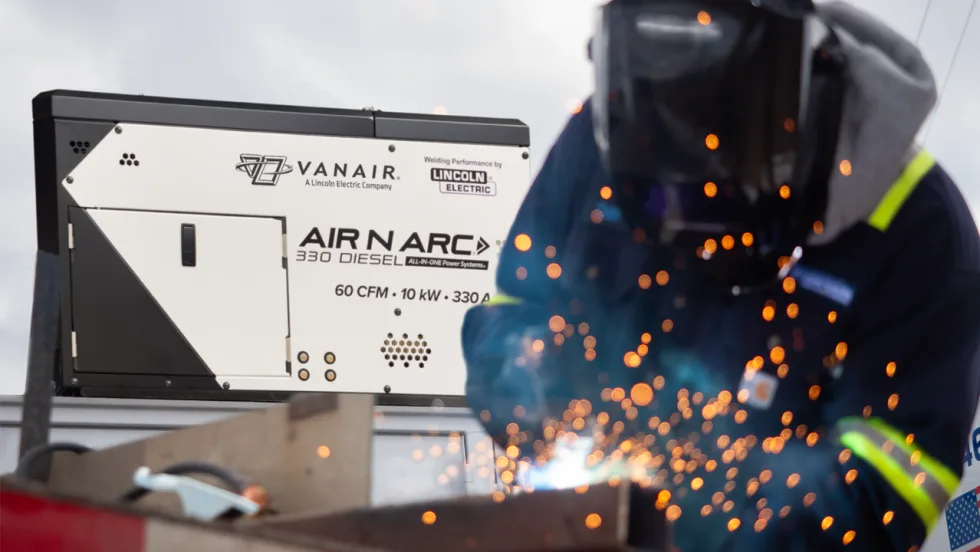
The Air N Arc 330 Diesel 60 CFM from Vanair consolidates a welder, generator, rotary screw air compressor, battery booster, battery charger, and EV charger into a single 750-pound enclosure driven by one 24.8-horsepower Kubota diesel engine.
Buyers Products has been awarded a Sourcewell contract for a wide range of winter maintenance equipment and accessories, including snowplows, municipal plow systems, wing plows, spreaders, and more.
Hilltip’s new SnowStriker SFT Flex expandable box plow features hydraulically extendable sections that allow operators to adapt the clearing width to changing conditions and applications on the go.
American Rheinmetall received an 18-month U.S. Army contract to deliver autonomous, hybrid-powered uncrewed ground vehicles. Harbinger is providing the truck platform for those vehicles.
Choosing the right truck body can have a major impact on loading efficiency, cargo protection, downtime, and long-term operating costs. Here’s how dry vans, platforms, and curtainsiders compare, plus what fleets should consider before spec’ing their next truck.
Think your upfit deserves industry recognition? Enter the 2027 Work Truck Upfit Package of the Year Awards before the Sept. 30 deadline. There is less than a month left to get your submissions in!
Reading Truck Equipment and Masterack have integrated operations to create one of North America's largest and most comprehensive commercial vehicle upfit organizations.
Kinedyne’s new Heavy Duty Logistic Shoring Strap features a patent-pending four-point design to deliver greater cargo stability, increased strength, and easier handling for rolling and shifting freight.
Stellar Industries’ new bumper for the NZT Series Hooklifts come in two capacity options: the 20K, designed for Class 3 – 6 chassis with a 20,000-pound pull capacity, and the 90K, built for Class 7 and 8 chassis with a 90,000-pound pull capacity.
Maxon Lift, a liftgate manufacturer since 1957, received the Wabash Platinum Award for supply chain performance in 2025. Each year, Wabash presents awards to top suppliers for excellence in supply chain performance.