




Where Do You Get Your Fleet Information?
It’s a simple question, but a complex answer. Print publications, online newsletters, industry conferences, fleet management company resources, and factory reps and OEM websites form key components of the answer.


A discussion about where fleet managers get their information, moderated by AF Editor Mike Antich (left wearing red tie), included fleet professionals (clockwise from left) Mike Ahart, Dean Foods; Mike Sims, LDS Church; Alicia Hammond, Ambius; Lee Miller, Boehringer Ingelheim; Theresa Belding, Forest Pharmaceuticals; Donna Bibbo, Novo Nordisk; John Dmochowsky, Kraft Foods; and Bret Watson, Sprint.

A discussion about where fleet managers get their information, moderated by AF Editor Mike Antich (left wearing red tie), included fleet professionals (clockwise from left) Mike Ahart, Dean Foods; Mike Sims, LDS Church; Alicia Hammond, Ambius; Lee Miller, Boehringer Ingelheim; Theresa Belding, Forest Pharmaceuticals; Donna Bibbo, Novo Nordisk; John Dmochowsky, Kraft Foods; and Bret Watson, Sprint.
The question was straightforward: Where do you get the information you need to manage your fleet? The answer was surprisingly complex — with print publications, the Internet, and old-fashioned face-to-face networking forming critical parts of the answer.
Automotive Fleet sat down to discuss their go-to sources for fleet information with:
● Mike Ahart, vice president, transportation, Dean Foods Company.
● Theresa Belding, senior manager - Fleet Services, Forest Pharmaceuticals.
● Donna Bibbo, CAFM, manager, Fleet and Travel, Novo Nordisk.
● John Dmochowsky, CAFM, sales fleet manager, Kraft Foods, Inc.
● Alicia Hammond, CAFM, fleet administrator, Ambius.
● Lee Miller, senior manager, fleet services, Boehringer Ingelheim Pharmaceuticals Inc.
● Mike Sims, global fleet planning, acquisition, and resale manager, LDS Church.
● Bret Watson, CAFM, national fleet manager, Sprint Nextel Corporation.
What resulted was an eye-opening, lively discussion.
AF: What are your main sources of fleet information?
HAMMOND: I rely on publications and OEMs. I read Automotive Fleet; that’s probably the one I read the most. I also work with my fleet leasing company and the guys in the truck department. They’re a great source of information for me, because they work with customers who have similar applications and similar needs. Also, I have found my manufacturer reps to be extremely valuable resources.
WATSON: The two sources I use primarily are Automotive News and Bobit Business Media. I really like Automotive News because you can find out what’s going on with manufacturers in advance, so I read it cover-to-cover. The other magazines I read every month from cover to cover are the Bobit publications.
When it comes to new vehicle information, it would probably be OEM websites.
AHART: I have Class 7 and 8 trucks and passenger vehicles. On the heavy-duty side, I rely on the OEMs to provide me with information about vehicle changes, especially with the engine changes that have occurred over the past couple of years. On the passenger side, I rely on national account representatives from the manufacturers and the leasing company. I talk to them about data they’ve accumulated from fleets running similar vehicles and their cost of ownership. I also read industry publications to get additional information.
MILLER: My sources of fleet information are the publications, online, especially, because online comes out quicker than in print. As soon as news breaks, I get push e-mails from Automotive News, up to twice daily. It’s almost too much at times, but sometimes there’s critical information in there.
I, too, have trucks in the fleet. And, those become an acute problem, because so many things change, so I rely not only on the manufacturer’s rep, but on the leasing company. I use them as a resource to find out the bottom line and where I am. Then, I educate myself by trying to actually place an order to build a unit. Trucks are so complicated; you really have to go through a dry run to see what options might require another.
HAMMOND: I wanted to mention that Automotive Fleet’s survey of the “Top 300 Commercial Fleets” is really valuable. We can see where we are in position to our competition, and compare the number of trucks on the road we need to do our job.
AF: How do your companies place their vehicle orders?
WATSON: I place all my orders online. I order vehicles from our own select dealer group, so I order dealer direct.
BELDING: I rely on actual meetings with the OEM representative, our manufacturing representative, their websites, and actually going in and building the vehicle just so you know what may have changed. For instance, maybe there is an option you didn’t know about that could add value.
BIBBO: In addition to what everybody has said, I also rely on PC Carbook. I do a lot of building cars and looking specifically at their different packages.
AF: How valuable are OEM websites to your day-to-day operation?
MILLER: I don’t really go to them that often. If I can’t find the information on the FMC website, then I go to the OEM website. The manufacturer websites are difficult to maneuver for spec information; it can be hard to find. It’s not really user-friendly from a fleet perspective.
BIBBO: Usually you can’t build an order. I go to them infrequently. Also, I can’t remember my user ID and password and end up locking myself out.
MILLER: I tend to go there if one of my drivers has called me saying they went to the manufacturer’s website and saw an option they are interested in. So, then I need to go back and look at it, to find out “what did they really see?” Did they misunderstand what they were looking at (which is usually the case)? That’s why I go to the website.
WATSON: I want to add to what Donna [Bibbo] said, because PC Carbook is the tool I use primarily to spec my vehicles. It is a Chrome Data company. What I really like about PC Carbook, for those of us that have upfit trucks, is that I can add in my dealer upfit for what it costs, and my CPA adjustment. Also, if you’re spec’ing trucks, I can look at the gross vehicle weights. It has a comparison tool, so I can do all the comparisons, and look at different specifications. I go to the manufacturer fleet websites all the time, because sometimes what I want to do is not found in PC Carbook. Sometimes, PC Carbook lags and it isn’t 100-percent accurate.
When you log into the manufacturers’ website as a fleet user, you can get the latest information, so if there’s a spec that has changed, it will be there first. I also go there because if I’m looking for color codes, the manufacturer websites have the best color chips, I can really see what the color’s going to look like. If it’s a new model, they’ll have the 360-degree view of how the interior will look. If I have to carry cargo, and need to know what it looks like with the seats folded down, I use the manufacturer websites all the time. And, the other thing, because I order the vehicles direct, I’m always going there to get my order status.
AHART: I expect the dealers or the manufacturer representatives to come see me, bring me the literature, and walk me through changes or enhancements. I’ll bring in my director of fleet maintenance, so we can have a general discussion about engine changes and engine specifications, as well as any safety changes that need to be made. We’re frequently talking to the drivers, the operators of the vehicles, to make sure that we incorporate changes that need to be made to the vehicles. This year, I went to the Mid-America Trucking show (something I don’t normally do), because of all the engine changes on Class 7 and 8 trucks.
I’m not a big user of websites because of the time you’ve got to dig to find what you’re looking for. It’s a lot easier to talk to the experts.
BIBBO: I think it’s clear that one message is to change the OEM website password requirement.
SIMS: They should have a lifetime password and ID.
AF: What about the Church of Latter-Day Saints?
SIMS: We don’t use leasing companies, so we don’t have the advantage of them reviewing our specs. We do everything ourselves. I find the OEM websites difficult to use. I don’t go to them very often, and, generally, my password has expired. All of the OEM websites are different. They are not user friendly. We use PC Carbook almost exclusively. I use PC Carbook multiple times a day — it’s fabulous.
WATSON: I do the same thing. The only time I go on the manufacturer website is when I want to double check something or I’m second guessing something, because every so often in PC Carbook there’s an error.
SIMS: But rarely.
BIBBO: The nice thing about PC Carbook, once you finish building your car, you click on a button that says “validate” and it validates that it is an orderable car the way you spec’d it out.
SIMS: If I have a question, I’ll generally go to my national account rep, because they are very accessible and very knowledgeable. Chrome Data (PC Carbook) first, my account rep second, and rarely I go to the manufacturer website. However, there is one OEM website I do go to, and that’s General Motors.
WATSON: Another website I use, because Sprint is striving to be green in our vehicles and our company, is the Environmental Protection Agency (EPA) website. Sprint’s program for green vehicles right now is to go to the EPA and try to identify the vehicles that are SmartWay certified. As far as I know, the only source you can use to find out if a vehicle is certified is the EPA. I imagine there are some safety websites some people would go to determine the crash ratings of the vehicle.
[PAGEBREAK]
AF: How important are fleet management companies (FMCs) as a source of fleet information?
MILLER: I hold them responsible because I’m relying on them 99 percent of the time to get it right. The FMC I use just came out with a robust ordering tool. It is unbelievable — it cut down the amount of time spent on 2011 and 2012-MY spec’ing. I used it partially for 2011 and all for 2012. It reduced my preparation time by at least 75 percent, because all of the data was loaded in there — including rebates; everything that I need in terms of my contract.
DMOCHOWSKY: I use my FMCs a lot, because of the complexity of my fleet. We all have checks and balances in terms of spec’ing. I reach out to all of the resources available, the OEM representatives, as well as the FMC representatives. I have a good idea of what I want, and, from a template standpoint, I always have to measure what I did last year and compare it to this year. Now they’re changing engines with the new technology and that’s going to create some challenges in terms of spec’ing.
AF: Which are the key sources you use the most for vehicle spec’ing?
DMOCHOWSKY: It would definitely be the FMCs.
AHART: One other thing I would add about ordering heavy-duty trucks — Class 7 and 8 — is that it’s much more complicated because you get options for nearly every vehicle component. I can say that I want a Sheppard steering box, instead of another steering box, and I want a specific alternator versus a different one. It’s important to have the input of your OEM rep. Basically you build the vehicle from the ground up as opposed to ordering automobiles, which are mostly packages. Ordering heavy-duty trucks is very different than cars and light-duty trucks. It’s much more complicated.
AF: Do you think the industry publications and websites are doing a good job covering the industry?
DMOCHOWSKY: Yes, I think the publications are doing a good job covering industry trends.
MILLER: Websites are valuable, but sometimes there’s a frustration because they have videos and if you try to watch them, they take forever to load, which can be a hassle. Sometimes, I wish it wasn’t such a high-tech situation. We have a challenge because we’re on a lower version of Internet Explorer — it’s a nightmare.
WATSON: I use Automotive News a lot in ways that people may not realize. When it comes to safety options, Automotive News is one of those magazines you’ll read about suppliers. For example, you find out that a certain supplier is getting ready to ramp up because in practically every car a certain option will be standard equipment, such as back-up sensors. Then you realize, “Oh, my gosh, I don’t have to pay for this option this year,” because it’s becoming standard in the future.
It’s the same with battery technology. There’s much discussion about electrification, but you find out that this battery technology is not working very well. Or, a particular battery technology is working very well, but it’s very expensive. You get insights as to what might be happening in the future, more so than what the factory reps will tell you.
AF: What other magazines do you read?
WATSON:Automotive News and Automotive Fleet are the main two. I read both the electronic and print publications. If I read something in the print magazine that I want to archive, I’ll go online and pull the article and archive it so I can look at it years from now.
AHART: I read regularly Transport Topics, HDT, and Fleet Owner. All are great magazines providing in-depth information on topics that are of concern to my business.
DMOCHOWSKY: I’ll scan through material online and if I want to read it, I’ll print it. I save it as a reference point that I can go back to, or if I want to sell a program to my leadership, it provides supporting documentation.
WATSON: If I do save it as an electronic file for future reference, sometimes I will also forward it to others in my company and say, “You should be aware of this.”
BIBBO: But, if it’s information that’s timely and you need to have it right now, then it needs to be electronic and push it out right now.
AF: Which websites do you use?
SEVERAL VOICES:Automotive Fleet’s website.
WATSON: I get the e-mail alerts and I’ll read the summaries, and if I want to learn more I’ll click on it and go to the website to get more information. It’s the same with Automotive News.
AHART: Sometimes I don’t have time to read articles. I’ll hit the “print” button and usually I’ll read it on an airplane.
DMOCHOWSKY: That’s what I do, too. I put it in a folder that says “read.” For personal information about someone who has been promoted or retired, I’ll print that out. I like the electronic version. It comes right away, and I give myself a reminder to send a card or an e-mail.
BELDING: We use the pharmaceutical e-community. The pharma e-community is very supportive. If you have a question, people will respond to you. Somehow, I got onto the corporate e-community and those folks will not answer your questions. I promptly got off that list. I was so spoiled because the pharma group is so helpful.The pharma group is great because if your boss asks what other fleets are doing about “XYZ,” I can have an answer in a day and a half, at most.
BIBBO: In general, this happens all the time in the pharma industry. If you want to do something, the first question management asks is “what are the other pharma companies doing?”
MILLER: When we exchange information, we are respectful of one another’s competitive advantage. We simply provide a spreadsheet with “A, B, and C” company, so you have benchmark information to compare. We are lucky to have a forum to share industry best practices.
AF: How valuable are trade shows, seminars, and webinars for fleet
information?
AHART: I go to the AFLA (Automotive Fleet Leasing Association) Conference, and NAFA Fleet Management Association I&E. I try to go to all the manufacturers’ shows, so I can touch and feel the product.
HAMMOND: Sometimes you need to be able to see and touch the product versus reading about it.
Originally posted on Automotive Fleet
More Vehicle Insights
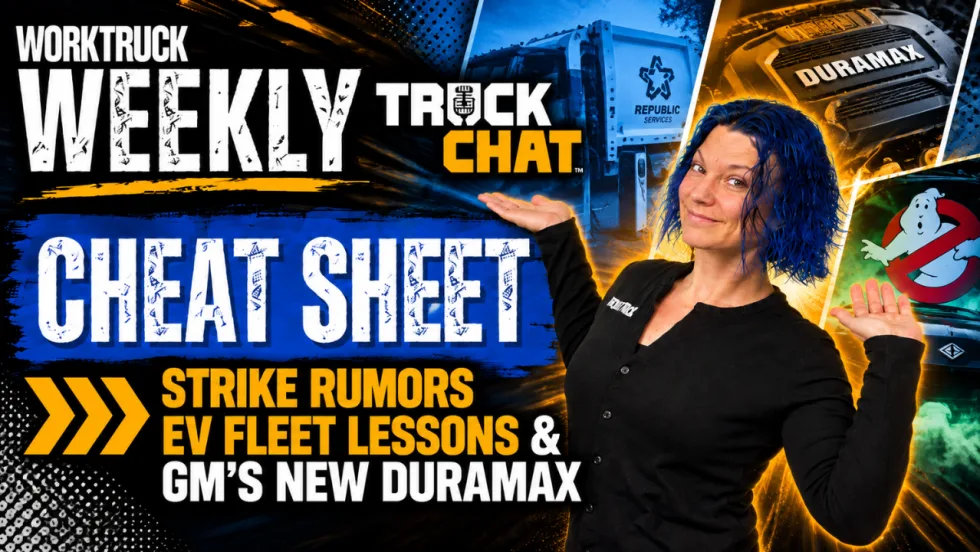
Truckers’ Strike Rumors, Electric Fleet Lessons, and GM’s New Duramax Lead This Week’s News
Truckers’ strike rumors, Republic Services’ electric fleet lessons, GM’s new 8.3L Duramax, van upfitting, Ford Pro used trucks, and more headline this week’s Truck Chat Cheat Sheet.
Read More →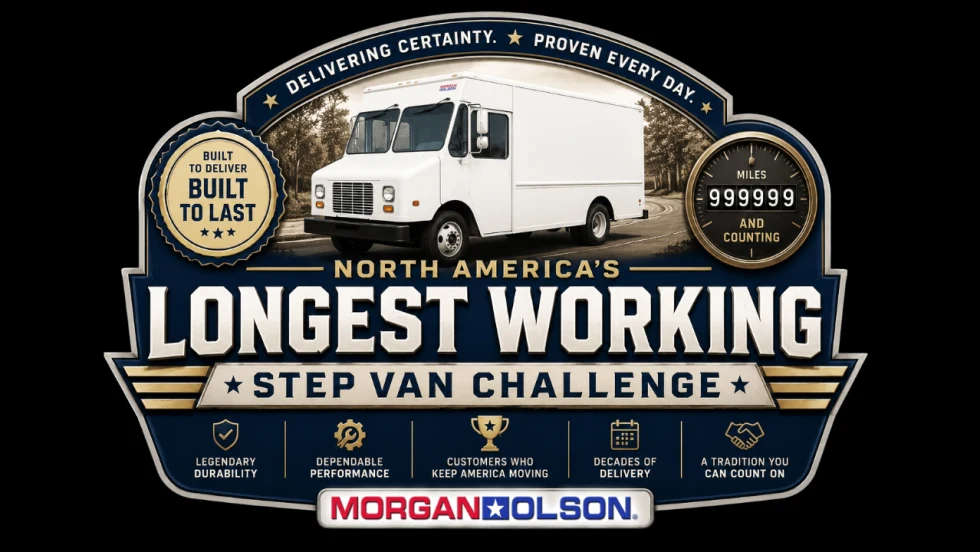
Morgan Olson Launches North America’s Longest Working Step Van Challenge
Morgan Olson has launched North America’s Longest Working Step Van Challenge, a new customer campaign to find the longest-working qualifying Morgan Olson or Grumman step van actively delivering packages for an independent service provider contracted by FedEx.
Read More →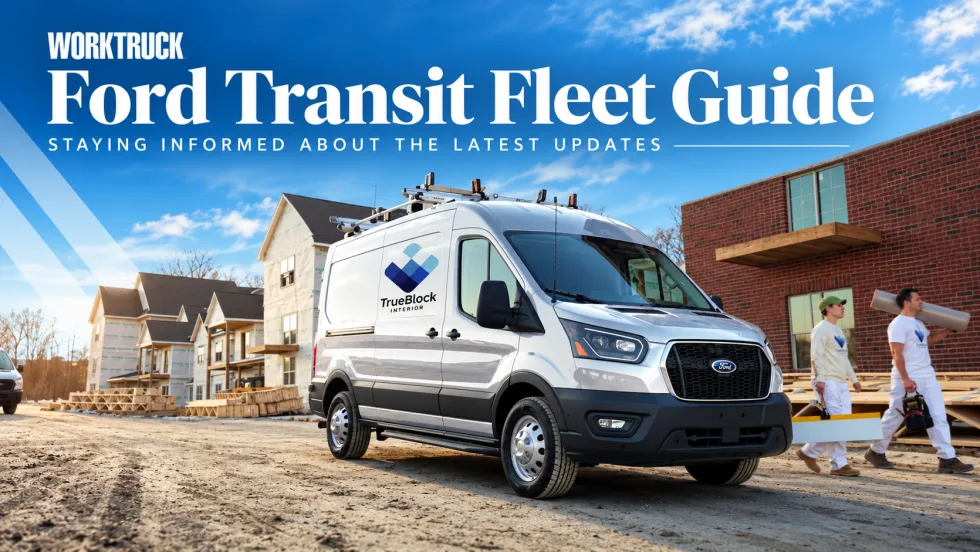
Ford Transit Fleet Guide Specs Capability and 2027 Model-Year Updates
Explore 2027 Ford Transit fleet specs, engines, payload and towing capability, cargo configurations, work features, technology, and model-year updates.
Read More →
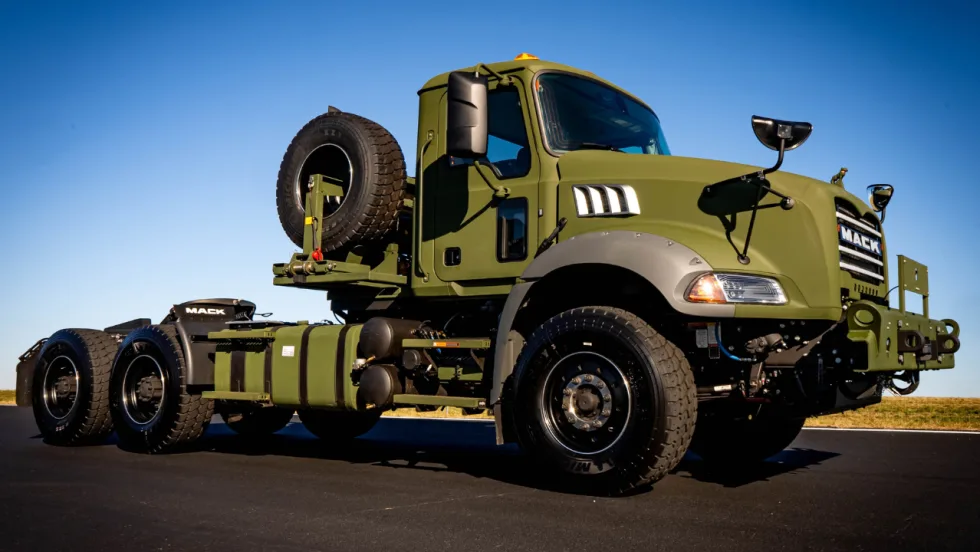
Mack Defense to Spotlight Common Tactical Truck Line Haul Hybrid Tractor During AUSA 2026
Mack Defense was awarded a contract to design, build, and deliver prototype vehicles for the U.S. Army’s Common Tactical Truck (CTT) program. It will show off its line-haul hybrid tractor prototype, based on the Mack Granite, at the 2026 United States Army (AUSA) Annual Meeting and Exposition.
Read More →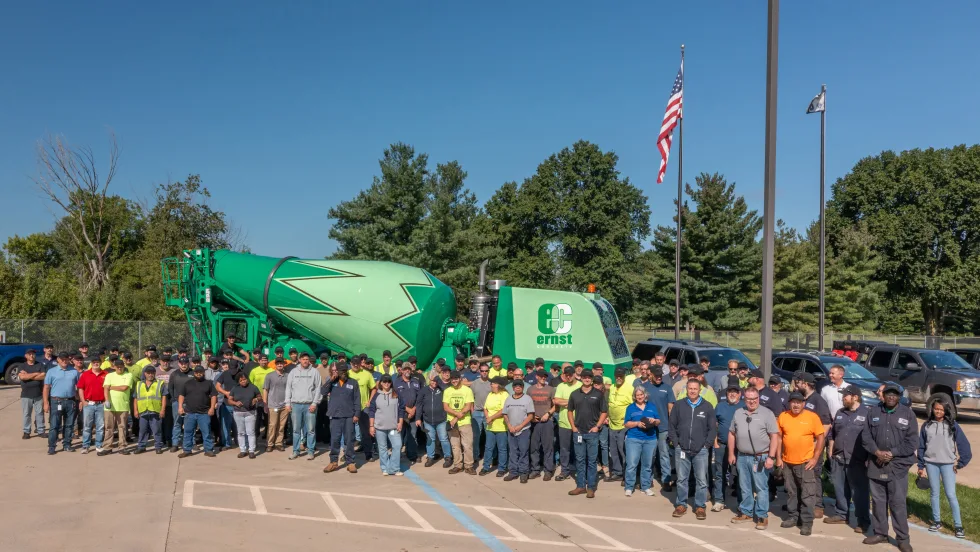
Advance Produces 20,000th Front-Discharge Mixer
Advance celebrated the production of its 20,000th front-discharge mixer, a Commander Series FD4000 mixer. Jack Willard first developed the original Rite-Way Truck in 1964, and then Advance was established in 1972.
Read More →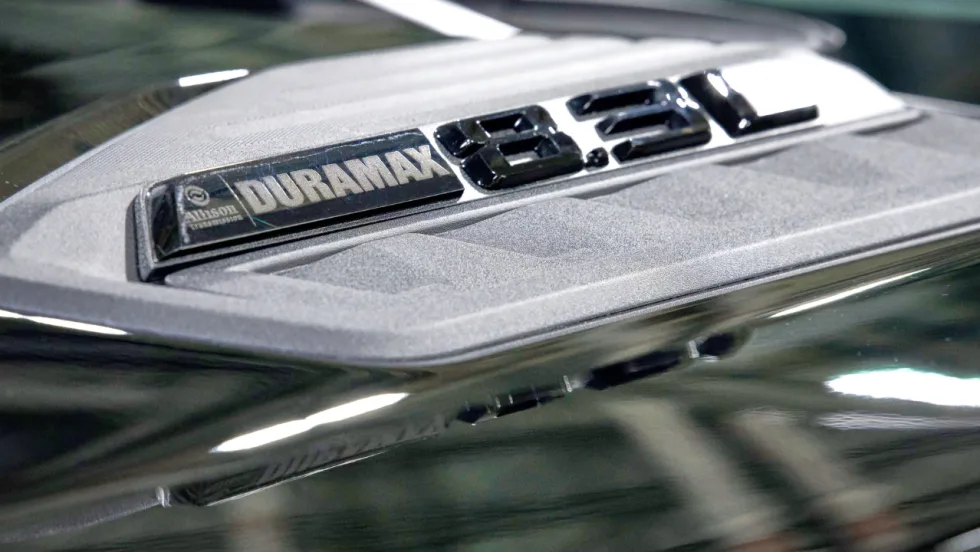
GM Launches Clean Sheet Duramax 8.3L Turbo-Diesel V8 for 2027 HD Pickups
General Motors previewed key updates for its 2027 HD pickup lineup, which will now include a new Duramax 8.3L Turbo-Diesel, electric power steering, and electronic brake boost.
Read More →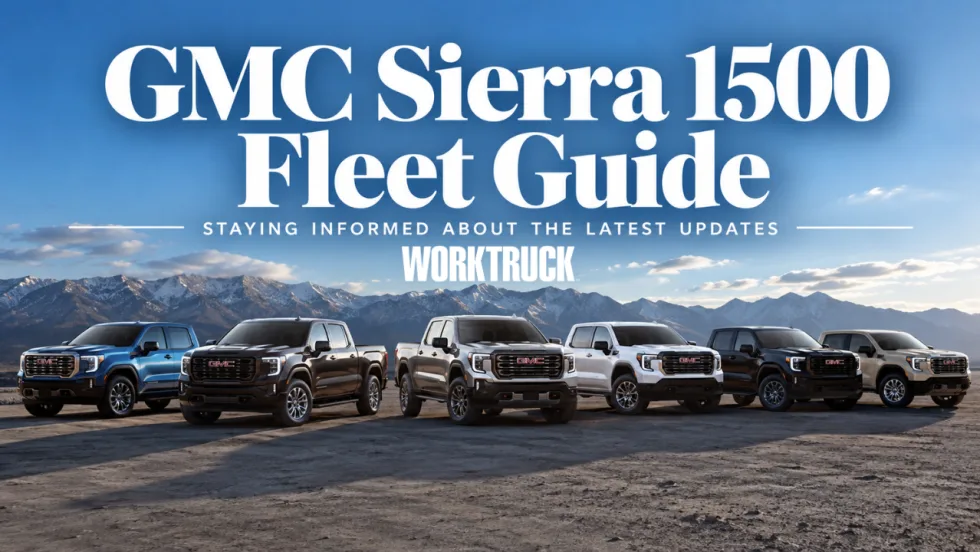
GMC Sierra 1500 Fleet Guide Specs Capability and 2027 Model-Year Updates
The next-generation 2027 GMC Sierra 1500 brings new V-8 engines, more standard safety technology, updated trailering tools, and a work-focused Pro trim. Here’s what fleets need to know.
Read More →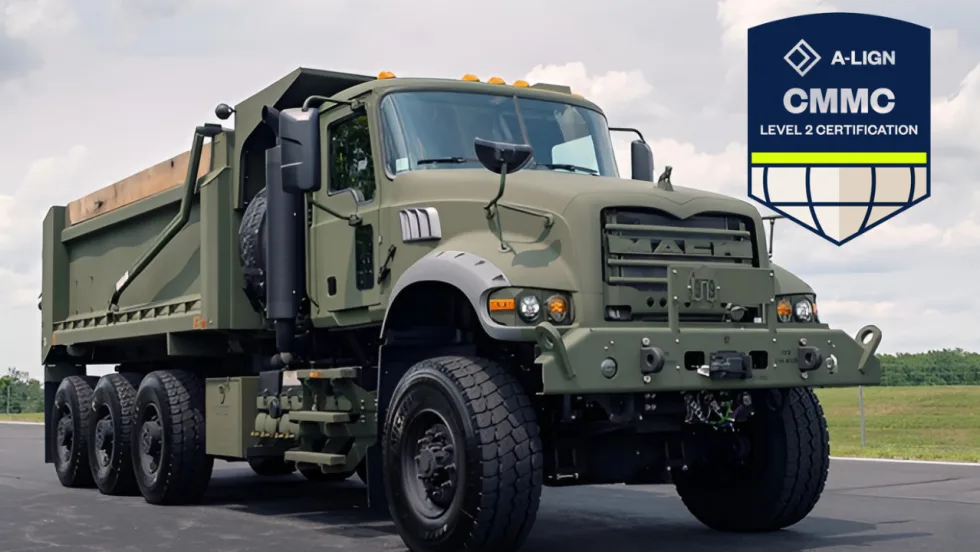
Mack Defense Achieves Cybersecurity Maturity Model Certification Level 2
After an assessment conducted by an authorized Certified Third-Party Assessment Organization (C3PAO), Mack Defense has achieved Cybersecurity Maturity Model Certification (CMMC) Level 2.
Read More →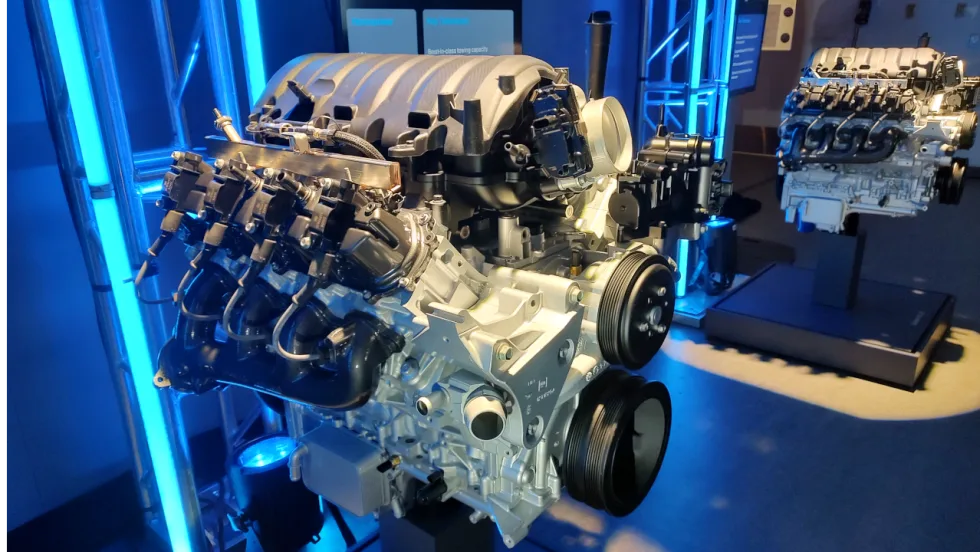
GM Unveils New Sixth-Generation Small Block Engines for 2027 Light-Duty Pickups
General Motors unveiled two new small-block engines, backed by extensive real-world validation and more than 70 years of small-block V8 manufacturing experience, as part of the engine portfolio for the 2027 Chevrolet Silverado 1500 and GMC Sierra 1500.
Read More →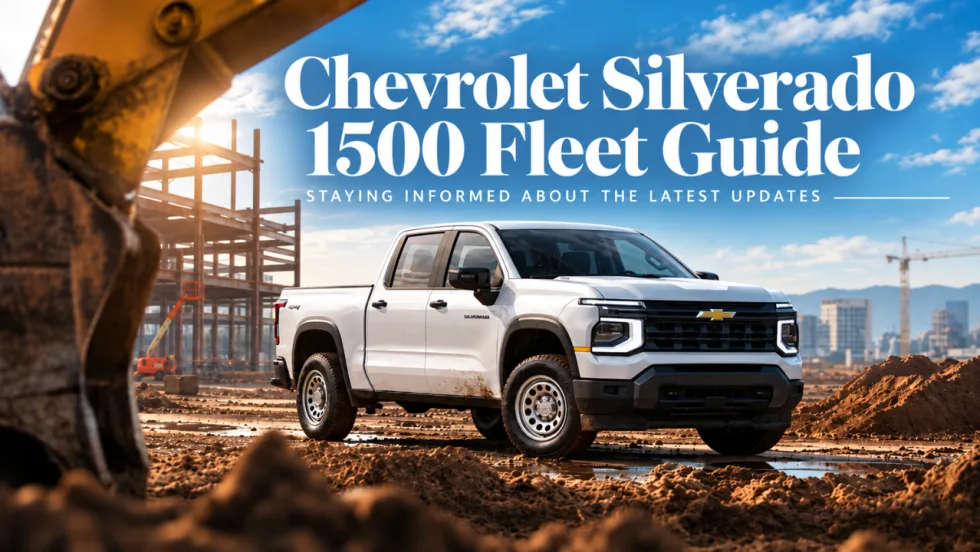
Chevrolet Silverado 1500 Fleet Guide Specs Capability and 2027 Model-Year Updates
The next-generation 2027 Chevrolet Silverado 1500 brings new V-8 engines, updated technology, expanded safety features, and a fleet-focused Work Truck. Here’s what commercial fleets need to know so far.
Read More →