




Three Ways to Screw Up Your Fleet Operation
It’s nice to get suggestions and advice from experts on how to better manage your fleet. It’s also good to know what not to do. Here are three tried-and-true ways to screw up your fleet operation.

Fleet managers need to be on the lookout for common, easy-to-make mistakes that can negatively impact operations.
At a Glance:
Screwing up your fleet operation is easy. Avoid these pitfalls:
Making exceptions.
Putting untested technology into your fleet.
Micromanging all fleet expenses and losing sight of the "big picture."
There are myriad ways a fleet manager can deepen his or her knowledge and understanding of the job. Industry gatherings, networking, reading articles, and attending seminars or conferences can all help achieve a better job performance.
There are also a number of ways to screw things up. Learning the former is obviously helpful; learning the latter can be even more valuable. The mistakes of others are lessons for everyone.
1 Make Exceptions - Lots of Exceptions
You take time to craft a comprehensive fleet policy. You develop procedures to implement that policy. You make it available to all stakeholders and keep it updated. Then, the inevitable happens: You're asked to approve exceptions to the policy, by many different people, at many different levels, for a smorgasbord of reasons.
There's the sales manager. His star performer is involved in a third chargeable accident in the past 18 months, and he begs you not to bring the "policy hammer" down. The policy calls for the salesperson's company vehicle privileges to be suspended, but, the manager pleads, "Can't we make an exception? This guy is our best and brightest new performer, and if we take away his company car, we'll lose him to a competitor!"
Then, it's the vice president who gives her company-provided luxury SUV to her daughter to drive, who promptly gets a ticket for reckless driving and running a red light. The fleet manager's boss, who reports to that VP, warns the fleet manager to back off, that if he follows policy, he'll catch all kinds of grief from her.
Of course, there's the tall marketing rep who complains that he can't drive that mid-size sedan on the selector, and has his branch manager call asking for an exception for a full-size car.
You get the picture. Everyone has a reason not to adhere to that policy, to get something he or she isn't supposed to get, or to avoid the consequences of policy violations. It is guaranteed that once an exception is made, it will be the first of many. How do you turn one down, after you've approved the first one?
Pretty soon, that policy becomes little more than a series of suggestions, which are waived for anyone with a good enough excuse. The fleet manager comes to be known as an "easy mark" for anyone who violates policy and doesn't care to suffer the consequences.
Granting policy exceptions is an excellent way to screw up your fleet operation. That policy you put so much time and effort to implement is now just a scrap of paper in the suggestion box, your own authority to make decisions related to the company fleet has been compromised, and as a result, the fleet is in a low level of chaos.
2 Put All Your Eggs in One, Shiny New Basket
You go to the fleet ride and drive. That new model that everyone's been talking about is there. Loaded with new technology, a new drivetrain, and new styling, you slide behind the wheel and take it out for a spin. It handles well, has plenty of pep, lots of back seat leg room, and enough trunk space for your drivers' needs.
The hype surrounding this new model introduction has been little short of deafening. Excited, you return to the office and call the manufacturer's rep to set up a meeting immediately. The rep comes in, and you tell him you want to start rolling out the new model to your entire fleet. The rep is thrilled. He tells you he'll make sure the orders get built and delivered on time. You grab the calculator, and find that with reduced cap cost, fuel savings, and that new warranty, you'll be able to report up to the boss that you've just saved the company millions on a full three-year cycle.
It's now six months down the road. You have several hundred of the new models out in service, with a few hundred still on order.
All of a sudden, problems start trickling in. Drivers call and send e-mails complaining of issues with the engine, transmission, power steering, or all three. The trickle becomes a steady stream, and finally a flood. Vehicles start breaking down by the dozen, drivers are getting stranded, and downtime skyrockets. Then, you get the first of several recall notices, and all the vehicles must go back to the dealer to fix one thing or another.[PAGEBREAK]
You start to wonder: Should I cancel the orders I've placed, but aren't yet delivered? You begin to see a lot of bad press - articles in the papers about the new models, detailing the problems, recalls, and the manufacturer scrambling to correct them all. You get a call from your boss, who's reading about the troubles, and wondering what you're doing to address them. Now, you have a fleet turning over to a brand new, un-fleet-tested model. You have vehicles breaking down, and renting replacements while vehicles are in the shop wastes precious hours and dollars. You have vehicle resale values that will undoubtedly be hammered by the problems with the first generation, resulting in increased depreciation costs. It's happened before.
Congratulations! You've just screwed up your fleet operation, cost your company hundreds of thousands of dollars, and put your future employment in jeopardy. All because you bought into the hype of a brand-new generation of vehicle, and brought it into your fleet without testing to see if it would be all it was said to be.
3 Micromanage Expenses, to the Penny - On Your Own
Fleet managers don't usually have much in the way of staff anymore; some have one or two, but many more operations have none. Time - that most precious of resources - is limited. There are only so many hours in the day, and most fleet managers don't have the help they need to dive into the thick undergrowth of fleet expense.
But you're different. Staff or no staff, you decide you're going to track and manage every nickel of fleet cost, from depreciation down to power-steering fluid. You demand fleet suppliers provide you the minutest details on what is being spent. Rather than focus on those large categories of expense most ripe for cost savings, you agonize over what brand of tire to buy, whether or not a shock absorber needs to be replaced, or what kind of oil to use for oil changes. You demand to be contacted by every shop on every item, large or small, and no repair is done without your express approval.
Of course, your voicemail box is full, you've got dozens - perhaps hundres - of e-mails you haven't read, and you're so far behind its likely that you'll never catch up. Drivers, and shops, wait for hours until you call back and approve the new wiper blades. Dozens of vehicles run through auction without your knowledge. The lease billing hasn't been audited in months. And, to top it off, you're frazzled to the point of exhaustion and have difficulty concentrating on anything.
Naturally, you're paranoid that, if you dare outsource anything, you'll lose your job, since everyone knows suppliers are all out to get you fired. You try hard to keep up, but whenever there's a lull and you think you've cleaned up the backlog, there's yet another crisis, another driver stranded, another order that comes in wrong, and you are knocked backwards once again.
Yet another fleet operation gets screwed up. The stubborn insistence on micromanaging your fleet has resulted in a rapidly aging mess and the death of any form of strategic management. Rather than focusing, laser-like, on spending your time on expense categories where the real money is spent (and the real savings can be generated), such as depreciation, fuel, and accident costs, you've decided to try to focus on everything, finding there just aren't enough hours in the day. Lacking staff, with limited resources, you may well have a good handle on how much motor oil the fleet uses, but you've lost track on what your resale trends are, and how many drivers are filling their spouses' cars using the fleet fuel card.
Screwing Up Is Easy
Screwing up your fleet operation is easy. Be an easy mark when you're asked for an exception to the policy you worked so hard to produce. If you see a new model vehicle you like, throw caution to the wind and replace the whole fleet. And, for Pete's sake, chase every penny of fleet expense, personally, every day. Your authority will be compromised, you'll have the pleasure of dealing with an entire fleet of problems, and your spouse will wonder why you don't get home until Jay Leno is on. Enjoy!
Originally posted on Automotive Fleet
More Vehicle Insights

Morgan Olson Launches North America’s Longest Working Step Van Challenge
Morgan Olson has launched North America’s Longest Working Step Van Challenge, a new customer campaign to find the longest-working qualifying Morgan Olson or Grumman step van actively delivering packages for an independent service provider contracted by FedEx.
Read More →
Ford Transit Fleet Guide Specs Capability and 2027 Model-Year Updates
Explore 2027 Ford Transit fleet specs, engines, payload and towing capability, cargo configurations, work features, technology, and model-year updates.
Read More →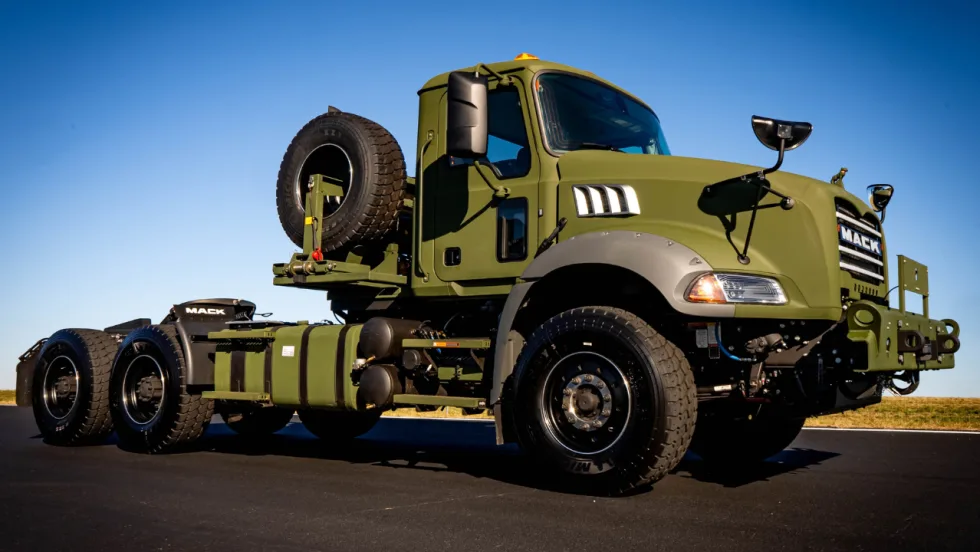
Mack Defense to Spotlight Common Tactical Truck Line Haul Hybrid Tractor During AUSA 2026
Mack Defense was awarded a contract to design, build, and deliver prototype vehicles for the U.S. Army’s Common Tactical Truck (CTT) program. It will show off its line-haul hybrid tractor prototype, based on the Mack Granite, at the 2026 United States Army (AUSA) Annual Meeting and Exposition.
Read More →
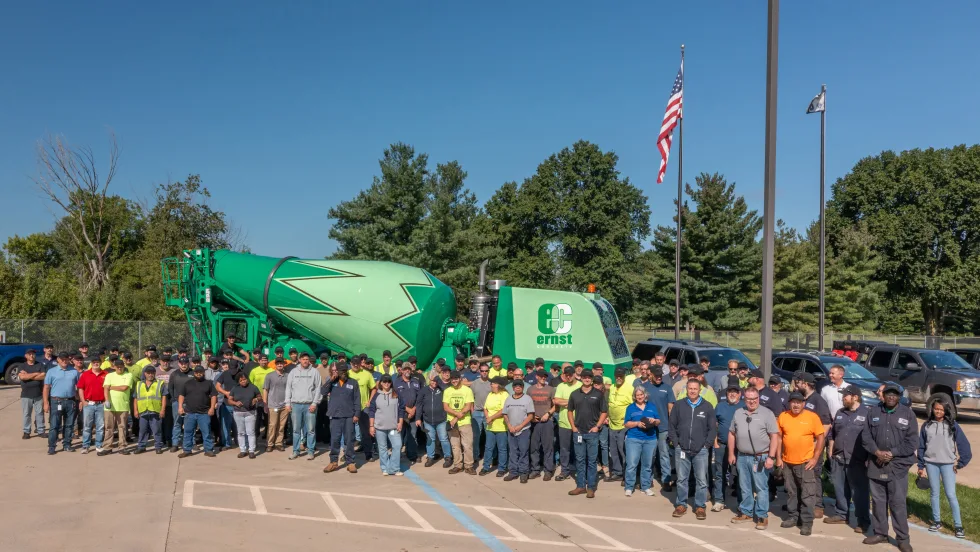
Advance Produces 20,000th Front-Discharge Mixer
Advance celebrated the production of its 20,000th front-discharge mixer, a Commander Series FD4000 mixer. Jack Willard first developed the original Rite-Way Truck in 1964, and then Advance was established in 1972.
Read More →
GM Launches Clean Sheet Duramax 8.3L Turbo-Diesel V8 for 2027 HD Pickups
General Motors previewed key updates for its 2027 HD pickup lineup, which will now include a new Duramax 8.3L Turbo-Diesel, electric power steering, and electronic brake boost.
Read More →
GMC Sierra 1500 Fleet Guide Specs Capability and 2027 Model-Year Updates
The next-generation 2027 GMC Sierra 1500 brings new V-8 engines, more standard safety technology, updated trailering tools, and a work-focused Pro trim. Here’s what fleets need to know.
Read More →
Mack Defense Achieves Cybersecurity Maturity Model Certification Level 2
After an assessment conducted by an authorized Certified Third-Party Assessment Organization (C3PAO), Mack Defense has achieved Cybersecurity Maturity Model Certification (CMMC) Level 2.
Read More →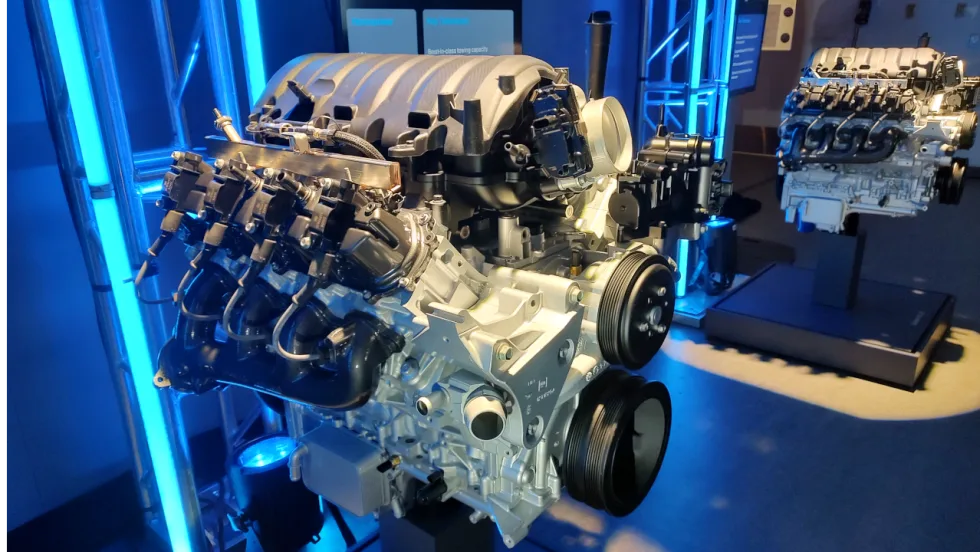
GM Unveils New Sixth-Generation Small Block Engines for 2027 Light-Duty Pickups
General Motors unveiled two new small-block engines, backed by extensive real-world validation and more than 70 years of small-block V8 manufacturing experience, as part of the engine portfolio for the 2027 Chevrolet Silverado 1500 and GMC Sierra 1500.
Read More →
Chevrolet Silverado 1500 Fleet Guide Specs Capability and 2027 Model-Year Updates
The next-generation 2027 Chevrolet Silverado 1500 brings new V-8 engines, updated technology, expanded safety features, and a fleet-focused Work Truck. Here’s what commercial fleets need to know so far.
Read More →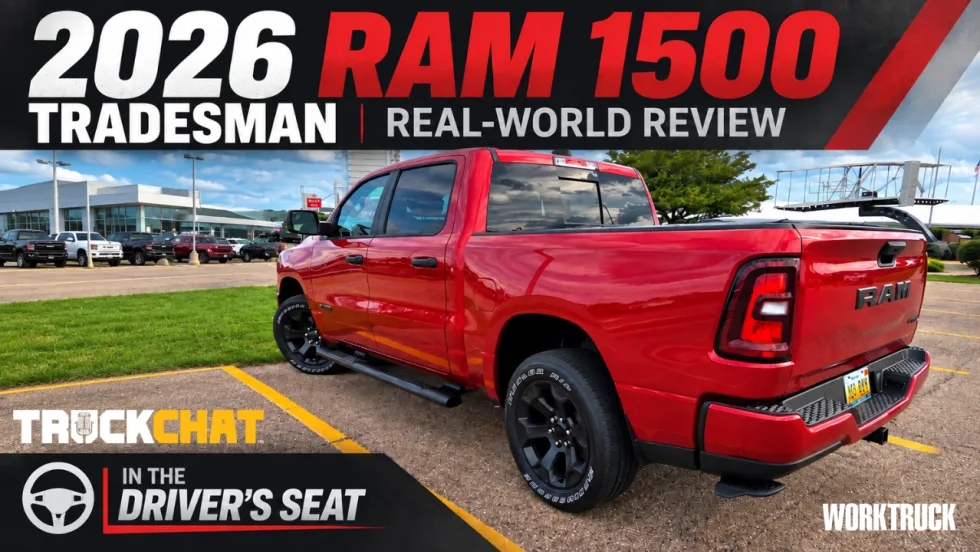
2026 Ram 1500 Tradesman Put to a Real-World Fleet Test
A few days behind the wheel of a 2026 Ram 1500 Tradesman turned into a test of visibility, parking, work-ready features, and even severe-weather driving.
Read More →