




The Hybridization of Fleet Grows Broader
Citing environmental awareness, improved fuel efficiency, and a positive corporate role model, commercial fleets are increasingly turning to hybrid vehicles.
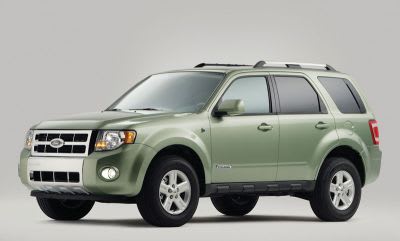
2008 Ford Escape Hybrid
Call it a growing trend. A means to save money on one of fleet’s greatest expenses — fuel. A way to promote a positive corporate image. There’s no denying that the hybridization of fleet has caught fire and is spreading rapidly. Unpredictable gas prices have helped fuel this fire as more hybrid fleets continue to spring up across the U.S.
Three Ford fleet customers share their experiences implementing the Escape Hybrid into their fleets, noting positive results all around, from performance and cargo capacity to fuel efficiency and driver reaction. Here’s what they had to say.
Company: Comcast Communications
Location: Philadelphia
Fleet Manager: Milton “Bud” Reuter
Total Vehicles: 37,585
Reuter is responsible for Comcast’s U.S. fleet, comprising vans, pickups, bucket trucks, medium-duty trucks, cars, and SUVs. The fleet’s hybrid and alt-fuel breakdown includes 75 Ford Escape Hybrids and 600 flex-fuel vehicles, primarily Ford F-150s.
Comcast’s prototype 2005-2007-MY Escapes have been in service for less than two months and are welcomed by fleet drivers, according to Reuter. The fleet tested the Escape Hybrids in 2005, and they worked so well the company increased orders the following years.
Comcast drivers are “head-end technicians” and management/ supervisory personnel — positions that don’t require carrying much cargo.
“Our company initiative is to move toward being greener and more environmentally conscious wherever it makes sense,” said Reuter. “Our intention is to be a corporate leader in environmental issues regarding fleet. Corporate image and saving money are important, but doing the right thing for the environment and our country is just as important.”
Expectations upon hybrid implementation were to begin establishing a more environmentally friendly fleet. Reuter acknowledges hybrids may not benefit all cases, but they provide benefits in their use in Comcast’s fleet. The fleet’s typical vehicle lifecycle is 7-10 years.
“We chose the Ford Escape Hybrid because it meets the needs of our technicians,” said Reuter. “They have been very well received by our drivers and all have seen a significant increase in fuel mileage, resulting in fewer dollars spent.”
He continued, “We feel we will absolutely see the return on the initial investment within five years; however, this depends on the price of fuel.”
Comcast will continue to purchase Escape Hybrids and other hybrid vehicles when available and where appropriate, according to Reuter. The fleet’s largest issue is the lack of alt-fuel or hybrid vehicles currently available that meet 85 percent of the fleet’s needs. “We are doing all we can to work with the existing 15 percent that have somewhat-similar vehicles available in alt-fuel.”
Company: Exelon
Location: Oakbrook Terrace, Ill.
Fleet Manager: Dan Gabel
Total Vehicles: 5,100
Gabel oversees all fleet operations for Exelon’s Illinois and Pennsylvania fleets. Comprising heavy- and medium-duty vehicles, light-duty trucks, passenger vehicles, trailers, and other equipment, Exelon’s two energy-delivery companies — PECO Energy in Pennsylvania and ComEd in Illinois — operate the majority of the fleet’s vehicles.
“We have 245 Ford Escape Hybrids currently in service and in 2006, added two medium-duty hybrid bucket trucks through our participation in the HTUF (WestStart-CALSTART’s Hybrid Truck Users Forum) program,” said Gabel.
All the company’s light-duty hybrids are Ford Escapes. The two Escape flex-fuel vehicles (FFVs) Exelon recently acquired are used by ComEd field supervisors who drive in rural areas and stop-and-go traffic. Gabel says drivers will gauge how well the vehicles work in a variety of driving conditions.
“The decision to go hybrid was initially made in 2001 when we put 70 Escape Hybrids into service to support Exelon’s ‘Green Fleet’ strategy to reduce vehicle-related greenhouse gas (GHG) emissions,” said Gabel.
“Ford has been a valuable partner to Exelon in implementing our Green Fleet strategy by providing us hybrid technology and keeping Exelon in the forefront as new green technologies become available,” said Gabel. “The Escape hybrids are an ideal solution for our front-line supervisors because they can carry equipment they regularly transport while maintaining fuel efficiency. The FFV Escape Hybrids will go into service shortly.”
Since implementing the Escape Hybrids, Exelon’s fleet fuel economy has improved over its non-hybrid counterparts. Gabel expects similar results with the FFV Escapes. Compared to gasoline counterparts, Escape Hybrids have been positively received by drivers, according to Gabel.
With Exelon’s range of vehicle and equipment needs, Gabel says the fleet is unlikely to convert entirely to hybrids. “We’re always looking for alternatives to traditional fossil fuels, and hybrid technology will continue to play a key role in that strategy.”
Company: Secura Insurance
Location: Appleton, Wis.
Sr. VP, Claims: Scott Huiras
Total Vehicles: 75
By next summer, Secura plans to convert the majority of its fleet to hybrid vehicles. Of its 75 vehicles, 40 are currently Ford Escape Hybrids.
Secura committed to hybrids 15 months ago for environmental reasons and in reaction to the gasoline price spikes plaguing the country in recent years. So far, Huiras has received positive reports on the hybrids from fleet drivers.
Secura has a history of environmental consciousness. The company president was named Wisconsin’s Environmentalist of the Year, and the company actively works to reduce heating and cooling expenses. “It’s the right thing to do, and corporations can make a real impact by implementing hybrids into their fleet because they are low-emissions vehicles,” said Huiras.
Management chose the Escape Hybrid, the only small SUV option available. Secura’s claims and sales personnel require vehicles that provide room to carry equipment.
Though the hybrids cost more up-front, Secura receives a government rebate for vehicle purchases and has experienced improved fuel efficiency and reduced gasoline expenses. Drivers achieve 8 mpg better than their previous vehicles and average vehicle lifecycle is 60,000 miles. “But the wildcard is resale value, which may be affected by the price of gasoline,” said Huiras.
Huiras maintains drivers are happy with the hybrids and experience little difference in acceleration, compared to the gasoline counterparts. “Ford delivered us quality cars in a timely fashion. The salesperson ran through the benefits of the hybrids and performed a cost comparison versus conventional vehicles.”
To expand Secura’s alt-fuel profile, Hurias looks to E-85’s potential. “We hope more ethanol stations will pop up in the upper Midwest. Ethanol supports the farm economy, so it would be a nice fit for us. We’d like to offer more choices to our fleet drivers; we need larger vehicles, and we’d be interested in a hybrid van.”
Going hybrid is good for the corporate brand if it’s consistent throughout the fleet, according to Hurias. It differentiates a corporation from others, and Huiras is optimistic more commercial fleets will follow suit..
Originally posted on Automotive Fleet
More Small Fleet


Developing Budget-Friendly Driver Safety Programs
From driver training and safety meetings to one-on-one coaching and incentive programs, several small fleets share how they have developed a safety culture with their drivers using low- to no-cost resources.
Read More →
Boosting Last-Mile Fleet Uptime, Safety, and Value with AI Vehicle Inspections
AI-powered inspections are transforming last-mile fleets by replacing manual checks with highly accurate automated scans that detect defects in seconds. By giving fleet operations visibility into the daily condition of their vehicles, you can identify trends over the vehicle’s lifecycle that enable improved procurement decisions, route management, driver training and accountability.
Read More →

Five Ways Seat Belts Help Prevent Injuries
There are five ways seat belts protect occupants from injuries, according to the Tennessee Department of Safety and Homeland Security.
Read More →
Basic Tracking vs Next Generation Fleet Technology
Fleet software is getting more sophisticated and effective than ever, tying big data models together to transform maintenance, safety, and the value of your existing tech stack. Fleet technology upgrades are undoubtedly an investment, but updated technology can offer a much higher return. Read how upgrading your fleet technology can increase the return on your investment.
Read More →
It’s here: The 2026 Fleet Technology Trends Report
What does AI mean for fleets? Get the answer — and learn other top tech trends.
Read More →
Small Fleets, Big Impact: How Independent Drivers Power Wreaths Across America
Check out how small fleets and independent drivers power Wreaths Across America each December and why their impact matters more than ever.
Read More →
VMS Survey Finds 65% of Small Fleet Managers Run Operations Alone
A new VMS survey shows small fleet managers are stretched thin, with most handling operations solo and eager to adopt digital tools for relief.
Read More →
Tips for Driving Safely on Halloween Night
This video features a reminder from the Connecticut Department of Transportation (DOT) and the Connecticut Police Chiefs Association, urging drivers to prioritize safety this Halloween.
Read More →
AI, Access, and Uptime: VMS’s Next Chapter with David Prusinski
VMS’s new Co-CEO, David Prusinski, shares how an AI-first approach will give small fleets and repair shops the tools to compete like big players.
Read More →