




Selecting the Right Alt-Fuel Truck
What are the four first steps you should take when searching for an alternatively-powered vehicle?

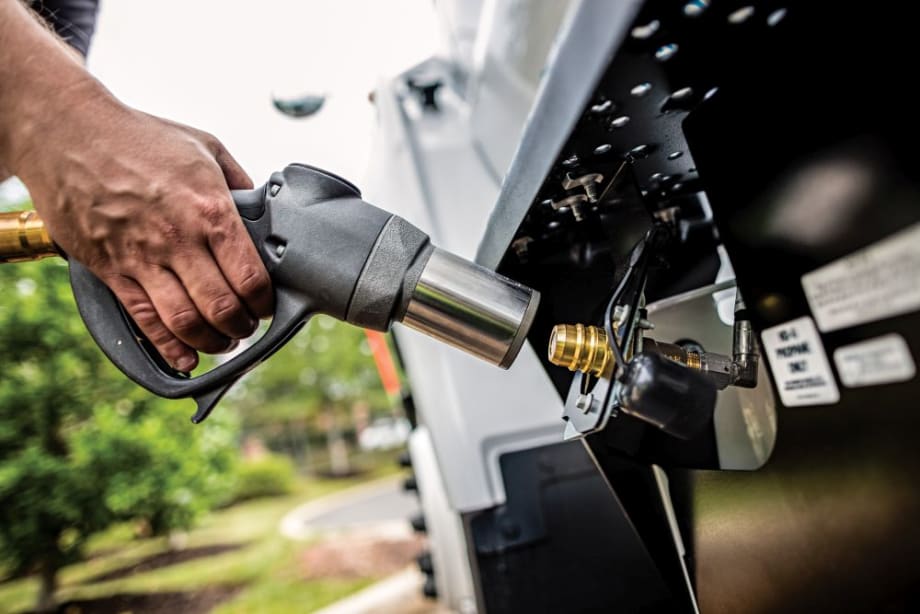
Once you know your fleet needs and how it operates, its time to evaluate the fuels and benefits.
Photo: PERC
Compressed natural gas (CNG), renewable diesel, biodiesel, propane autogas, electricity: Fleets have no shortage of alt fuels from which to choose. While it’s nice to have choices, it can make selecting the right alt-fuel truck complicated. Each fuel type has its benefits and drawbacks, so how do fleets simplify the evaluation process?
These steps can help:
Start with a Fleet Fact-Finding Mission
When considering alt-fuel choices, a person’s instinct may lead them first to ask questions about the fuels themselves. Still, Stephen Whaley, director of autogas business development for the Propane Education & Research Council (PERC), said asking questions about their fleet is the place to start.
“The first step for fleet owners is to do a thorough evaluation of their fleet vehicle’s duty cycles,” he said. “Once they have that information, fleet owners can work with energy source suppliers or OEMs to learn what options are available to select an appropriate energy source and vehicle that meets their needs. These considerations will help determine which alternative fueled vehicle solutions are available for your particular trucks and duty cycles.”
Whaley suggested considering such factors as:
The number of miles fleet units travel each day.
Do the vehicles return to a central location during the fuel cycle?
Climate where trucks will operate (do they need air conditioning or heaters?).
The weight class.
Available fuel storage space based on body configurations.
Available space for infrastructure.
How long trucks typically stay in the fleet.
Tim Thornton, vice president & general manager, refuse, for Autocar Truck, said examining the routes trucks and vans typically travel can help narrow down the options, as distance and fuel availability are vital factors.
For that reason, fleets should know how far drivers travel on average and whether fueling is available along those routes.
“If trucks are driving a long distance, will they run out of gas? You can’t just fill up anywhere. For EVs, there are very few places that you could recharge,” he said. “Auditing the routes is a big part of it. Fleets need to determine their fuel needs for a full day and then, in the instance of CNG, figure the tank capacity to service those routes.”
Eric Foellmer, director of marketing for XL Fleet, said other questions fleets should ask about their applications and organizational goals include:
What are the drive cycles?
What performance characteristics are most important?
Do you have specific vehicle/OEM preferences?
What are the specific MPG/ROI requirements for these vehicles?
Are there sustainability mandates you’ve committed to? If so, over what timeframe?
“As with any fleet project or initiative, understanding your goals is the most important first step in planning for success,” Foellmer said. “One of the most important things a fleet can do is look into the data surrounding their drive cycles to gain a deeper understanding of how their vehicles are performing. Are they idling for long periods? Are they working primarily in cities? Are they driving almost exclusively on expressways? These questions should dictate what kind of electrified or alt-fuel vehicle solution works best for a particular fleet.”
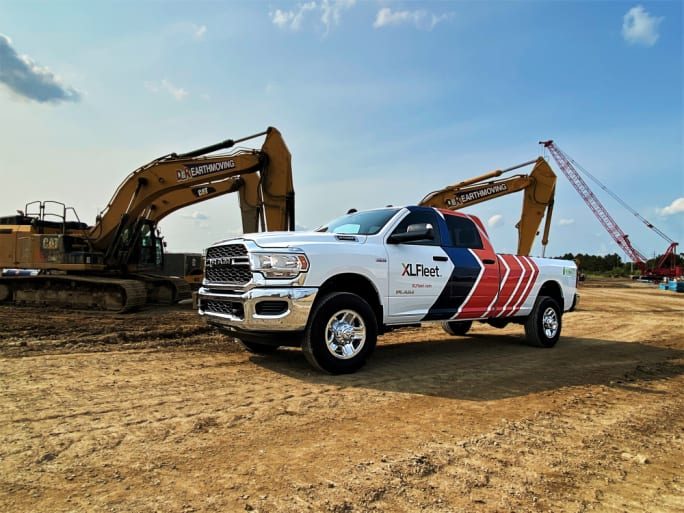
Beyond application and infrastructure, fleets should consider operating environment, maintenance, and power outages.
Photo: XL Fleet
Evaluate the Energy Sources
Once you’ve evaluated the fleet, it’s time to compare the fuels.
“Fleet owners should ask about the benefits the alternative energy source will provide in terms of the environment, operation, cost, and availability,” PERC’s Whaley said.
Questions fleets may want to ask include:
What are the environmental benefits? Are they more significant than the current fuel used? “There needs to be a reduction in emissions over the lifecycle of the energy source, ideally without increasing cost or losing efficiency,” Whaley explained.
Does the energy source provide a financial benefit? The cost of the fuel itself is one factor, but fleets should also consider whether the alt-fuel reduces the total cost of vehicle ownership combined with its needed fueling infrastructure.
Does it provide an operational benefit? “The vehicle should perform as well or better than the original fuel without compromising range,” Whaley said.
What is the new fuel’s availability? Some alt fuels may not be in abundance, or fueling infrastructure may be too big of a hurdle to overcome, so fleets should also ensure they will have access to the fuel they’re considering.
When considering biodiesel, Scott Fenwick, technical director for the National Biodiesel Board, said fleets should also include specs about the fuel type in their bid requirements.
“Fleets need to work with the original equipment manufacturers (OEMs) most willing to support their efforts to lower their fleet’s carbon footprint through the use of higher biodiesel blends. Include a requirement for B-20 or higher biodiesel blend support in the vehicle procurement bid specifications for any new diesel vehicles or equipment purchased,” he explained. “The vast majority of OEMs in the medium- and heavy-duty vehicle market already support B-20, but there are a couple of holdouts that still just support B-5.”
The National Biodiesel Board offers a Fleet Manager Guide with instructions on including B-20 in bid specifications.
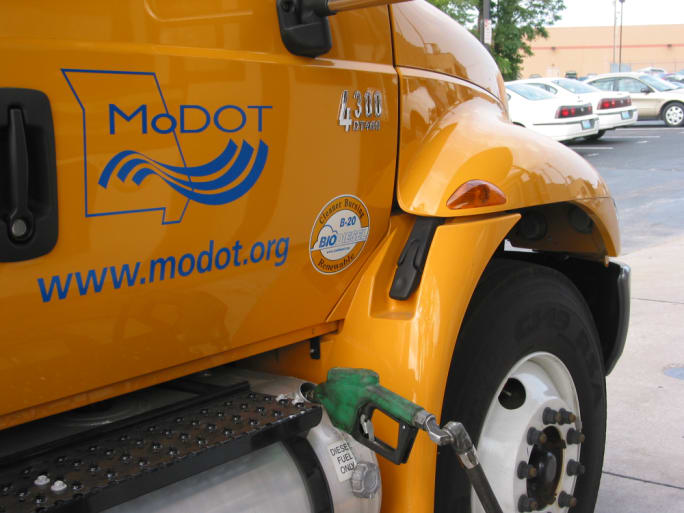
Not every energy source can supply the power needed for larger vehicles. If you operate heavier-duty trucks, make sure your fuel can get the job done.
Photo: National Biodiesel Board
Match the Fuel to the Duty Cycle and Application
Some alt-fuels are better suited to some duty cycles and applications than others. The following are considerations for each alt-fuel type:
Propane Autogas
Uses: Whaley said propane autogas is ideal for medium-duty (Class 3-7) fleets that need to consider range and performance in addition to substantially lowering their emissions.
“If a medium-duty fleet needs to operate more than 100 miles a day or carry a heavier payload, propane autogas will be able to meet those needs more efficiently than other alternative energy sources, like electric, that have limitations in those areas,” he said.
Tips: Examples of fleets that rely on propane autogas include paratransit, food and beverage delivery, and package delivery. Whaley said fleets like these use propane autogas because it can support their range and payload needs.
“Not every energy source can meet those needs — electric vehicles need to recharge long before a propane autogas vehicle would need to refuel. Plus, when fleets need to refuel, propane autogas is a liquid that pumps at the same rate as gasoline and diesel,” he said.
Availability and infrastructure: With propane autogas, fleets can install a private, centralized refueling station and leverage the option for mobile fueling when necessary.
"Propane fueling infrastructure is completely scalable, and storage tanks are often changed to a larger size as the fleet size grows without having to alter the dispensing equipment,” Whaley said. “Your local propane supplier can help identify the right refueling setup. In most cases, propane suppliers will provide the equipment in exchange for a fuel contract that locks in a set price per gallon for a duration beneficial to both parties.”
Considerations for establishing a private propane autogas fueling site include available space, expected growth, and traffic requirements. Fuel tank sizes range from 1,000 to 30,000 gallons.
"If fleet owners travel outside the range of their infrastructure, there are thousands of publicly accessibly refueling stations, half of which of which are located at local U-Haul facilities,” Whaley said.
Biodiesel and Renewable Diesel
Uses: Biodiesel and renewable diesel are both options for fleets that currently operate diesel-powered vehicles.
“Both biodiesel and renewable diesel can be used in any diesel engine without modification, providing similar power, performance, hauling capability, and fuel economy as diesel fuel while operating seamlessly with fleets’ existing duty cycles,” Fenwick explained. “If it has a diesel engine, it can get the job done equally well running on biodiesel or renewable diesel while also reducing carbon emissions and other pollutants in the process. In many cases, the right truck for the job is the diesel vehicle that is already in their fleet.”
Tips: Fenwick said fleets that use biodiesel in a newer diesel vehicle should experience a seamless transition, and most OEMs don’t require any notable changes in the oil change or fuel filter maintenance intervals.
Suppose a fleet is switching to biodiesel in an older diesel vehicle that has run for several years on petroleum diesel fuel. In that case, they should be aware that biodiesel’s cleaning properties may loosen the deposits accumulated over time on the fuel tank walls and flush them out into the fuel filters.
“Some fleets may need to be more proactive with their fuel filter changes for the first few months using biodiesel in this case, but once the fuel tank is cleaned out, they should be able to return to their normal maintenance schedule,” Fenwick said.
Availability and infrastructure: Fenwick said infrastructure is less of a concern for biodiesel blends, as it is available at more than 2,400 major truck stops and distributors nationwide. Renewable diesel, on the other hand, is currently only available on the West Coast.
Compressed Natural Gas (CNG)
Uses: Thornton said CNG is often used by refuse fleets, which need to haul, load, and unload and travel in residential neighborhoods.
“Refuse markets benefit significantly from the CNG trucks, as well as some steel scrap haulers that operate roll-off trucks,” he said. “The conventional cab DC-64R roll-off truck, which Autocar introduced in 2019, can be configured for many applications. The DC-64R, with an OEM-installed roll-off hoist, treats the chassis and body as one complete tool that can serve multiple applications for hauling. The DC-64 severe-duty conventional truck is a newer model, which can be used for refuse applications, rear-discharge mixers, or dump trucks. It is available in both 12.0L and 9.0L CNG.”
Tips: When considering CNG, fleets should be aware of the location of the tanks to ensure they don’t hinder the operation of trucks while in the field.
“The truck’s design plays an important role in the size and locations of the CNG tanks,” Thornton explained. “A rear-loader versus a roll-off truck, for instance, may have tanks in different locations due to the body configuration and chassis layout. CNG tanks mounted vertically on the back of a cab might be an issue for overhead clearance. Some configurations may have the CNG tanks below the frame on either side, resulting in less ground clearance. It is critical to engineer a truck and tank configuration that is optimized for the application.”
Availability and infrastructure: According to the American Gas Association’s CNG Infrastructure Guide, the U.S. has approximately 1,200 public and private CNG stations. The U.S. has more than 120,000 retail gas stations, which results in a ratio of roughly one CNG station for every 100 retail gasoline stations and signals the limited availability of CNG by comparison. For this reason, users of CNG will need to make plans for how trucks can be fueled.
“The infrastructure usually focuses on having a pipeline to use, but there are options without the big six-inch main lines in the ground,” Thornton said. “Some companies have brought in trailers that they can have filled routinely and fill their trucks there. So, even without the pipelines, you can make it work.”
Electric and Hybrid Electric
Uses: Foellmer said that hybrids and plug-in hybrids provide versatility and performance for many fleet applications.
“XL Fleet’s range of hybrid and plug-in hybrid electric drive solutions for commercial and municipal fleets, including Ford, GM, Ram, and Isuzu vehicles, work well for nearly every work truck application,” he said. “XL Fleet customers using hybrid and plug-in hybrid systems span multiple industries, including last-mile delivery, beverage distribution, utility work, and food service, along with a wide array of municipal applications.”
Tips: While fully electric propulsion may be suitable for many applications, Foellmer cautioned that there are be some applications for which it isn’t the best fit.
“As with any alternative fuel vehicle, electrified vehicles are not necessarily the right tool for every job in your department,” Foellmer said. “It’s important to understand the performance characteristics, as well as the strengths and limitations, of the types of EVs you’re considering for each application. As we move forward and EVs become increasingly mainstream, a typical fleet manager will likely have a range of electrified vehicle options working in their fleet at any given time.”
Availability and infrastructure: EVs require charging infrastructure, but hybrids can rely on their combustion engines as needed.
“The state of your vehicle charging infrastructure is a significant consideration when scoping an investment in electrified vehicles,” Foellmer said. “Examine your current and near-term plans for your charging infrastructure to help choose the best class of EV for your particular situation.”
In 2020, the U.S. had 26,000 publicly accessible charging stations for a total of 80,000 places to charge. This number is projected to grow as charging equipment manufacturers, automakers, utilities, Clean Cities coalitions, municipalities, and government agencies establish a national network of public charging stations.
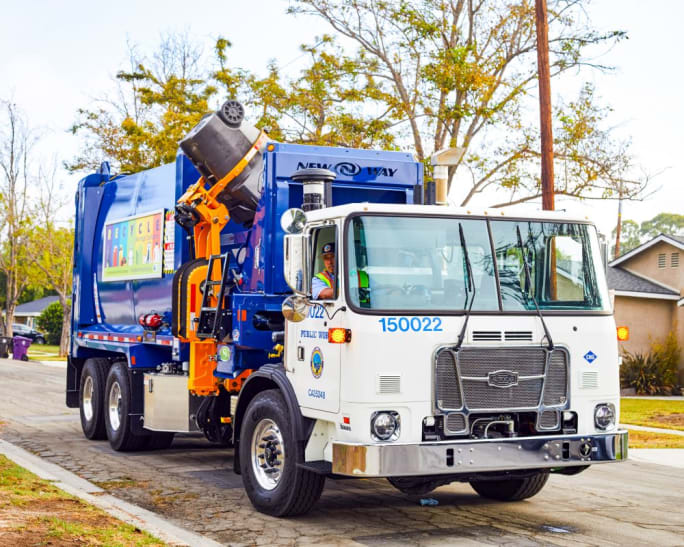
Once you have made the decision to go green, there are a few questions you need to answer before selecting the best alt-fuel option for your operation, as well as completing a thorough evaluation of duty cycles.
Photo: Autocar
Other Factors to Consider
Beyond application and infrastructure, fleets should consider operating environment, maintenance, and power outages.
Weather
A common misconception about biodiesel is that it can’t be used in cold weather, but Fenwick said that’s not the case.
A fuel containing 5% biodiesel (B-5) typically has a cloud point similar to or the same as 100% No. 2 petroleum diesel. Fuel containing 20% biodiesel (B-20) can have a cloud point of approximately 2° to 7°F higher than 100% No. 2 petroleum diesel.
“Biodiesel blends up to 20% are being used successfully by thousands of fleets throughout the nation year-round. If properly managed, blends of ultra-low sulfur diesel and biodiesel of any feedstock can be used successfully even in challenging winter climates,” Fenwick said. “However, like petroleum diesel, biodiesel blends can be enhanced for cold-weather performance using field-proven additives and proactive tank management determined by knowledge of climatic conditions.”
Natural Disasters and Power Outages
When natural disasters like hurricanes, tornadoes, or blizzards happen, the resulting power outages could affect fuel availability.
“If the electric grid goes down, propane delivery trucks can pick up and dispense fuel at your facility without relying on electricity,” Whaley said. “Propane autogas is a portable energy source that performs well in all extreme weather.”
Changes in the Shop
Depending on the energy source, fleets may need to implement training, modify facilities, or change maintenance processes and schedules to adjust accordingly.
“Speaking specifically to propane autogas, it is comparable to a spark-ignited gasoline engine. Since propane is heavier than air, it behaves like gasoline and diesel, so your shop doesn’t have to have modifications for the detection or evacuation of vapors. If your shop is already up to code for gasoline and diesel, then no infrastructure changes are required,” Whaley said.
“Since new liquid propane fuel injection engines are similar to gasoline engines, they use similar equipment for maintenance, diagnosis, and repair.”
Operating Environment
If trucks operate in residential neighborhoods, as refuse trucks do, the noise level could be another consideration. Thornton said CNG-powered trucks tend to be quieter, reducing the noise level when servicing customers.
“People have told me that if they forget to put their trash out, they usually hear the trash truck coming down the road, so they can run out and get their trash to the curb,” he said. “They might not be able to do that with CNG trucks because they are so much quieter, but most are pretty happy without the truck noise.”
A Fit for Every Fleet
While no alt-fuel is perfect for every fleet, with a range of options to choose from, fleets should be able to find a fit that works for them.
“With how many alternative energy sources there are today, there’s no reason a fleet can’t find a way to lower their emissions substantially. The key is selecting the right energy source for the job,” Whaley said. “Take the time to evaluate all aspects of your fleet and find the energy source that best fulfills all your needs. Talk with vehicle solution providers, energy source suppliers, and fellow fleet owners to learn more about your options.”
More Green Fleet

Fleet Forward Conference Introduces One-Day Passes for 2026
New one-day registration gives fleet professionals the flexibility to attend Tuesday, Wednesday, or Thursday, with passes available for $199 through Sept. 18.
Read More →
CALSTART Rebrands as Catalyst Mobility, Will Combine with Forth in 2027
CALSTART has rebranded as Catalyst Mobility and will combine with Forth at the start of 2027. The new organization said it is poised to become one of the world's largest, strongest, and most impactful clean transportation nonprofits.
Read More →
Electric Truck and Charging Programs to Boost Sustainability at NY & NJ Ports
Together, the Port Authority of New York and New Jersey and CALSTART will electrify drayage and terminal operations serving the East Coast’s busiest container port. A pair of incentive programs totaling $45 million has launched to accelerate adoption of zero-emission drayage trucks and terminal tractors.
Read More →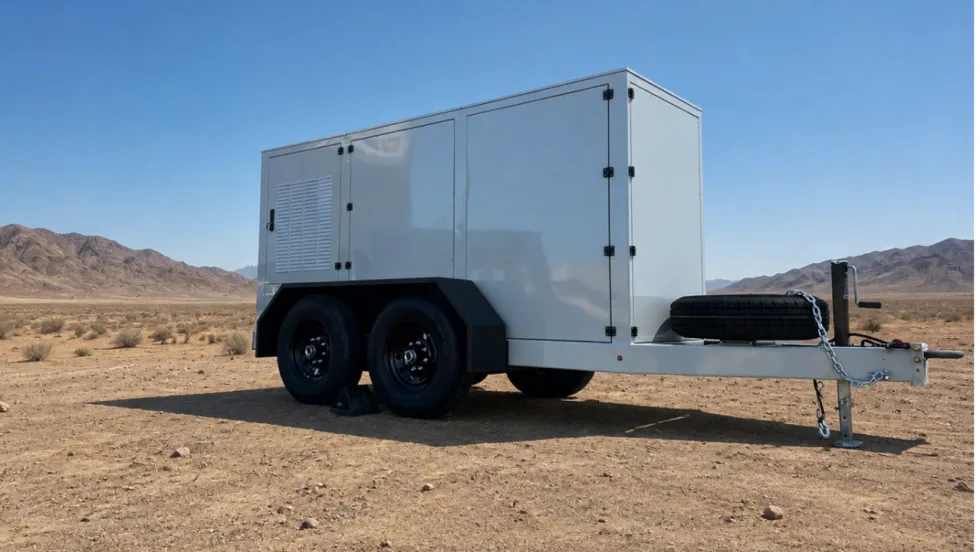
Xos Hub Surpasses One Gigawatt-Hour of Energy Delivered in the Field
A single Xos Hub has surpassed one gigawatt-hour of energy across more than 33,600 charging sessions in the field, demonstrating performance that supports Xos' expansion across new products and markets.
Read More →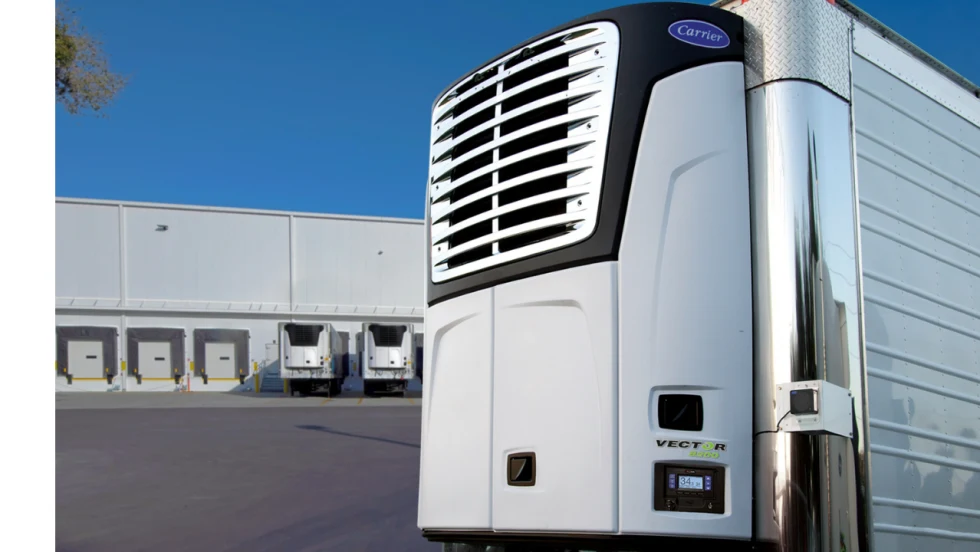
Carrier Transicold Launches All-Electric Vector 8200 TRU for Diesel-Free On-Site Cold Storage
Carrier Transicold’s first engineless multi-temperature TRU helps fresh- and frozen-food fleets add supplemental cold storage capacity during seasonal peaks.
Read More →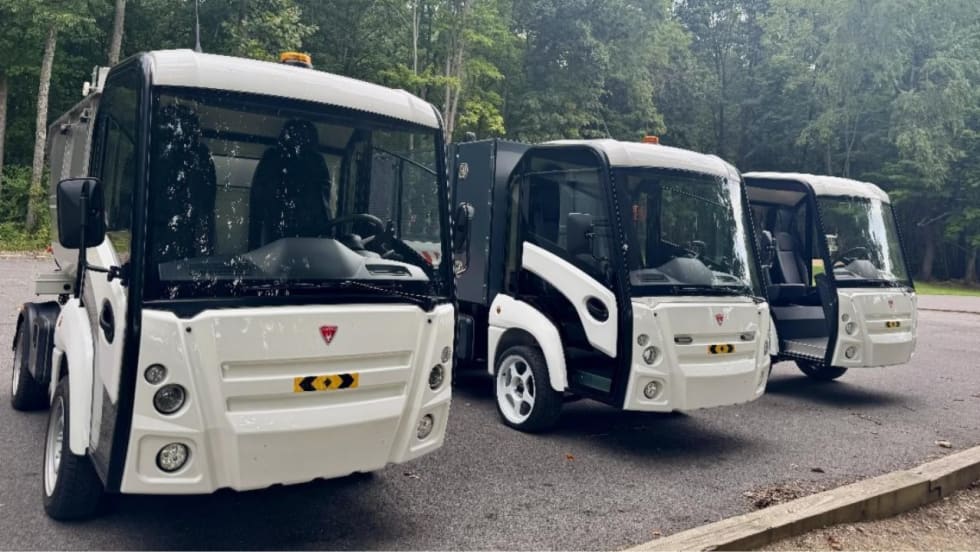
Narro Trucks Introduces Electric Utility Vehicle
Narro Trucks officially launched its operations on Aug. 20 and hosted a ride and drive to showcase its electric truck, which will be produced in Virginia.
Read More →
Samsung SDI Takes Full Control of GM Battery JV as Indiana Plant Pivots to Energy Storage
Samsung SDI is taking full control of its Indiana battery plant with GM, marking a major shift from the EV-focused joint venture Charged Fleet first covered in 2023.
Read More →
NWSA Taps CALSTART to Administer Zero-Emission Drayage Assistance Program
CALSTART will provide free technical assistance services to drayage fleets serving the Ports of Seattle and Tacoma and looking to transition to cleaner technologies and help decarbonize freight hubs.
Read More →
EV Fleet Reality Check: What Operators Wish They Knew Before Electrifying Their Work Vans
Electric work truck upfits bring new compatibility questions. Learn how parts availability, OEM guidance, power demands, and route planning can affect fleet performance.
Read More →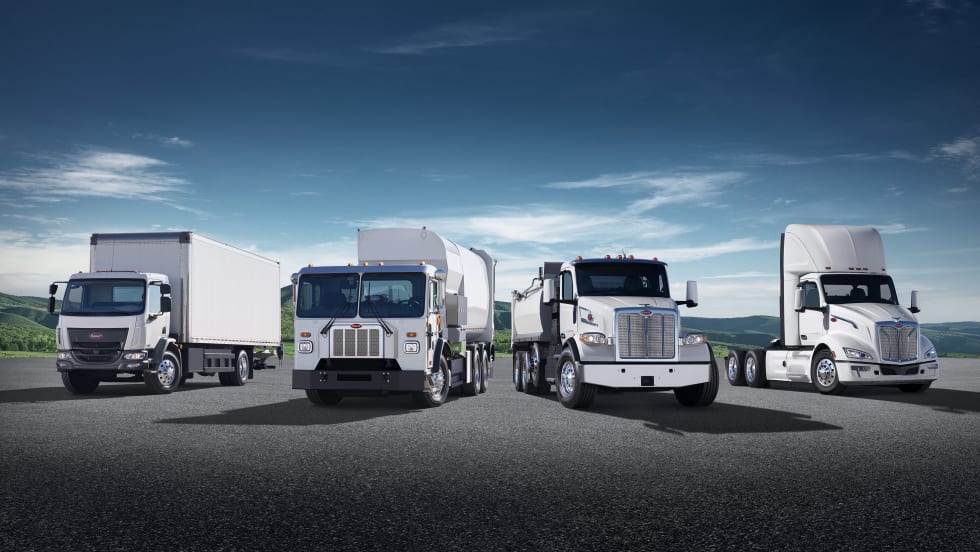
Peterbilt Expands Sourcewell Partnership with Electric Vehicle Lineup
Peterbilt Motors Company’s cooperative purchasing agreement with Sourcewell and its Canadian partner, Canoe Procurement Group, now includes including Peterbilt's battery-electric vehicle lineup.
Read More →