




Do You Know? 8 Pros for Using Swing Doors.
Put Your Swing Door Problems on a Roll
Discover how roll-up doors can help improve your operations and be customized to your specific fleet needs.
by Ken Czyzewski
June 26, 2013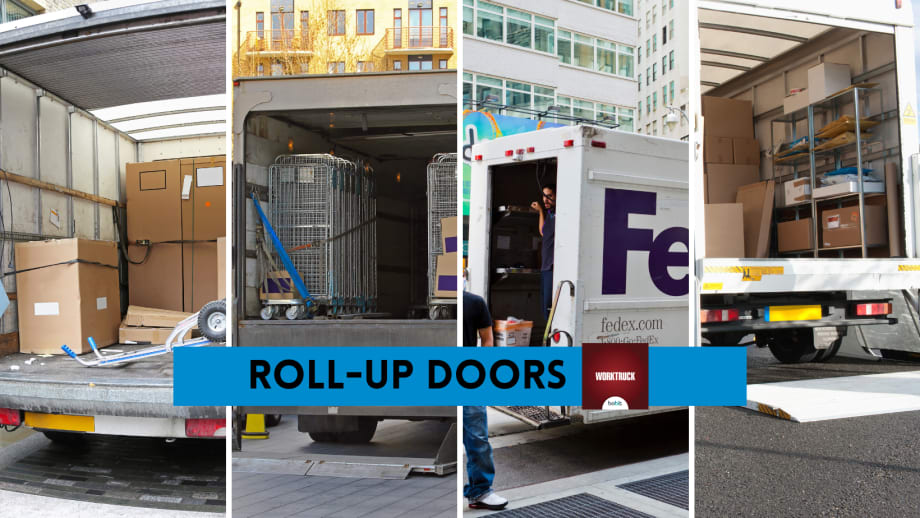
Roll-up doors are available for a variety of vehicle configurations are used in numerous vocational truck industries.
Photo: Work Truck
4 min to read
Roll-up doors keep personnel safe by allowing them to remain closer to the vehicle. In tight spaces, roll-up doors make loading and unloading easier and faster. Replacing swing-out doors with roll-up doors or spec’ing them on new truck bodies can improve operations while also providing greater safety, security, convenience, and durability.
And driver and operator safety, as we all know, is paramount. Ergonomics must be high on today's fleet manager’s “radar screen” because it can significantly impact the bottom line by reducing workers’ comp costs, improving driver productivity, and reducing fatigue-induced operator errors that can lead to preventable accidents.
They also eliminate damage associated with swing-out doors, both to surrounding objects and to the doors themselves, and prevent many injuries to personnel. Roll-up doors constructed of strong, double-sided aluminum ribs are secure, more durable, and easier to repair if damaged. They provide a full view of the compartment, with easy access to equipment inside. Versatile for a broad range of applications, they can operate in temperatures from below 40 degrees Fahrenheit to 180 degrees Fahrenheit.
Differences in Door Design & Construction
High-quality roll-up doors are constructed with ribs made of double-wall lightweight, anodized aluminum. One manufacturer’s rib design incorporates a polyurethane seal that rests up against the following rib to create a weather-tight seal when the door is closed. The spring-loaded operation makes the door easy to open and close. A three-inch diameter take-up roller allows for a small rolled-up size that provides maximum compartment storage. With foam-covered idler rollers, noise and vibration are dampened. A stainless steel lift bar provides additional bottom clearance for easy grip and door operation while enhancing its appearance.
Roll-up doors are generally furnished with a standard high-quality satin anodized finish. Optional automotive-quality paint finishes with a base and clear coat also can be specified to match the vehicle. Flexible polymer components, such as wipers and seals made of Santoprene, seal against water and offer high UV resistance. They also accommodate hot and cold temperature extremes and are easy to clean with mild detergents.
Customizable Roll-Up Doors for Most Requirements
It's important to spec for the specific application and needs of your fleet. Many options and accessories are available to tailor roll-up doors to specific applications. Here are a few of the choices:
Side-Rail Options. Various choices of side-rail configuration make it easy to accommodate the structure of a truck body and equipment compartment.
Manual Key Locks. Locks with standard key codes help keep contents secure. Heavy-duty locks are available for large doors.
Power Locks. Compact power locks provide added convenience and eliminate the need to use a key for frequent locking and unlocking. A manual override allows operation in case of power failure.
Door Ajar Switch. A magnetic switch lets the operator know instantly if a door is not closed securely.
LED Compartment Lighting. LED lighting provides high output and long life, with low amp draw, for work in low-light conditions. Light strips can be pre-installed on new doors or are easy to retrofit with side-rail mounting on existing doors.
See-Through Slats. Slats can be provided with a rugged polycarbonate material for interior or exterior compartments to allow viewing without raising the door.
Inside Opening Lift Bar. An inside lift bar provides added safety and convenience for large compartments or truck body doors.
Pull Strap. For tall doors, an optional pull strap adds convenience.
Drip Rails and Sill Plates. Where the application requires, the door manufacturer can provide an optional top drip rail or sill plate.
Roll Up Doors are Easy to Order, Install & Repair
Ordering instructions from the door manufacturer require mainly compartment measurements and some details on preferred mounting configuration and desired special features. Take-up rollers can be positioned at the front or rear of the header above the compartment opening.
In some cases, such as a truck body or large compartment door, a breadbox-style door may be used, with the roller mounted toward the rear of the area. The manufacturer can create custom solutions to fit specific applications based on standard designs.
Once the pre-drilled side rails and top rail are mounted to the compartment, the left and right pennant plates that hold the roller are installed. The roller and door unit are positioned and adjusted, including the handle assembly. Any accessory items such as lighted side rails and power locks are also installed easily during the process.
If a door is damaged, replacement ribs can be ordered from the manufacturer and installed without replacing the entire door. Individually replaceable end caps make disassembly easy.
Whether roll-up doors are used on individual compartments, for full truck body access, or even on trailers and other related equipment, they will be found to be convenient, safe, and durable. Their neat appearance will also enhance the look of the equipment and the company and fleet’s image.
Updated: October 25, 2022
Subscribe to Our Newsletter
More Upfitting
Re-rating Gross Vehicle Weight Ratings (GVWR): Why and How it's Done
Sometimes, it is not in a fleet’s best interests to have a vehicle at a given GVWR. Changing the GVWR to a special value can be done, but the process is complicated.
Read More →
Tekmodo Introduces CargoBright Brand of Translucent Roofs
CargoBright is designed to diffuse daylight across the cargo area while performing as a working vehicle roof. Its reinforced composite construction is designed for impact, abrasion, moisture exposure, and UV exposure.
Read More →
Buyers Products Expands Popular GuardDogg Headache Rack Line
Buyers Products’ aluminum GuardDogg headache rack is now available to contractors, construction crews, and utility fleets that want to reduce vehicle weight without sacrificing functionality.
Read More →

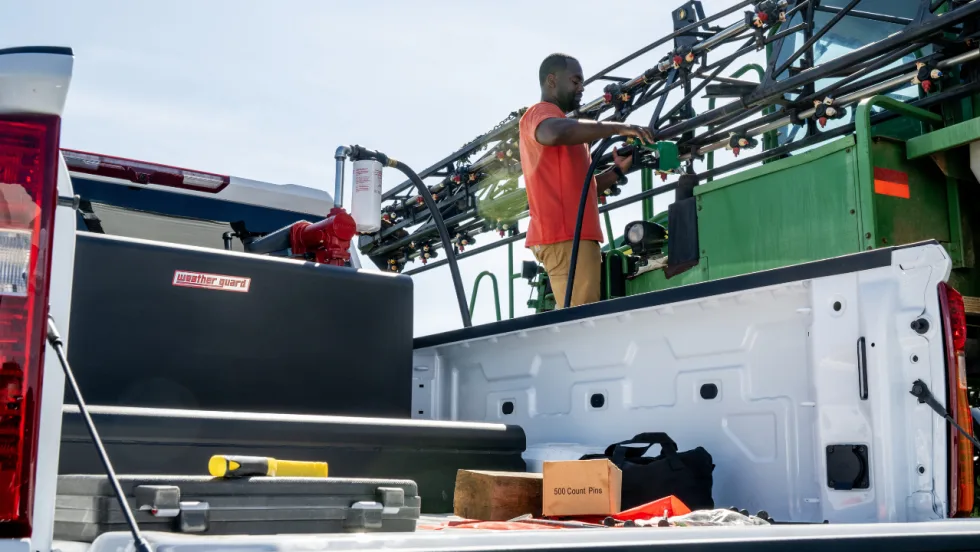
New Weather Guard Transfer Tank Engineered to Reduce Downtime and Improve Fleet Productivity
Weather Guard completely redesigned its line of transfer tanks to improve durability, simplify installation, and keep equipment running in demanding field conditions.
Read More →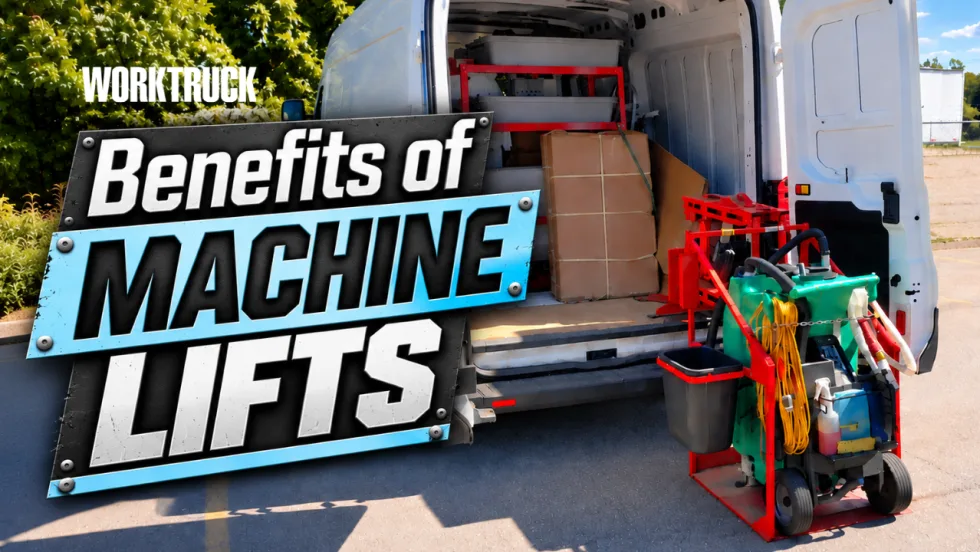
How Machine Lifts Drive Safety & Efficiency for Fleets
What is a machine lift, what fleets need them, and how do they improve safety and drive efficiency? What advantages do they have over ramps and liftgates?
Read More →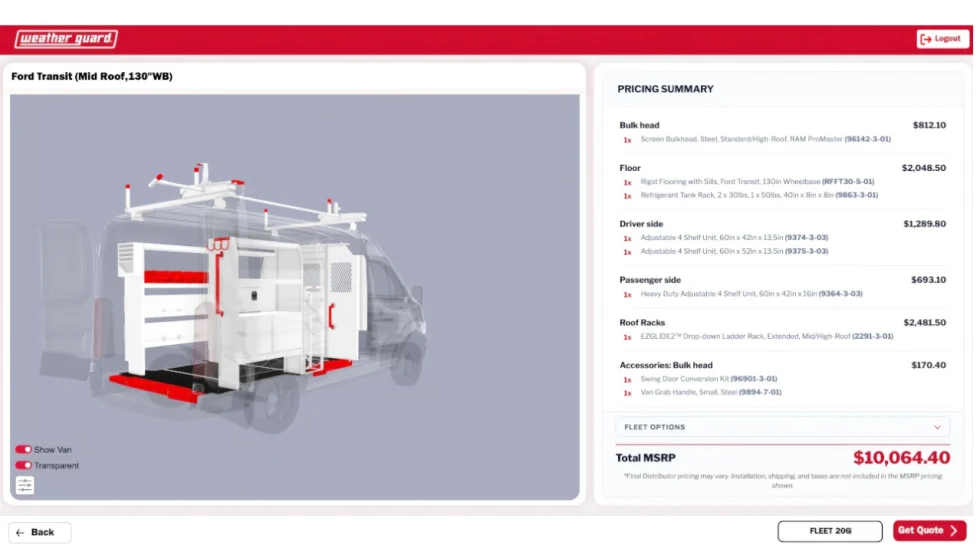
New Weather Guard Configurator Simplifies Planning and Design of Van Upfits
The Weather Guard Configurator combines vehicle-specific product compatibility with real-time 3D visualization to streamline design, quoting, and ordering for fleet managers, upfitters, and professional users. The latest version is now available for vans, with truck upfitting being added in early 2027.
Read More →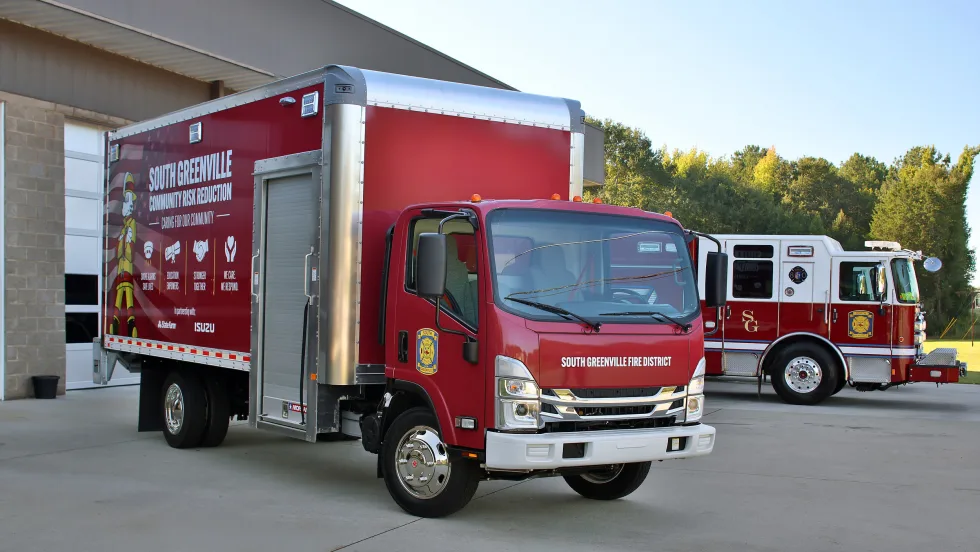
Isuzu Donates New N-Series NRR Truck to South Greenville Fire District to Support Community Outreach
Isuzu North America Corporation donated a new Isuzu N-Series NRR, equipped with a Morgan truck body and a Palfinger liftgate, to support fire safety education, community engagement, and outreach programs throughout Southern Greenville County, South Carolina.
Read More →
M.H. Eby Announces Bostick Truck Center as Michigan Distributor
Bostick Truck Center in Pontiac, Michigan, is now the official distributor for Eby Truck Bodies in Michigan. It will have access to Eby’s Ford, GM, and Ram chassis pool programs.
Read More →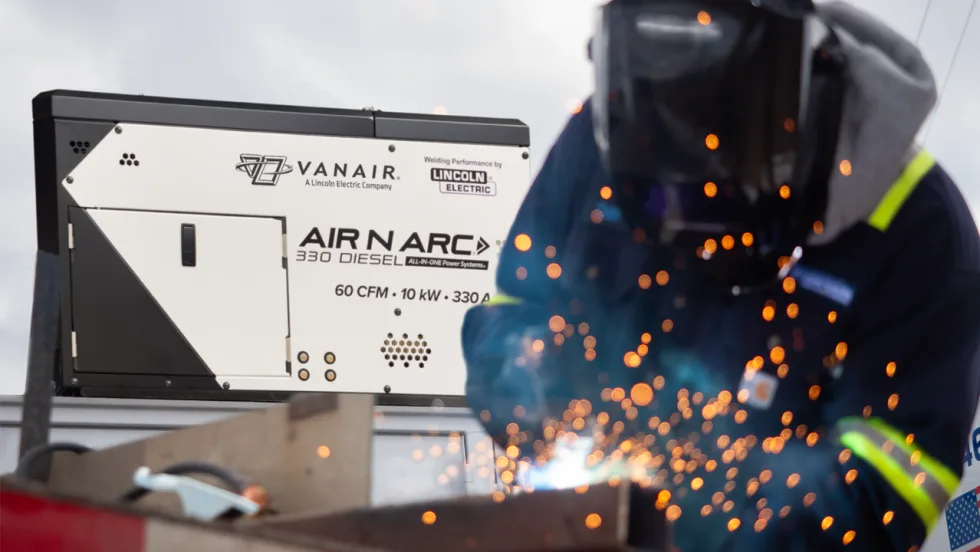
Multitasking: Vanair’s Air N Arc 330 Diesel 60 CFM All-In-One Power System
The Air N Arc 330 Diesel 60 CFM from Vanair consolidates a welder, generator, rotary screw air compressor, battery booster, battery charger, and EV charger into a single 750-pound enclosure driven by one 24.8-horsepower Kubota diesel engine.
Read More →
Buyers Products Awarded Sourcewell Cooperative Purchasing Contract for Snow & Ice Equipment
Buyers Products has been awarded a Sourcewell contract for a wide range of winter maintenance equipment and accessories, including snowplows, municipal plow systems, wing plows, spreaders, and more.
Read More →