




Propane-Powered and Profitable
Austin Gutter King is realizing reduced fuel and maintenance costs after converting four vehicles to run on propane.
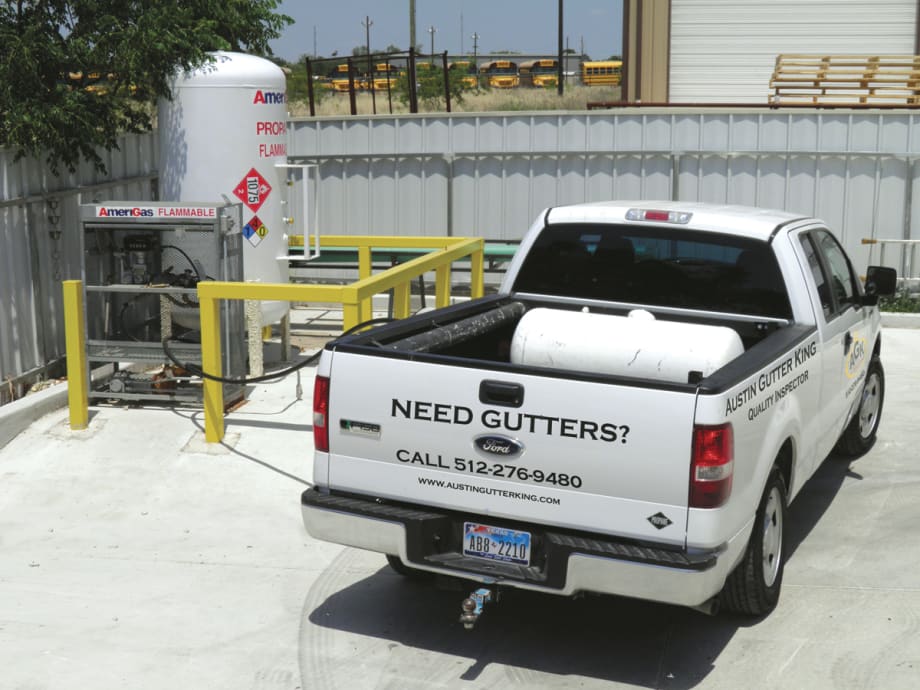
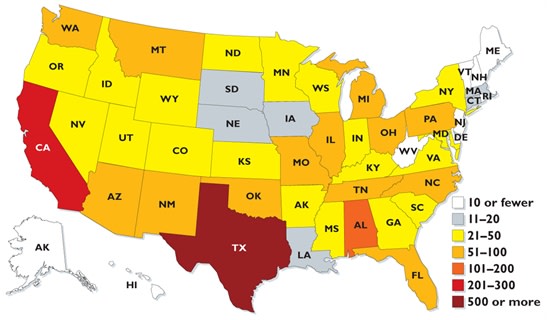
In Texas, propane is big business. The state has more than 850 fueling locations and the world’s largest store of propane autogas.
For Gary Kulp, owner of Austin Gutter King, a rain gutter installation and maintenance company, propane seemed like a natural choice after gas prices skyrocketed a few years ago, dropped, then shot back up again.
“When we first started investigating propane a few years ago, I wanted to diversify my fueling options for two reasons: One is the reliance on overseas fuel and oil. Secondly, we wanted to do something that was more eco-friendly.”
The company has a total of 18 vehicles in its fleet. Four vehicles run on propane; specifically, three 2008 Ford F-150s and one 2010 Ford E-350 cutaway. Other vehicles include a Ford F-350 and three Dodge 2500s, a Toyota Tundra 1/2-ton, a Chevrolet 1/2-ton, two Mazda B2300 pickups, three diesel-powered Dodge Sprinter vans and two sedans for sales reps. The average vehicle drives 12,000 miles per year.
Kulp plans to purchase one more propane-fueled vehicle this year. He says the company plans to have all fleet vehicles equipped with propane fueling systems within five years.
Kulp investigated a number of different fuel types before deciding on propane. Once he decided, he chose Roush CleanTech as his company’s provider. “The technology has moved forward by leaps and bounds,” he says.
The upfitting process was seamless, Kulp says. A factory code routes the new trucks through Roush, so he didn’t have to wait for delivery of the propane vehicles.
Propane Autogas ROI
Kulp believes he’ll see a return on investment on his propane vehicles in about six years. The ROI depends on the cost of propane relative to gas and federal subsidies. Kulp was able to get a federal subsidy for his propane trucks before the program expired at the end of 2010.
Propane produces fewer hydrocarbons, so it burns cleaner. Kulp expects fewer maintenance issues and fewer oil changes. He uses synthetic oil and changes it every 15,000 miles. “Even at 15,000 miles, the oil is pretty clean, but it’s a best practice to go ahead and change it,” he says.With a cleaner engine, “We think these engines will last about as long as diesel engines do, which is about 300,000 miles.”
Kulp paid an extra $300 for hardened valves that can handle the increased heat from burning propane.
Fueling Up
Kulp negotiated a special deal with a local propane distributor to fuel up. Propane prices in his area are closer to the price of gasoline in the winter and lower in the summer. Right now, he pays about $2.65 a gallon. “Compared to four-dollar diesel, it’s quite a deal,” he contends.
With most alternative fuel and propulsion types, being able to fuel up anywhere, quickly, is a challenge. This is not an issue for Kulp — there are dozens of public propane refueling stations in the city of Austin, including one at each U-Haul location. Propane also is the default choice for home use outside the city, because natural gas is not available. “We’re blessed to be here in Texas, where propane is available,” he says.
As for the rest of the country, Kulp says finding fueling locations doesn’t have to be an issue if fleets go with an onsite refueling system. In his area, with the help of subsidies and tax credits, Kulp says the fueling infrastructure can be installed for around $10,000.
Kulp says range isn’t an issue for his propane-fueled vehicles. He reports that the 60-gallon onboard propane tank provides a 48-gallon useful capacity, which translates into 500-550 miles per tank. That range is factoring a 10-percent loss in fuel economy compared to gas. “We only have to fuel up two or three times a month, depending on the vehicle,” he says.
Sustainable Business
The company has committed itself to environmentally sustainable business practices. Kulp says his company’s four sustainability initiatives are converting vehicles to propane, rainwater reclamation, recycling, and reducing the size of his trash haul. Kulp also uses wind power for Austin Gutter King’s offices.
Gutter King has instituted other practices and technology to ensure its fleet is running well. The company installed GPS tracking devices in all of its vehicles for more efficient routing. Kulp also is diligent about preventive maintenance and has an ASE-certified employee on staff.
Thinking of Propane Fueling Onsite?
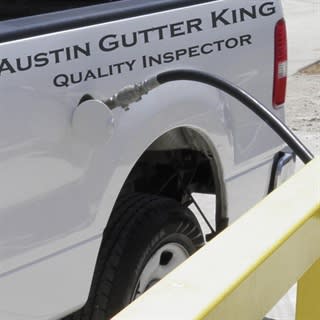
Regardless of fleet size, a propane autogas on-site refueling infrastructure can be tailored to fit a fleet’s needs, says Brian Feehan, vice president, Propane Education & Research Council. Depending on storage necessity, longevity and available space, there are skid-mounted above-ground portable platforms, or underground storage tanks for longer-term use, depending on fleet requirements.
Skid-mount systems are typically pre-assembled, making installation or relocation quick, easy and inexpensive, according to Feehan. Permanent refueling stations include an aboveground or underground propane autogas storage tank. As with any refueling infrastructure, operators are trained by local propane providers to ensure safe refueling practices, Feehan says.
Propane providers also can advise which refueling option best fulfills a fleet’s needs and provide an installation estimate. The installation cost of a propane autogas refueling station is comparable to that of gasoline or diesel stations, according to Feehan. Due to multiple portable or permanent options, installation cost varies. Federal tax credits are available for 30 percent of the installation cost, up to $30,000, for alternative refueling structures.
Public propane fueling stations
Fleet managers and drivers can locate propane stations via the Energy Department’s Alternative Fuels and Advanced Vehicle Data Center. The site includes a search function for all alternative fuel and power stations within a specific mile radius for a ZIP code or address.
More Small Fleet


Developing Budget-Friendly Driver Safety Programs
From driver training and safety meetings to one-on-one coaching and incentive programs, several small fleets share how they have developed a safety culture with their drivers using low- to no-cost resources.
Read More →
Boosting Last-Mile Fleet Uptime, Safety, and Value with AI Vehicle Inspections
AI-powered inspections are transforming last-mile fleets by replacing manual checks with highly accurate automated scans that detect defects in seconds. By giving fleet operations visibility into the daily condition of their vehicles, you can identify trends over the vehicle’s lifecycle that enable improved procurement decisions, route management, driver training and accountability.
Read More →
Five Ways Seat Belts Help Prevent Injuries
There are five ways seat belts protect occupants from injuries, according to the Tennessee Department of Safety and Homeland Security.
Read More →
It’s here: The 2026 Fleet Technology Trends Report
What does AI mean for fleets? Get the answer — and learn other top tech trends.
Read More →
Small Fleets, Big Impact: How Independent Drivers Power Wreaths Across America
Check out how small fleets and independent drivers power Wreaths Across America each December and why their impact matters more than ever.
Read More →
VMS Survey Finds 65% of Small Fleet Managers Run Operations Alone
A new VMS survey shows small fleet managers are stretched thin, with most handling operations solo and eager to adopt digital tools for relief.
Read More →
Tips for Driving Safely on Halloween Night
This video features a reminder from the Connecticut Department of Transportation (DOT) and the Connecticut Police Chiefs Association, urging drivers to prioritize safety this Halloween.
Read More →
AI, Access, and Uptime: VMS’s Next Chapter with David Prusinski
VMS’s new Co-CEO, David Prusinski, shares how an AI-first approach will give small fleets and repair shops the tools to compete like big players.
Read More →
Fleet Managers Share Winter Prep Tips: It's Never Too Early!
Three fleets share best practices to prep vehicles for winter and prevent downtime when the cold sets in.
Read More →