




Stay Informed: How to Know if Your Drivers Need a CDL
Perfecting Your Fleet: 4 Reasons to Buy Medium-Duty Trucks
Find the truck that's perfect for your fleet. Here are four benefits to having medium-duty trucks in your fleet.

Hillary Weiss・Senior Editor
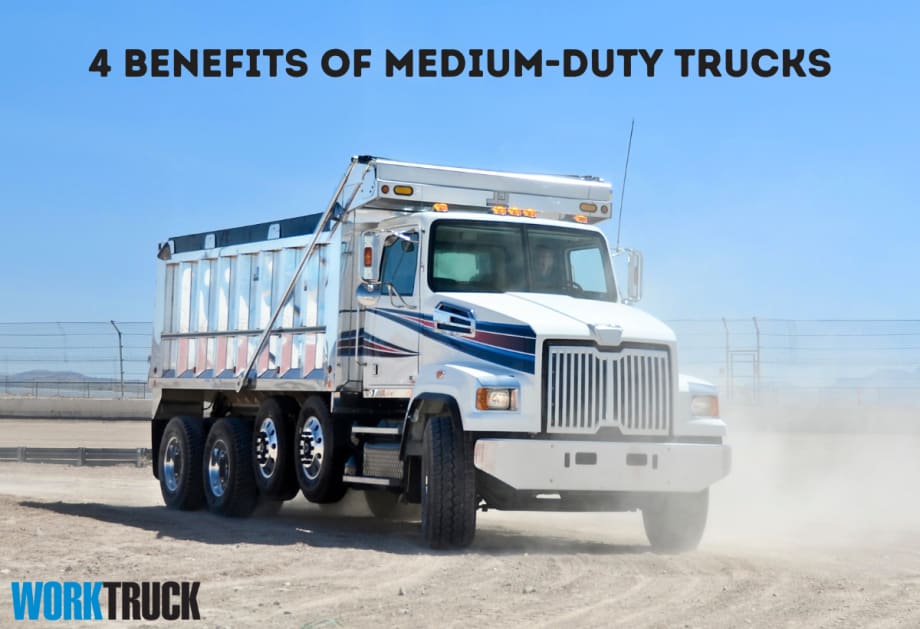
There are several benefits to buying medium-duty trucks compared to light-duty trucks and heavy-duty trucks.
Photo: Work Truck
2 min to read
- Medium-duty trucks offer versatile capabilities suitable for a wide range of fleet needs.
- These trucks balance between cost-efficiency and sufficient performance for various tasks.
- Their adaptability makes them an ideal choice for expanding and diversifying fleet operations.
*Summarized by AI
Medium-duty trucks consist of Class 4-6 trucks. What classifies a medium-duty truck is the Gross Vehicle Weight Rating. This includes the maximum weight plus the weight of the cargo, passengers, or fuel.
Medium-duty trucks weigh between 14,001 and 26,000 pounds. They have a varied of options they can be used for, such as:
Delivery trucks.
Fuel/lube trucks.
Bucket trucks.
Cherry pickers.
Depending on the operations needed, Class 4-6 trucks might be more beneficial compared to light-duty or heavy-duty trucks.
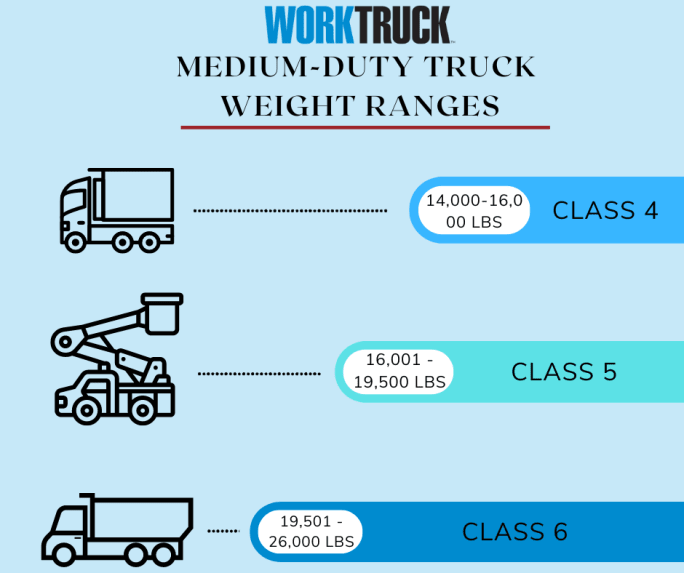
Medium-duty trucks are Class 4-5 and weigh between 14,000 and 26,000 poounds.
Photo: Work Truck
4 Benefits of a Medium-Duty Work Truck
Whether you need a work truck for transporting fuel or lumber, Class 6 trucks can get you where you need to go.
Here are six benefits of choosing a Class 4-6 medium-duty truck:
1. Costs Less
If you calculate the total weight of products you’ll need to transport, you can figure out which trucks you need. But going bigger isn’t always better. If you use a Class 6 truck and utilize all its capacity, a lower upfront cost (compared to heavy-duty trucks) plus higher utilization equals a higher return on investment.
2. Easier to Drive
Traveling between job sites can get difficult. Class 4-6 trucks are lighter in weight and have a single axle. This allows the driver to navigate on the road and job sites a lot easier than a heavy-duty truck.
Plus, some Class 6 trucks such as the Ford F-600 have four-wheel drive, adding mobility. Medium-duty trucks also have higher visibility that helps drivers navigate neighborhoods.
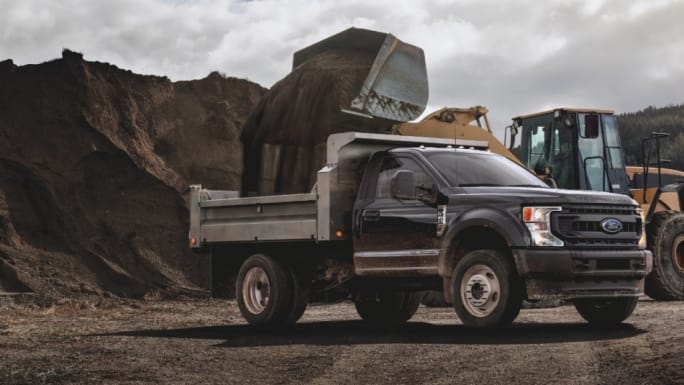
The 2021 F-600 Super Duty chassis cab features 4x2 or 4x4 drivetrain and 300 lb.-ft. of torque.
Photo: Ford
3. No CDL Necessary
Drivers who have a CDL are in short demand. And drivers who operate trucks that weigh more than 26,000 pounds are required to have a valid CDL.
By adding medium-duty trucks to your fleet, you’ll have an easier time recruiting and retaining drivers who don’t have a CDL.
4. Customizations
No matter the industry, medium-duty trucks can be customized to fit the fleet’s needs. Some customizations available are cab configurations, bodies, and chassis-mounted equipment.
It may seem expensive to customize your trucks up front, but by maximizing functionality you end up saving money in the long term. Some of the benefits include:
Increasing storage.
Option to add a crane.
Custom lighting.
Choose between aluminum or steel body material.
Option to open or close truck body.
In the market for a medium-duty truck and interested in 2023’s trucks and vans for commercial fleets? Work Truck has you covered.
We made a list of all the latest 2023 commercial models, including updates and discontinuations. Take a look back at what the Top 5 Medium-Duty Trucks were in 2022!
Subscribe to Our Newsletter
More Vehicle Research
2026 Ram 1500 Tradesman Put to a Real-World Fleet Test
A few days behind the wheel of a 2026 Ram 1500 Tradesman turned into a test of visibility, parking, work-ready features, and even severe-weather driving.
Read More →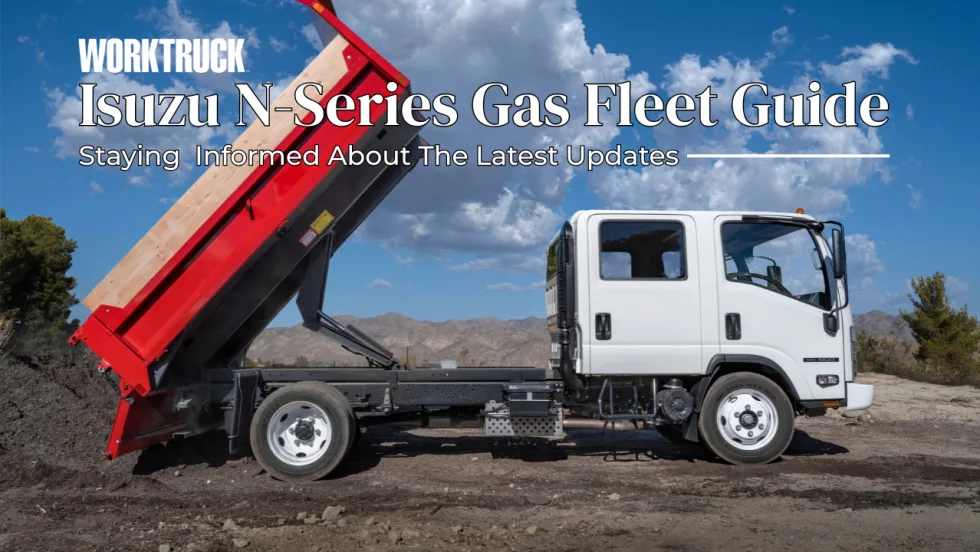
Isuzu N-Series Gas Fleet Guide: Specs, Capability and 2027 Model-Year Updates
Explore Isuzu Truck North America’s N-Series Gas fleet specs, engine performance, GVWR and payload capability, configurations, chassis dimensions, work-focused features, and 2027 model-year information.
Read More →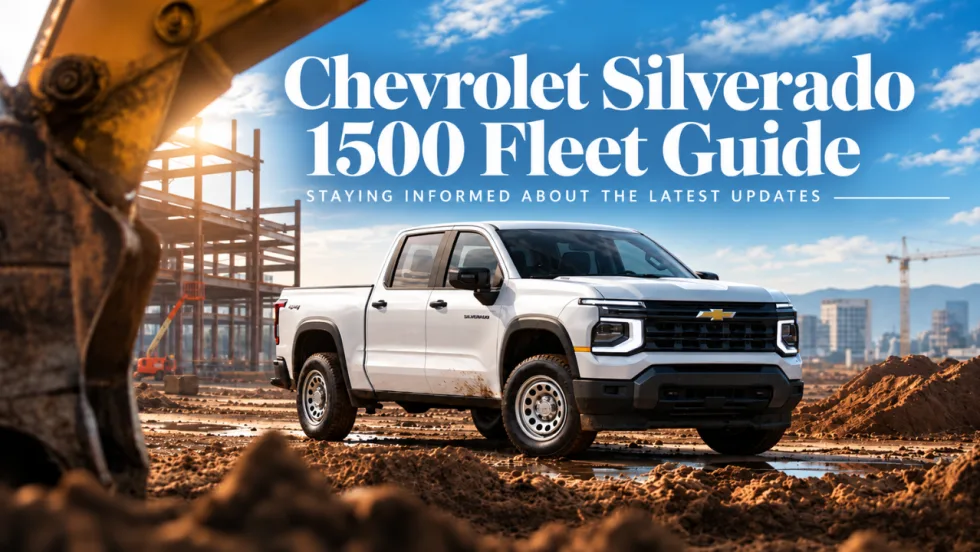
Chevrolet Silverado 1500 Fleet Guide Specs Capability and 2027 Model-Year Updates
The next-generation 2027 Chevrolet Silverado 1500 brings new V-8 engines, updated technology, expanded safety features, and a fleet-focused Work Truck. Here’s what commercial fleets need to know so far.
Read More →
Ram ProMaster City Fleet Guide Specs Cargo Capacity and 2027 Updates
Work Truck’s Ram ProMaster City Fleet Guide tracks the latest specifications, cargo capability, configurations, fleet technology, pricing, and model-year updates for Ram’s mid-size commercial van.
Read More →
Ford F-150 Fleet Guide Specs Capability and 2026 Model-Year Updates
Explore 2026 Ford F-150 fleet specs, engines, towing and payload capability, configurations, work features, technology, and model-year updates.
Read More →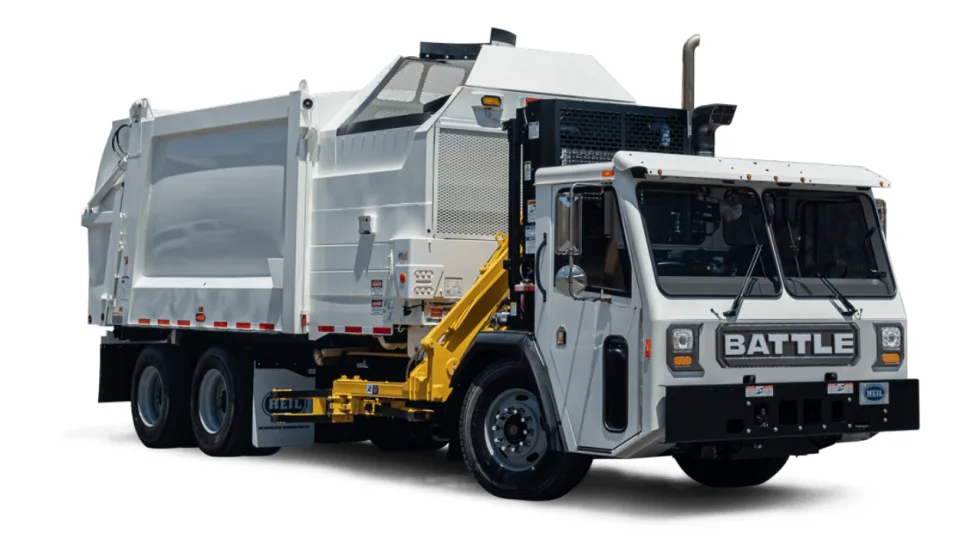
TCI Now Sells & Supports Battle Motors’ Vocational Trucks
Midwest truck dealer Truck Centers, Inc. (TCI) has expanded its transportation solutions with sales and service support for Battle Motors’ heavy-duty vocational trucks at locations in locations in Indiana, Illinois, and Missouri
Read More →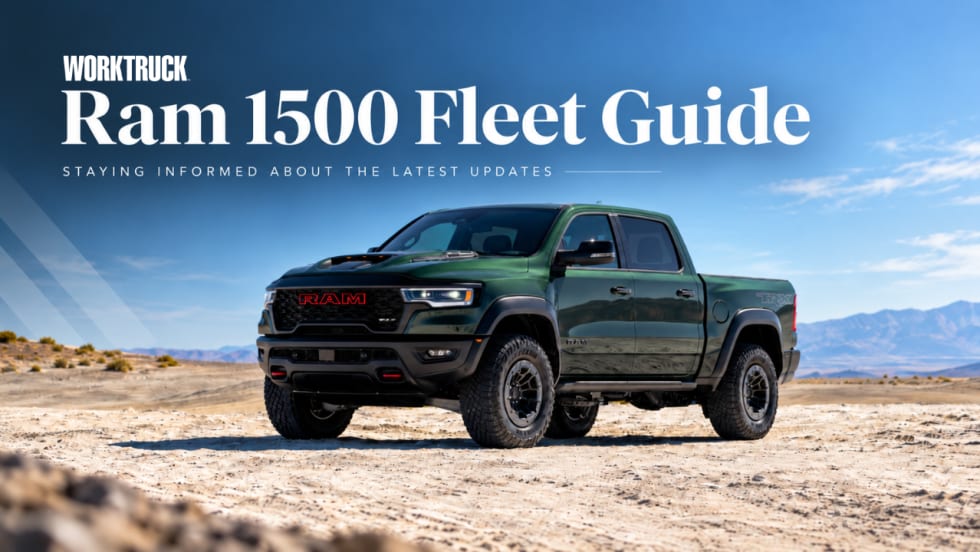
Ram 1500 Fleet Guide Specs, Capability and 2027 Model-Year Updates
Explore always up-to-date Ram 1500 fleet specs, engines, towing and payload capability, configurations, technology, pricing updates, and model-year changes.
Read More →
Peterbilt Trucks Equipped with Paccar TX-18 Pro Boost Efficiency for Maryland Fleet
Patuxent Companies is replacing aging trucks with the Peterbilt Model 567 and Model 589, specified with the Paccar TX-18 Pro 18-speed automated transmissions, and is reporting an 8% to 10% improvement in fuel economy.
Read More →
Stellar Expands into Fire Apparatus Market with Acquisition of Midwest Fire
Stellar Industries has acquired Midwest Fire, a custom fire apparatus manufacturer headquartered in Luverne, Minnesota, with nearly four decades of specialized apparatus experience.
Read More →
Recalls You Need to Know About in August 2026
If you have Altec, Chrysler, Ford, Heil, General Motors, International, Mack Trucks, Paccar, Rivian, Royal Truck, Toyota, US Truck Body, or Volvo Trucks vehicles in your fleet, you should check these important recalls issued by the National Highway Safety Administration.
Read More →