Last-Mile Delivery Market Primed for Electrification
Work vehicles are finally becoming electrified. With many stops, predictable
routes, and daily returns to a central depot, the last-mile delivery market is
poised to take advantage of these new electric models first.
by Martin Romjue & Chris Brown
May 4, 2021
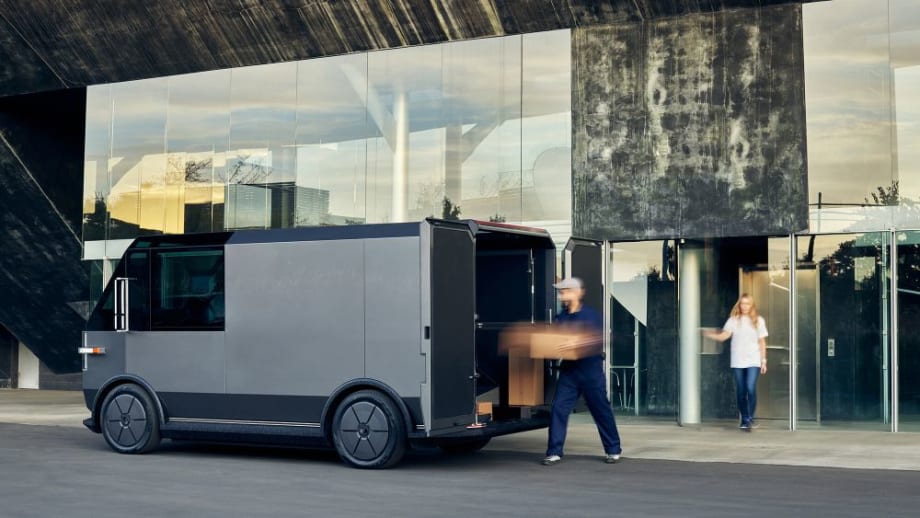
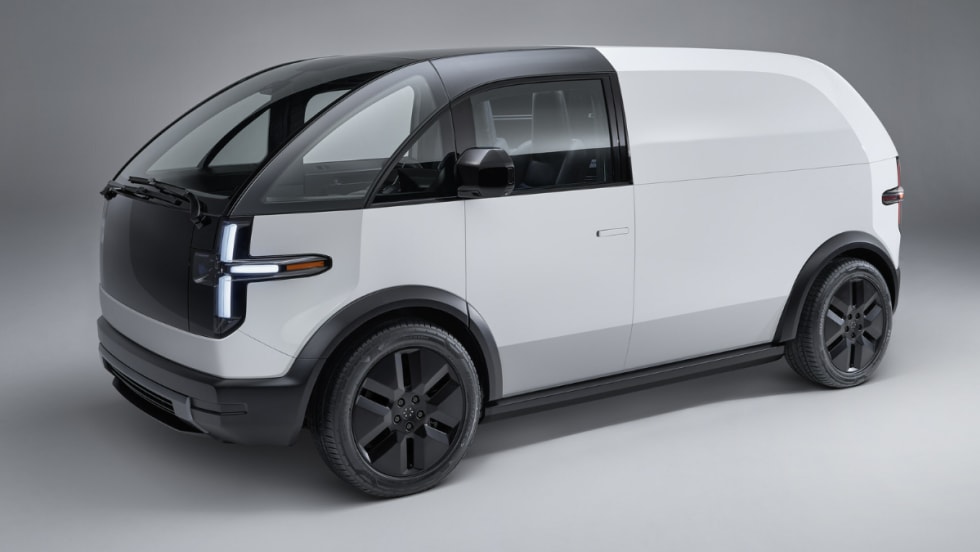
EV startup Canoo’s MPDV1 delivery van has dimensions comparable to the Ford Transit
Connect and Ram ProMaster City, but with more cargo capacity — 230 cu.-ft. — behind the
bulkhead. Canoo expects a limited launch in late 2022, with production ramping up in 2023.
Photo: Canoo
5 min to read
In the past year, local deliveries have multiplied, spurring investment in the manufacturing of electric delivery vans. From 2018 to 2030, the number of EVs in commercial fleets will likely grow to 8 million by 2030, from only 5,000 in 2018, according to research by McKinsey & Company. Overall, advances in design, building, and technology will make electric vans more reliable, durable, and feasible for fleet operations.
Ad Loading...
The pandemic, small business trends, and demand for home delivery coincide with the next phase of electric vehicle evolution as their ranges increase, batteries grow in capacity, available models increase, and costs gradually decline. In the last-mile delivery market, the many stops, predictable routes, and daily returns to a central depot lend themselves to electric vans.
Ad Loading...
E-commerce still represents only about 15-18% of all retail purchases, indicating a strong upside for potential growth in the last-mile delivery market. The market for urban delivery vans is expected to double over the next five years, reflecting a likely permanent shift in consumer purchasing patterns, even when the pandemic recedes and retail stores are free to fully open again without restrictions. That means Amazon, UPS, FedEx, and all types of delivery services, both global and local, will be creating a demand that exceeds supply.
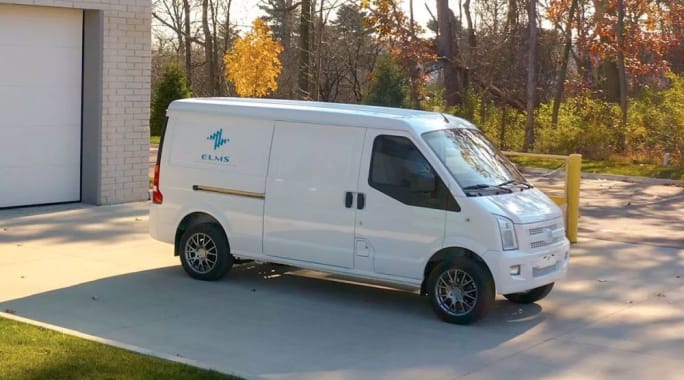
The Class 1 urban delivery vehicle from Electric Last Mile Solutions (ELMS) is expected to have a range of 150 to 200 miles and a cargo capacity of 170 cu.-ft. Product launch is expected in the third quarter of 2021.
Photo: ELMS
The Commercial EV Wave
A ripple of news on commercial EVs three years ago has turned into a wave of EV releases this year and next, from small cargo vans to larger Class 3 and 4 step vans on truck chassis.
In addition to traditional OEMs such as Ford, General Motors, and Mercedes-Benz, independent automakers have permeated the market. Here are some of the primary first wave suppliers:
EV startup Canoo is making two electric delivery vans in two initial sizes for a limited launch in late 2022, with production ramping up in 2023. The MPDV1 has dimensions comparable to the Ford Transit Connect and Ram ProMaster City, but with more cargo capacity — 230 cu.-ft. — behind the bulkhead. The larger MPDV2 fits in the large van category (Mercedes Sprinter, Ford Transit) and offers a comparatively substantial 450 cu.-ft. of cargo volume. Three battery pack capacities will be offered: 40kWh (for an estimated 130 miles range on the MPDV1 and 90 miles on MPDV2), 60kWh (190 miles/140 miles), and 80kWh (230/190 miles).
The Class 1 urban delivery vehicle from Electric Last Mile Solutions (ELMS) is expected to have a range of 150 to 200 miles and a cargo capacity of 170 cu.-ft. Product launch is expected in the third quarter of 2021.
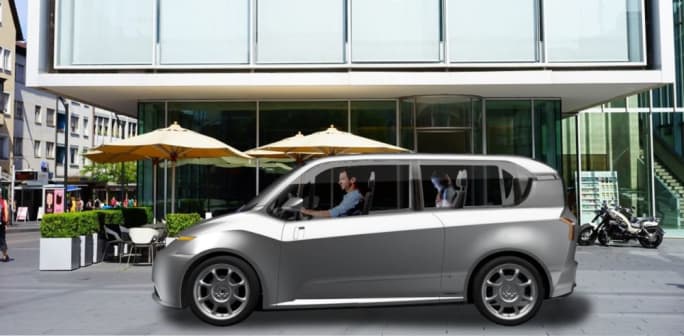
Indigo Technologies, an upstart electric OEM born at MIT, has developed an EV for package, food, and people delivery that uses its patented “robotic wheel” technology to deliver the ride comfort and handling previously not achievable with conventional motor and suspension systems. The purpose-built Indigo EVs will initially come in two variants: a four-wheel microvan and a three-wheel delivery pod.
Cenntro Automotive Group, best known for its low-speed electric utility vehicles, unveiled plans in January to produce an electric Class 4 urban delivery vehicle with a top speed of 60 mph. The CityPorter is projected to offer a range of up to 220 miles and 636 cu.-ft. of cargo capacity.
Workhorse unveiled its C650 electric step van at the 2020 Work Truck Show. The C650 and C1000 will offer (you guessed it) 650 and 1,000 cu.-ft. of cargo capacity. The vehicles are powered by a modular battery pack system that will provide 35 kWh of power when equipped with two battery packs and 70 kWh in its standard four-pack configuration, for range estimates of 100 and 150 miles.
Xos is testing its electric delivery trucks with UPS and cash management provider Loomis. The company’s modular battery pack system can be configured to accommodate a range of up to 250 miles.
Amazon has started testing its Rivian-made van for deliveries in January with wider deployment scheduled for this year, although details on battery, drivetrain, and range are scant.
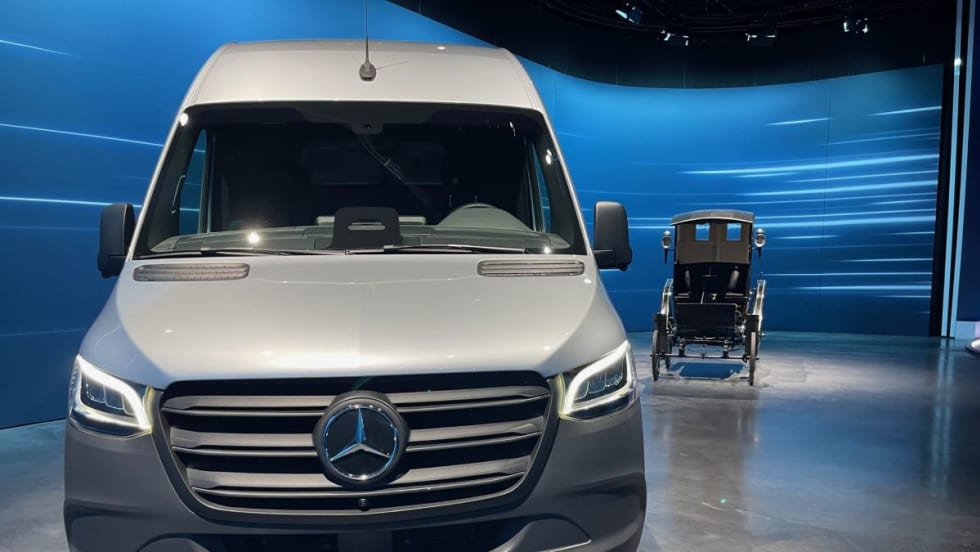
The European electric Sprinter is equipped with a small 55-kWh battery, giving it a stated range of only about 90 miles. Mercedes is planning an all-new Sprinter that can accommodate both electric and ICE drivetrains that will have more room for batteries. It’s reportedly headed to the U.S. in 2023.
The BrightDrop EV600, the electric delivery van from GM’s new EV business unit, will have, yes, 600 cu.-ft. of cargo capacity and is projected to achieve a maximum range of 250 miles. BrightDrop isn’t yet divulging EV600’s battery specs, but it will use GM’s Ultium battery system that spans 50 kWh of available energy up to a massive 200 kWh, which theoretically offers 400 miles of range. BrightDrop will start delivering 500 of its new EV600 delivery vans to Fedex, its first customer, later this year.
The Ford E-Transit, headed to market in late 2021 for first customers, will come in three roof heights and two lengths. E-Transit’s single battery pack offers 67 kWh of usable energy for an expected range of 126 miles, though that range is for the low roof height model only.
Workhorse Group Inc. is an American independent automaker with a focus on the last-mile delivery sector. Workhorse famously lost out on the contract to replace up to 165,000 USPS delivery vehicles to Oshkosh Defense. Nonetheless, the company expects to launch its electric C650 and C1000 step vans later this year. Workhorse C Series vehicles are powered by a modular battery pack system, which provides between 35 kilowatt-hours (kWh) when equipped with two battery packs and 70 kWh in its standard four pack configuration. Range is expected to be 100 and 150 miles on a single charge.
Electric conversion companies such as Motiv and Lightning eMotors take medium-duty Ford and GM chassis and convert them to electric powertrains for use in last-mile deliveries and other applications.
Indigo Technologies is carving a niche in the last-mile delivery market with a lightweight van that uses its patented “robotic wheel” technology to deliver the ride comfort and handling previously not achievable with conventional motor and suspension systems.
Photo: Indigo Technologies
Fleet Operators Moving to EVs
When asked what key performance indicators (KPIs) would be considered with EV implementation, most fleet manager/operator respondents to a recent Utilimarc customer survey about the future of electric vehicle performance pointed to the reduction of CO2 emissions and financial savings due to fuel expenses and maintenance costs.
Ad Loading...
Target goals for these KPIs were, on average, between 30 and 45% reduction in cost per mile, CO2 emissions, fuel savings, and maintenance costs.
All survey respondents anticipated some increase in EVs in their fleet in the next three years, with the average response being about 28%. Additionally, over 92% of respondents plan on prioritizing Class 1 and 2 vehicles in this change.
In a response that points to anticipated EV demand, a large fleet operator said, “We plan to convert 100% of the light-duty fleet by 2030.”
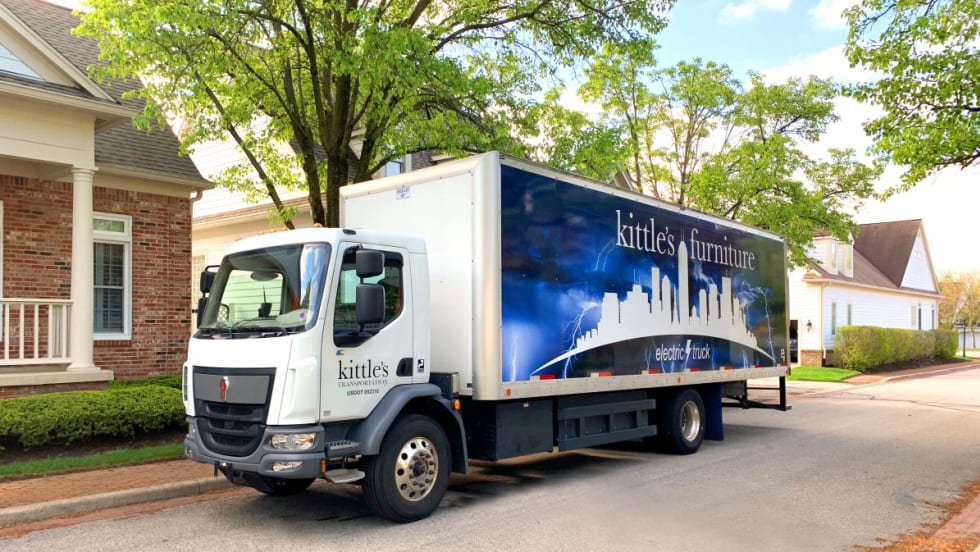
With six retail locations in Indiana, Kittle's Furniture uses a Kenworth K270E medium-duty electric truck to deliver furniture to customers in the Indianapolis metro area from its distribution center in Fishers.
The new cloud-based service from Bosch aggregates search results across multiple brokers and load boards based on a specific criterion, calculates profits, and helps with data-driven decision making to eliminate empty miles.
To make last-mile deliveries go smoothly, delivery companies can use strategies such as solving for demand fluctuations, using data and technology to plan better, and considering the technology offered to customers.