




Improving Economy to Boost 2015-MY Commercial Orders
Across-the-board improvement in business conditions, especially in the energy sector, is prompting a broad cross-section of corporations to increase their fleet order volume for MY-2015 to meet this uptick in business activity.


Photo courtesy of iStockPhoto.com.

Photo courtesy of iStockPhoto.com.
Fleet ordering for the 2015 model-year will be fueled by ongoing improvements in the national economy. Early indications are that total commercial fleet orders, on average, will increase compared to the prior model-year. Among the key factors driving 2015 model-year buying decisions are corporate initiatives to acquire the most fuel-efficient models available for the fleet application, downsizing to smaller displacement engines, and the incorporation of additional safety features and options into company-provided vehicles.
This market assessment is based on a 2015 model-year buying inclinations survey of 400 corporate fleets conducted by Automotive Fleet in late May 2014. The majority of fleet managers responding to AF's survey reported they will increase their new-vehicle ordering volume compared to last model-year; however, the commercial fleet market is very diverse and there were a smaller number of companies that reported they will decrease the volume of their MY-2015 fleet ordering for various reasons. But, on an aggregated basis, the survey revealed the overwhelming majority of companies are predicting either an increase in fleet order volume or that they will maintain traditional ordering levels for model-year 2015.
The top reasons for increasing fleet orders are improving business conditions and company expansion. One example is fleets in the energy sector, which are experiencing robust growth.
"We will acquire more vehicles, as we are experiencing a 25-percent growth in West Texas," said Jared Hanis, manager of procurement-fleet services for Western Refining Wholesale.
Business expansion, especially through corporate acquisitions, is another factor contributing to increased fleet order volume.
"A key reason for our increased ordering is because of expansion, both internally and through acquisitions. Normally, we purchase the vehicles when acquiring companies, assess the fleet, and then replace vehicles, as needed, the following year. The 2014 calendar-year is becoming a very good year for acquisitions," said Paul Youngpeter, CAFM, managing director, fleet, real estate, and facility management for Rollins Inc.
For many companies, 2015-MY ordering is returning to the historical volumes that occurred prior to the financial crisis. "Ordering in 2014 was our highest year since 2008, and we expect to maintain the same level for 2015," said Charlie Szymanski, manager, global property casualty insurance & auto fleet for PPG Industries.
Another example is AmeriGas Propane. "We are acquiring approximately 24-percent more vehicles versus last year's purchase. This number is up approximately the same for both our unit count and budgeted dollars," said Jay Massey, CPIM, corporate fleet vehicle manager for AmeriGas Propane.
Another company experiencing fleet growth is Eaton Corp., which reports it will increase its 2015-MY fleet orders. "We expect to acquire 10- to 15-percent more vehicles in 2015," said Janet Horvath, manager, supply chain for Eaton.
As is the case with many companies, fleet ordering volumes year-over-year is cyclical, ebbing or growing from one model-year to the next.
"Although we will be ordering more vehicles, it's cyclical. We're not increasing our fleet size. We had a larger-than-normal order in MY-2013, so MY-2014 was consequently light," said Sam Besser, CoinStar fleet manager for Outerwall, Inc.
Strong Resale Market
One factor influencing fleet order volume is the still strong resale market.
"We will be replacing more vehicles in 2015. We 'flipped' our entire fleet in 2012 and 2013 to take advantage of the strong resale market. We had very few orders for the 2014-MY. We plan to replace approximately 60 percent of our fleet this year," said Kimberly Jamme, manager, fleet operations for Teva Pharmaceuticals.
The use of this remarketing strategy was echoed by other fleets that are continuing to accelerate their replacement schedules to take advantage of the ongoing strong used-vehicle market.
"We are currently looking to replace more cars than usual to take advantage of the still relatively good resale values," said one fleet manager, who asked not to be identified.
Many companies shortcycled vehicles in prior model-years, which is causing them to decrease their fleet order volume for the 2015-MY. Shortcycling is the practice of taking vehicles out of fleet service earlier than normal to sell them in the used-vehicle market to take advantage of the strong resale market.
"We will be acquiring fewer vehicles in 2014 compared to 2013. This is due to the amount of accelerated replacement in 2013," said John Dmochowsky, senior fleet manager for Mondelēz International. "In 2015, we plan to go back to our normal replacement volume."
This sentiment was echoed by another fleet manager, who asked not to be identified: "We will probably be ordering less because we turned a majority of our vehicles this spring to take advantage of the used-vehicle market."
This was also repeated by several other fleet managers. "I can only say that, due to shortcycling over the past two years, our volumes will be down significantly," said one fleet manager who also requested anonymity.
This was seconded by another fleet manager: "We will acquire fewer vehicles because we virtually replaced our entire fleet in the 2014-MY due to high resale values on the old vehicles."
Those fleets that shortcycled in prior model-years consequently have younger fleets. "The 2015-MY will likely have fewer orders, because my last two to three years were heavily based on a good resale market, so the average age of the fleet is younger than prior years," said another fleet manager, who wished to be anonymous.
Technological Enhancements
Influencing 2015-MY ordering is the introduction of all-new models and the addition of new safety features as standard equipment.
"The 2015 models we are purchasing have been refreshed and include many new features and improvements, such as back-up cameras. We held off replacing our last group of 2014 models and moved them into the 2015-model buy to take advantage of the new enhancements," said one fleet manager, who wished to be anonymous.
The all-new, full-size "Euro-style" vans are prompting other fleets to look at increasing their 2015 fleet orders.
"I will buy more vans than anything else, and we will stick with that. We will be buying a lot of the new full-size Transits," said a fleet manager, who wished to remain anonymous.
The upcoming discontinuation of the Ford Econoline is prompting fleets to find a substitute model. "We have to change vehicles because the vehicle we always purchase — the Ford Econoline — is gone," said Julie Bromley, manager, credit and administrative services for Reedy Industries Inc.
Based on feedback from surveyed commercial fleet managers, this sourcing decision is impacting a number of commercial fleets. Many fleets cited moving to the new style full-size vans. "We are moving into the Transit full-size van from the Econoline van," said Stuart Olson, fleet manager for Tennant Company.
Another example is Genus PLC. "We will consider replacing trucks with Transit-type vans where possible to gain fuel savings," said Jeff Allspaugh, manager, North American Fleet Operations for Genus PLC.
Impact of Fleet Policy Changes
Fleet policy changes for some fleets are resulting in increased vehicle ordering.
"We will be purchasing more vehicles for MY-2015. We are having a greater amount of associates joining the company vehicle program due to tighter control of corporate expenses. It has become a much better value to join the company vehicle program than taking a fixed allowance," said Bill Forsythe, global procurement/fleet administrator for ADP.
In addition, other fleets are also looking to transition allowance drivers into the company vehicle program. "In 2015, we will order about the same. We had a slight decrease in personnel, but have a mandate for allowance drivers to move to fleet, so we expect to pick up the same amount," said Nancy Murray, manager, facilities, fleet & travel for Agfa Graphics.
A similar change in fleet policy occurred at another company. "We will give some managers less discretion to opt out of ordering and require replacement in some cases," said one fleet manager, who wished to be anonymous. "We will probably order more vehicles for the 2015-MY."
Status Quo Replacement Schedule
Many companies will place 2015-MY orders according to a set replacement cycle.
"We generally stay within 25 to 30 new vehicles each model-year," said Don Woloszynek, manager, fleet services for National Gypsum.
While some companies will be ordering the same volume, they anticipate changes in types of models acquired and the OEMs from whom they source.
"Sprint's contract with our current OEM has run its course, so I will be looking at all OEMs that can provide vehicles to meet our requirements. For sales, the vehicles we choose must be SmartWay certified and be NHTSA 5-Star crash rated. Another aspect of how I purchase vehicles is based on resale value. I look harder at projected resale than I do purchase price. I buy vehicles with the intention of how I think they will do end-of-term. There is so much more to be gained or lost on resale than what one negotiates on the purchase price," said Bret Watson, CAFM, manager – corporate fleet for Sprint. "Our fleet size is still 2,400 units, so we will buy about 800 units this year."
[PAGEBREAK]
Reasons for Decreased Orders
There are a variety of reasons why some companies are decreasing their fleet orders in 2015-MY. One reason is cyclicality of their fleet ordering.
"We will acquire slightly fewer vehicles. We had purchased heavy for MY-2014 due to all of the changes coming for the 2015-MY," said a fleet manager, who wished to remain unidentified.
Another reason is the timing of fleet request for proposals (RFP) and prior year shortcycling to take advantage of the strong resale market by accelerating vehicle replacement schedules. Other companies placed substantial fleet orders in 2014, so this coming year's volume will appear smaller.
"We will order less this coming year because, last year, we made up for delays due to the economy and started a little expansion," said Carl Nelson, fleet manager for AM-Liner East, Inc.
Although fewer units may be ordered for 2015 compared to the prior model-year, the volume is still substantial.
"We will buy fewer units than last year, but it is still a pretty big purchase plan. Last year, we acquired almost 2,700 new units. This year, it looks like we will acquire 2,200," said Dave Meisel, senior director – transportation & aviation services for Pacific Gas & Electric (PG&E).
There is also reluctance on the part of some operating units to make capital outlays for new models.
"I'll probably purchase about the same number of vehicles as last year unless one of our divisions decides to replace several piles of junk they currently have rolling around. In that case, I'll purchase more," said Ed Miller, fleet manager for Morris Communications.
Another factor is the divestitures of companies or consolidating an acquisition. "For the 2015-MY, we expect to purchase about the same number of vehicles. We divested a few of our larger companies recently, so for us to purchase about the same number of vehicles could be considered an increase," said Keith Scolan, manager, global fleet for ITW.
Another reason is rightsizing initiatives. "We mostly likely will purchase fewer vehicles due to a recent project to rightsize the fleet," said Brenda Davis, commodity manager, fleet COE & temporary services for Baker Hughes.
Rightsizing is also an initiative being undertaken by ITW. "We will review our selector list again to see where it might be possible to rightsize our fleet, but last year we introduced a new corporate policy that significantly reduced the vehicle choices," said Scolan of ITW.
Along the same vein is corporate downsizing. "I believe we will decrease our orders by about 10 percent due to internal downsizing," said Pat Smith, senior specialist facilities/fleet management for Diageo North America, Inc.
Although not widespread, some companies have moved part of fleet to reimbursement. "I will be acquiring fewer vehicles than last year. Part of my fleet was moved to a reimbursement program for cost-saving reasons. Moving them continues to bring savings back to the organization," said Bridget Clark, manager, fleet & travel – USA for Alstom. "Those purchases will be one-offs for the mailroom, or site vans; however, we have a construction business to run. We need trucks of all sorts. We will continue to procure those in all GVW capacities as we move forward."
2015-MY Selector Trends
Downsizing continues to be an ongoing trend as many companies continue to move to smaller, more fuel-efficient engines.
"Since 2012, we have been moving to more fuel-efficient, smaller engine vehicles, which we will continue to do so," said Katie Rixman, fleet administrator for Brown-Forman's global fleet.
Another trend is experimenting with different vehicle segments. "Last year, Ingersoll Rand was focused on identifying ways to replace service vans with service trucks. This was primarily driven by fuel-economy, employee engagement, productivity, and resale opportunity. We'll do more of the same this year for those positions that can benefit from the change. We'll never get out of service vans altogether, but, where it makes sense, we'll make that happen. The types of vehicles this year will be similar," said Jonathan Kamanns, fleet manager – North American fleet services for Ingersoll Rand.
Another ongoing trend is downsizing to the next smallest class of vehicles, when the fleet application allows it. "In areas where a full-size truck is not needed, we will be looking at the mid-size truck segment, such as the Chevrolet Colorado. Depending on pricing and mpg, this will help us save money in both depreciation and fuel cost," said an anonymous fleet manager.
In addition to downsizing for greater fuel efficiency, fleets continue to look at hybrids. "We are planning to move to a smaller, more fuel-efficient vehicle, possibly a hybrid, if the lifecycle costs work out as we need them to," said another fleet manager, who asked not be identified.
An interesting trend has been on the part of some fleets to upshift to larger models to develop a "motivational" fleet.
"At Teva, we recognize the work-life balance needs of our sales employees. We offer SUVs and minivans, which is different from many of our competitors. We employ this 'motivational' fleet to attract and retain talent," said Jamme of Teva Pharmaceuticals.
Another example can be found at American Greetings. "We will eliminate the Ford Focus SE and add the Ford Taurus — shifting drivers up one model," said Michelle Thur, fleet manager for American Greetings.
A similar trend is occurring at PPG Industries. "Sales drivers who spend a significant amount of time on the road and who spend several days per week away from home are requesting larger vehicles. This year we will investigate larger
vehicles as long as we do not compromise total cost of ownership," said Szymanski of PPG Industries.
In the same vein, some fleets are looking to upgrade trim levels and optional equipment offered to drivers.
"We will begin upgrading the pickups we order to include more safety features, such as back-up cameras and larger mirrors. We will also acquire larger cab configurations, such as more crew cabs versus the older standard of extended cabs," said a fleet manager, who did not wish to be identified.
Another interesting phenomenon is that some fleets, where possible, are shifting away from diesel powertrains due to problems being encountered in the emissions control systems.
"We have found that the new emissions diesels do not operate well in a pickup and delivery environment. They do not run long enough between stops or get the exhaust system hot enough to complete a DPF regeneration, leading to check engine lights, derates, drivers sitting while attempting a regen, idling tickets, downtime for dealer involvement for forced regens, premature DPF bake and blow, or replacement. Spark-ignited engines are the direction we are exploring now. The issue is weight-class availability," said Mike Payette, director, fleet equipment for U.S. and Canada for Staples Inc.
There is also a shift in the methodology of how vehicles are added to selectors. "In the past, we have had set maximum dollars and minimum mpg thresholds, but, for 2015, we are going to look more toward the TCO of vehicles. We will still try to stay within the maximum dollars and minimum mpgs, but those will not be hard numbers if TCO can be lowered," said David McCauley, fleet manager for Red Bull North America, Inc.
There is also an ongoing trend to standardize selector choices and, in the process, reduce the number of choices available to drivers.
"Mostly likely, we are looking to standardize our fleet specifications even more to have consistency for transferring units from one product line to another, including standardized upfitting," said Davis of Baker Hughes.
The recent series of recall announcements is having an impact, and some fleets are removing OEMs from their selector lists due to recalls. "We are considering removing one OEM due to all of the recalls," said one fleet manager, who asked not to be identified.
However, most fleets will not be making any major changes to their selectors.
"We have pretty much found what works best for what we do after a few years of experimentation, and will stay with the same vehicles," said Nelson of AM-Liner East, Inc.
This view was seconded by other fleet managers. "We look at the selectors each year and decide to cull based on the ordered units. I expect to keep the same selectors this year since we did some culling last year," said Murray of Agfa Graphics.
Changes in Sourcing OEMs
Several companies are in the middle of a pricing agreement with a particular OEM or are in the midst of a long-term global agreement.
The lion share of commercial fleet orders continue to go to the Detroit 3; however, some fleets are looking at expanding the number of OEMs from whom they source and the use of non-traditional fleet OEMs.
"We will be inviting Hyundai to bid on our business. We are open to changing manufacturers. It will depend on the TCO figures," said Jamme of Teva Pharmaceuticals.
"We are looking at more OEMs this year than in previous years, but will not know which models we will acquire until after the OEM presentations, which will take place in late June 2014," said an anonymous fleet manager.
Some fleets are looking to reduce the number of OEMs from which they source vehicles. "We will move from four OEMs to only two," said Linda Ellis, corporate procurement coordinator for Boral Industries Inc.
Other fleets are looking to dual source from OEMs. "We have been a 30-plus-year national account with Ford. In 2015, we will split our light-duty between Ford and GM," said Peter Clark, director of transportation for Petroleum Heat & Power.
This was seconded by another fleet manager. "We will likely add additional choices from one more OEMs, moving toward dual sourcing," said an anonymous fleet manager.
However, a key reason for single-sourcing is to maximize order volume to maximize incentives.
"While we have some units from each of the four largest suppliers (Ford, GM, Chrysler, and Toyota), we have two alternatives that are our default suppliers with a focus on maximizing the volume discount structure from the supplier that best meets the entire spectrum of our vehicle requirements," said an anonymous fleet manager.
Another reason for expanding the selector is to add new models, in particular hybrids. "Due to new hybrid offerings from more manufacturers, we have a greater number of offerings to review/choose," said Michael Bieger, senior director, global procurement for ADP.
Another consideration is order-to-delivery times (OTD). "For the most part, we will still source from GM, Ford, and Ram; however, due to order-to-delivery dates and model-year availability that may force us to order a little more from other OEMs to meet our needs in a timely fashion," said a fleet manager, who wished not to be identified.
Originally posted on Automotive Fleet
More Vehicle Insights
Re-rating Gross Vehicle Weight Ratings (GVWR): Why and How it's Done
Sometimes, it is not in a fleet’s best interests to have a vehicle at a given GVWR. Changing the GVWR to a special value can be done, but the process is complicated.
Read More →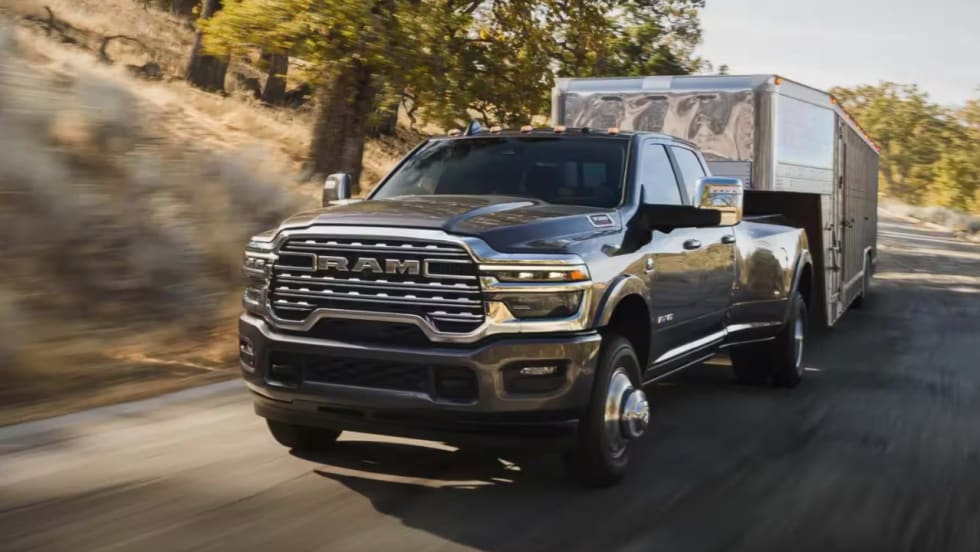
Which Pickup Trucks Last 250,000 Miles? 2026 Rankings Revealed
Which pickup trucks are most likely to reach 250,000 miles? The 2026 iSeeCars study ranks 12 long-lasting models, with Ram, Toyota, GMC, and Ford among the leaders.
Read More →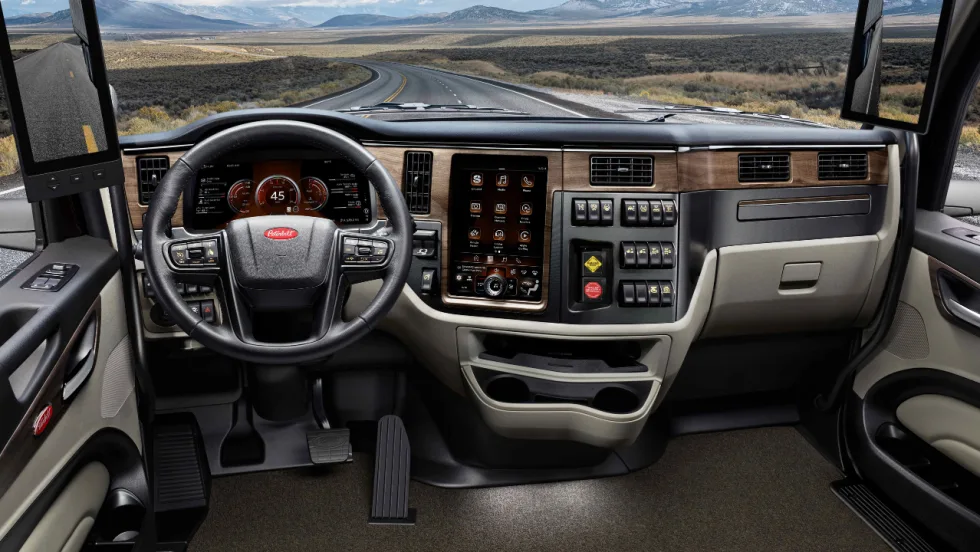
Peterbilt Showcasing Transportation Innovations at ATA MCE
Peterbilt showcased Paccar Connect and exhibited several trucks during the American Trucking Associations (ATA) Management Conference & Exhibition (MCE).
Read More →
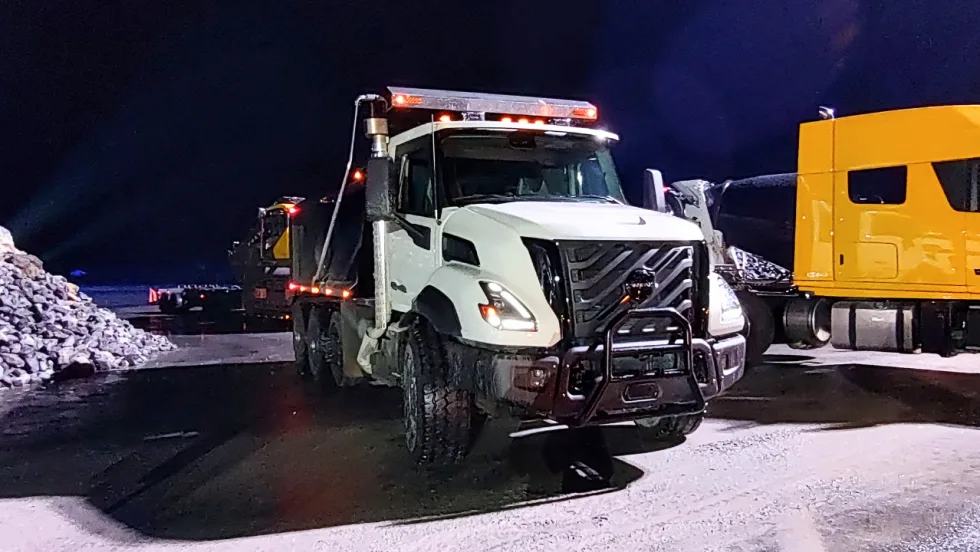
Volvo Unveils New VNX Vocational Truck & Off-Road Capable Tractor
Volvo Trucks has launched the VNX, a new vocational truck designed for on- and off-road use, and available in three variants. It is powered by the D13 platform, which delivers up to 540 horsepower and 1,950 pound-feet of torque and is EPA 2027 compliant.
Read More →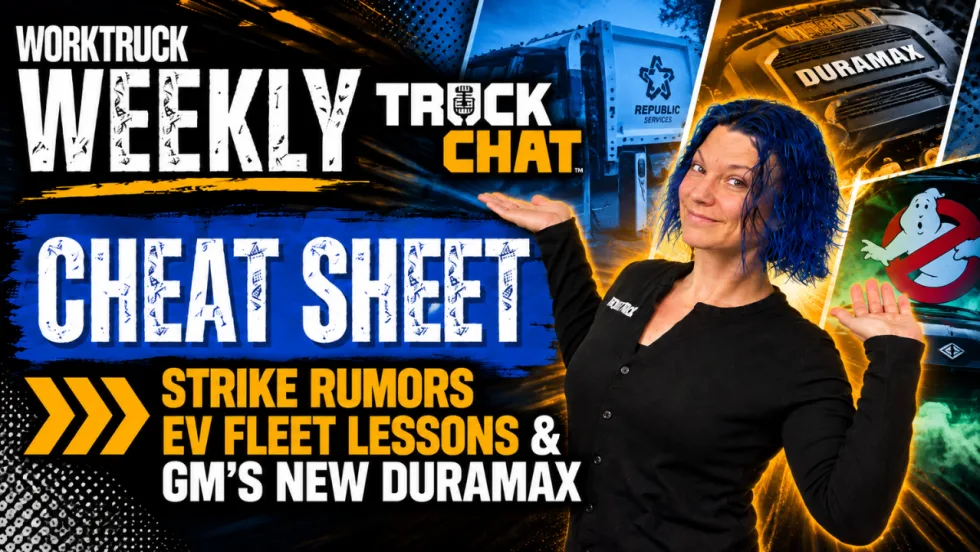
Truckers’ Strike Rumors, Electric Fleet Lessons, and GM’s New Duramax Lead This Week’s News
Truckers’ strike rumors, Republic Services’ electric fleet lessons, GM’s new 8.3L Duramax, van upfitting, Ford Pro used trucks, and more headline this week’s Truck Chat Cheat Sheet.
Read More →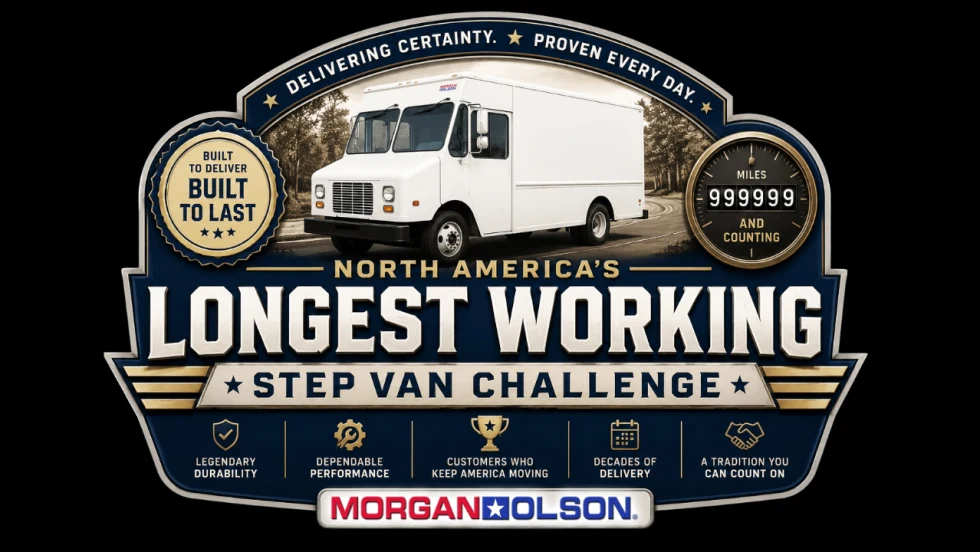
Morgan Olson Launches North America’s Longest Working Step Van Challenge
Morgan Olson has launched North America’s Longest Working Step Van Challenge, a new customer campaign to find the longest-working qualifying Morgan Olson or Grumman step van actively delivering packages for an independent service provider contracted by FedEx.
Read More →
Ford Transit Fleet Guide Specs Capability and 2027 Model-Year Updates
Explore 2027 Ford Transit fleet specs, engines, payload and towing capability, cargo configurations, work features, technology, and model-year updates.
Read More →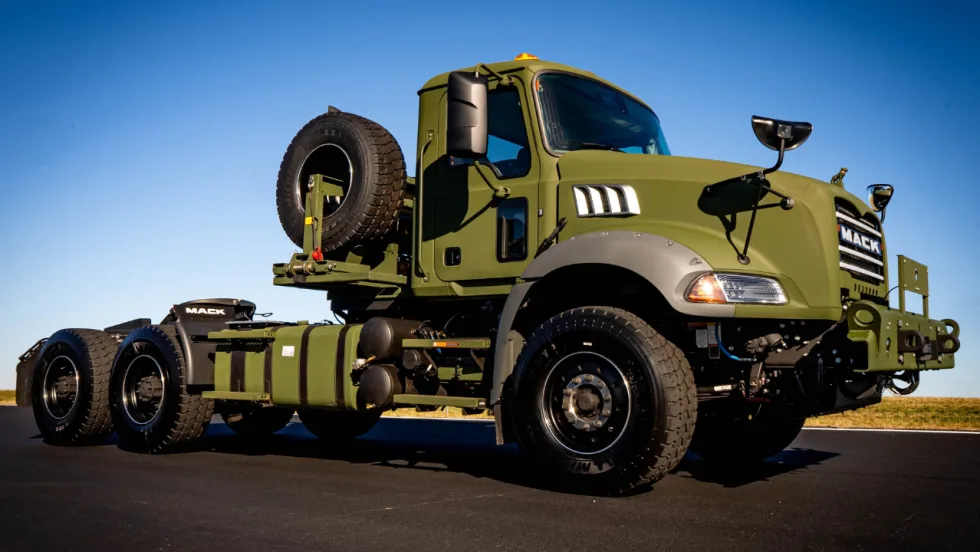
Mack Defense to Spotlight Common Tactical Truck Line Haul Hybrid Tractor During AUSA 2026
Mack Defense was awarded a contract to design, build, and deliver prototype vehicles for the U.S. Army’s Common Tactical Truck (CTT) program. It will show off its line-haul hybrid tractor prototype, based on the Mack Granite, at the 2026 United States Army (AUSA) Annual Meeting and Exposition.
Read More →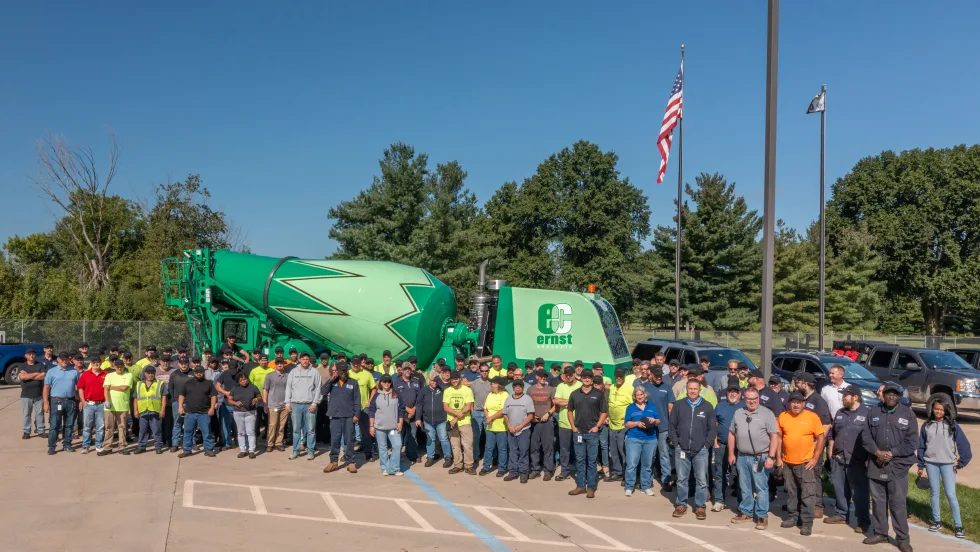
Advance Produces 20,000th Front-Discharge Mixer
Advance celebrated the production of its 20,000th front-discharge mixer, a Commander Series FD4000 mixer. Jack Willard first developed the original Rite-Way Truck in 1964, and then Advance was established in 1972.
Read More →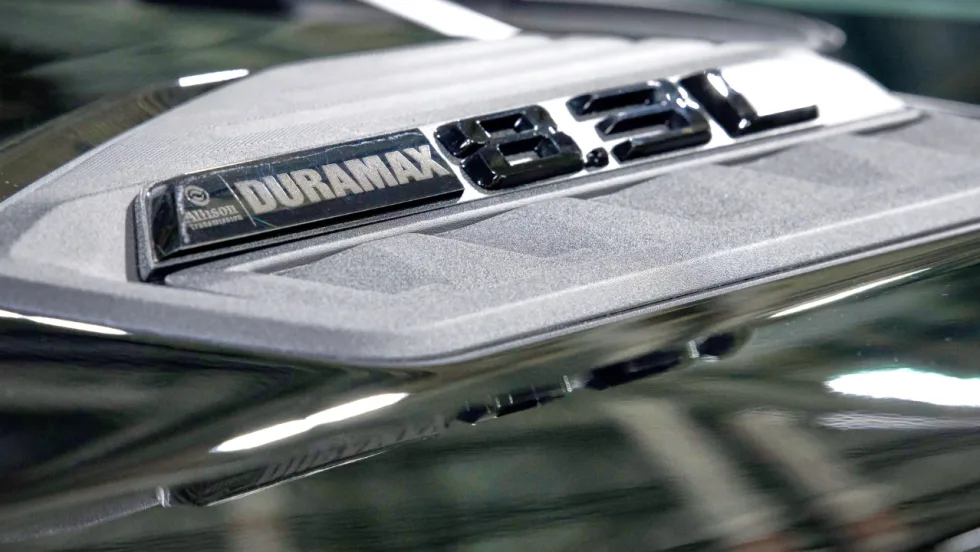
GM Launches Clean Sheet Duramax 8.3L Turbo-Diesel V8 for 2027 HD Pickups
General Motors previewed key updates for its 2027 HD pickup lineup, which will now include a new Duramax 8.3L Turbo-Diesel, electric power steering, and electronic brake boost.
Read More →