




Hybrid Conversion Cuts Fleet Vehicle’s Fuel Usage by 30%
This Ohio-based heating and cooling company represents a good test case for an aftermarket electric drive system due to its daily stop-and-go service routes.

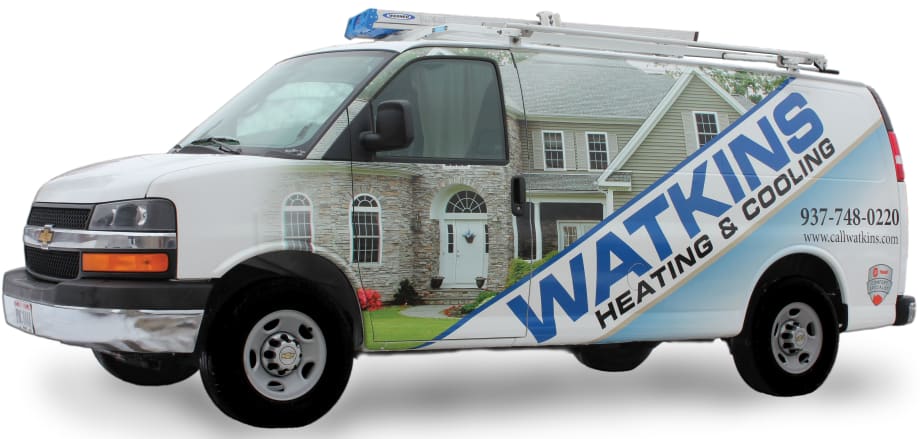
Watkins Heating & Cooling has converted one of its GMC Savana fleet vans using XL Hybrids' technology.
Watkins Heating & Cooling has converted one of its GMC Savana fleet vans using XL Hybrids' technology.
When David Watkins started reading up on alternative fuel options for his company’s fleet, he looked at several options, including mild hybrids, CNG and propane.
“I came across XL Hybrids while doing research on energy efficiency,” says Watkins, vice president of Watkins Heating & Cooling, a family-owned and operated HVAC service company headquartered in Springboro, Ohio.
Based in Boston, XL Hybrids offers fleet electrification solutions for class 2-4 fleet vehicles, including cargo vans, passenger wagons, box trucks and step vans. The XL3 Hybrid Electric Drive System is a regenerative braking system that helps save fuel.
“As the vehicle decelerates, our motor generator charges up the battery pack while helping the vehicle slow down,” says Clay Siegert, co-founder and vice president of XL Hybrids Inc. “When you press the accelerator, the motor generator helps to propel the vehicle using electric power. We offer an assist so the engine uses less fuel and doesn’t have to work as hard to propel the vehicle.”
So far, Watkins has added the electric drive system to one of his fleet’s GMC Savana vans. He plans to convert four more of his vans this year and eventually replace his entire 15-vehicle fleet with hybrids in the coming years.
Case Scenarios
Watkins Heating & Cooling is a good candidate for the electric drive system because each technician’s daily route consists of a lot of stop-and-go driving, according to Siegert. Covering the area between Dayton and Cincinnati, each technician usually has at least six appointments per day.
“Watkins’ service technicians drive in and around neighborhoods carrying heavy equipment,” says Siegert. “Their service routes involve lots of stop-and-go driving, which enables the customer to take better advantage of the XL3’s regenerative braking and reduce fuel consumption.”
Watkins’ converted van has experienced a 30% mpg improvement with the hybrid electric powertrain. “We anticipate getting a positive return on our investment in just over two years because we’re seeing a 30% to 35% improvement in fuel efficiency,” says Watkins.
Watkins is seeing an even higher fuel savings than the average XL Hybrid customer.
“Over the course of a drive cycle, the system can boost a vehicle’s mpg by an average of 25%,” says Siegert. “Watkin’s drive cycle is so ideal that he is seeing a higher mpg.”
In addition to the fuel savings, there is also no extra cost involved with managing the system or training employees how to drive the converted vehicles. According to Watkins, there hasn’t been a learning curve. He describes it as driving a Prius but with a stronger motor.
Plus, technicians don’t have to spend as much time at the gas pump. “We anticipate saving our service technicians about 20 gas fill-ups a year,” says Watkins. “Our technicians will have more time to focus on customer service while minimizing time on refueling the van.”
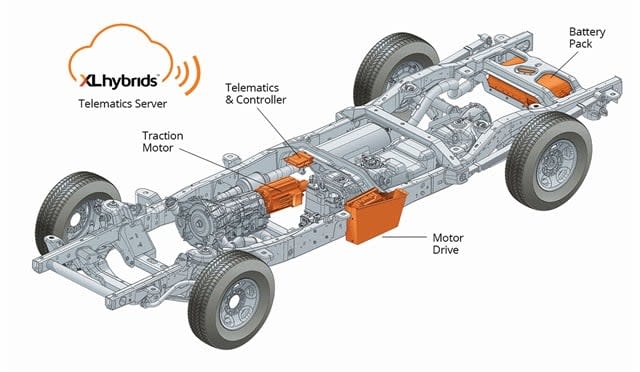
XL Hybrids' hybrid electric powertrain.
Conversion Process
Compatible with any type of fuel engine, the hybrid conversion system is installed post-transmission as a retrofit or a new vehicle upfit.
The conversion can be done in one day. Watkins dropped off the van in the morning at a XL Hybrid upfitter and picked it up the next day as a hybrid van.
Recommended for vehicle model years 2010 and later, the hybrid system generally lasts for 10 years or 250,000 miles.
“We have restricted the upfitting to newer vehicles (only a year or two old) so we can get the most use of the hybrid system before it’s time to retire the vehicle,” says Watkins.
More Small Fleet


Developing Budget-Friendly Driver Safety Programs
From driver training and safety meetings to one-on-one coaching and incentive programs, several small fleets share how they have developed a safety culture with their drivers using low- to no-cost resources.
Read More →
Boosting Last-Mile Fleet Uptime, Safety, and Value with AI Vehicle Inspections
AI-powered inspections are transforming last-mile fleets by replacing manual checks with highly accurate automated scans that detect defects in seconds. By giving fleet operations visibility into the daily condition of their vehicles, you can identify trends over the vehicle’s lifecycle that enable improved procurement decisions, route management, driver training and accountability.
Read More →
Five Ways Seat Belts Help Prevent Injuries
There are five ways seat belts protect occupants from injuries, according to the Tennessee Department of Safety and Homeland Security.
Read More →
It’s here: The 2026 Fleet Technology Trends Report
What does AI mean for fleets? Get the answer — and learn other top tech trends.
Read More →
Small Fleets, Big Impact: How Independent Drivers Power Wreaths Across America
Check out how small fleets and independent drivers power Wreaths Across America each December and why their impact matters more than ever.
Read More →
VMS Survey Finds 65% of Small Fleet Managers Run Operations Alone
A new VMS survey shows small fleet managers are stretched thin, with most handling operations solo and eager to adopt digital tools for relief.
Read More →
Tips for Driving Safely on Halloween Night
This video features a reminder from the Connecticut Department of Transportation (DOT) and the Connecticut Police Chiefs Association, urging drivers to prioritize safety this Halloween.
Read More →
AI, Access, and Uptime: VMS’s Next Chapter with David Prusinski
VMS’s new Co-CEO, David Prusinski, shares how an AI-first approach will give small fleets and repair shops the tools to compete like big players.
Read More →
Fleet Managers Share Winter Prep Tips: It's Never Too Early!
Three fleets share best practices to prep vehicles for winter and prevent downtime when the cold sets in.
Read More →