




How to Update Your Legacy Maintenance Program
Making changes isn’t easy, but carrying on with outdated policies and programs in a fleet's maintenance program can cost time and money, and put drivers at risk.

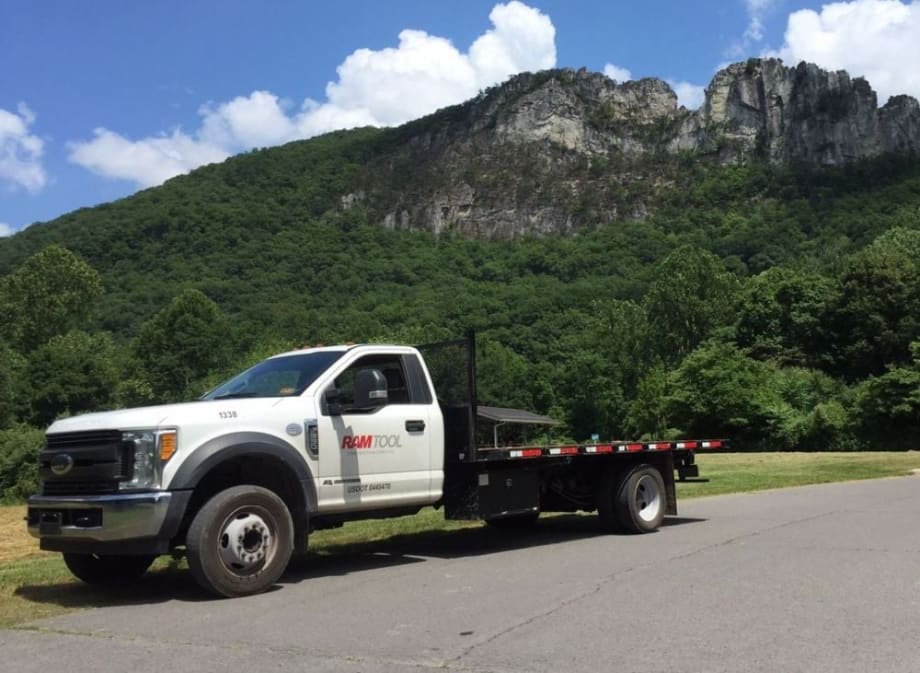
Ram Tool is working to increase overall vehicle uptime, decrease maintenance costs, and improve the availability and reliability of its fleet assets.
Photo: Ram Tool
What do transportation fleets, a service fleet, and a delivery fleet have in common? An old maintenance program.
Often in life, we must deal with the hand that is dealt to us. That is regularly the case with fleet maintenance programs. These “legacy” programs are handed down from previous fleet or maintenance managers. It can be difficult to convince a company to “fix what isn’t broken,” but the savvy manager knows that changes to a maintenance program can mean a lot to safety and the bottom line.
Different Fleets with Different Needs
Paul Transportation Inc., operates 200 tractor/275 trailer flatbed company providing open flatbed service to customers across the U.S.
“Our current program has been in place for 10 years. One of our current challenges is a lack of a proper system to track and record key elements for both scheduled and unscheduled maintenance repairs and procedures,” noted Bruce Stockton, director of maintenance for Paul Transportation Inc.
Ram Tool Supply operates a service-based fleet, delivering construction products directly to customers with approximately 850 trucks, 140 forklifts, and numerous trailers spread across 44 locations.
Sandra Martin, corporate fleet manager for Ram Tool Supply Inc., started Ram Tool’s current maintenance program in November 2017.
“After commissioning a vehicle, a maintenance program must be put in place. Processes such as the type of maintenance plan based on the desired outcome, timeline, and safety challenges that may impact the program must be decided. Increasing uptime on vehicles to the best possible level, decreasing maintenance cost, and improving asset availability and reliability are all crucial in having a successful fleet operation,” Martin shared.
One delivery truck fleet operates 5,000 vehicles, with approximately 85% of them being trucks. The senior fleet manager has 29 years of experience but wished to remain anonymous. The vehicles are used for delivery (intra-company, middle mile, and final mile), product installation, service technicians, sales, and support.
A general transportation fleet in California operates a 600-unit fleet with around 150 Class 8 trucks. Approximately 70% of its deliveries are food cargo. The general transportation fleet manager, who also wished to remain anonymous, noted the fleet has been applying the current maintenance program for around six years.
Making Changes
One big change is going from trying to prevent issues to predicting them.
“I am transitioning our preventive maintenance (PM) program to a predictive maintenance (PdM) program. Deployment is a challenge, so you must have a specific plan covering the complete process and focusing on the desired goal,” said Martin of Ram Tool. “Predictive maintenance, by definition, is a technique designed to help determine the conditions of in-service equipment to estimate when maintenance/replacements should occur. The task is only performed when warranted.”
Martin explained it this way: “Imagine performing preventive maintenance on an asset, it goes back in-service, and a component fails immediately afterward. That component was not addressed during the preventive maintenance service; however, it would have been considered during a PdM, if meeting the timeline-based criteria. PdM programs address these issues and improve asset performance.”
One of the many responsibilities Martin has is keeping the most uptime possible for the fleet.
“Issues related to predictive repairs and analysis of failure rates on certain components are calculated, changes are documented, all to keep our trucks on the road with little to no downtime,” she said.
Stockton of Paul Transportation is working toward more strict adherence to the manufacturer’s recommended maintenance intervals.“We are making these changes for cost savings as well as extending the life of the current vehicle fleet,” he explained.
The delivery fleet manager noted that his current program lacks compliance and accountability, leading to safety and total cost of ownership (TCO) concerns.
“Our current program is also based strictly on miles and time and does not account for hours of utilization. Because the fleet was previously operated as a de-centralized model and each location is responsible for their own P&L maintenance spend could be vetoed at the local level,” said the anonymous delivery fleet manager.
Safety is driving these changes, first and foremost, but second to safety is the increase in vehicle uptime.
“Also, the ability to exceed our customer promise gives us a competitive edge. The visibility, accountability, and compliance with the program will shift to a more central managed fleet team for greater efficiency. It is important to note these changes will increase our maintenance spend; however, the offset and gains will be realized in lowering our unscheduled repairs and reduction of downtime,” said the anonymous delivery fleet manager.
The biggest challenge the general transportation fleet manager noted is technological adequacy and the supply of parts promptly.
“Because we mainly have units less than three years old, our technicians constantly require training in the new gadgets of the units and technology for safety control on the routes,” said the general transportation fleet manager.
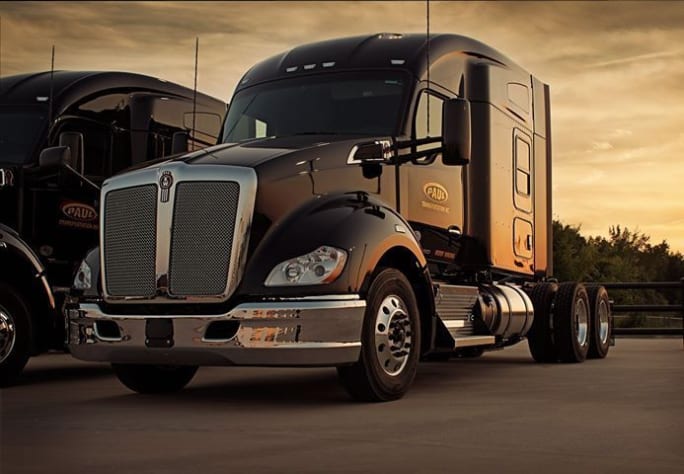
Paul Transportation operates a 200 tractor/275 trailer fleet and underscored the value of instituting a proper system for tracking preventive and scheduled maintenance.
Photo: Paul Transportation
The Bottom Line
At the end of the day, fleet managers need to develop a program that allows for flexibility.
“Flexibility can be obtained by having a combination of brick and mortar, mobile, and in-house maintenance solutions. Additionally, leverage the economy of scale to drive per-PM costs down — fleet standardization will help in this area. The program should look at each vehicle class or type of truck and determine how and where it is used,” noted the delivery fleet manager.
Hours of utilization should also be factored into the equation when developing a maintenance schedule.
“It may be more cost-effective to proactively replace a part during a PM than chance a failure between PM intervals based on your fleet make-up. Also, consider fluid analysis to help build the most capable PM program for your vehicles type and how they are used. Telematics data is invaluable and consider automated PM reminders and scheduling programs,” noted the delivery fleet manager.
Senior leadership buy-in to drive compliance and accountability will ensure a successful implementation of a new/revised program. “It’s best to educate how and why a robust maintenance program can benefit businesses and drive operational costs down over the long run, effectively lowering the TCO of the vehicles,” said the delivery fleet manager.
Don’t forget to set some key performance indicators (KPIs), so you can track the effectiveness of your products.
“Do your KPIs, retrieve data, and supply yourself with the insight on when certain components WILL fail. A good starting point is the manufacturer’s recommendations for service and replacement. Work hard on knowing your fleet, keep your mechanical certifications up, and know to expect the unexpected,” said Martin of Ram Tool.
Stockton of Paul Transportion summed it up nicely: “Say what you do and do what you say. Put your maintenance program in writing and stick to it.”
More Maintenance
Les Schwab Expands Commercial Tire Footprint Into Arizona
Les Schwab Tires has expanded into Arizona with two commercial tire locations in Phoenix and Tucson, strengthening its fleet service footprint in the Southwest.
Read More →
Volvo Trucks’ 'Lock and Leave' Software Updates Go Live Across North America
Unattended over-the-air software updates are now available in Volvo trucks across the U.S. and Canada. The new capability lets trucks stay current with the latest software without interrupting operations or requiring a dealership visit.
Read More →
Why Technician Appreciation Can’t Be a Once-a-Year Thought
For fleets trying to keep skilled technicians, recognition cannot begin and end with Technician Appreciation Week. Learn what year-round appreciation really looks like and why the everyday technician experience matters just as much as pay when fleets are trying to keep good people.
Read More →
How Faster Driver Reporting Can Keep Small Truck Problems Small
When minor damage, warning lights, or equipment issues are reported late, small problems can quickly become bigger maintenance headaches. Conversational AI can help shorten the path from what a driver notices in the field to the person who can act on it.
Read More →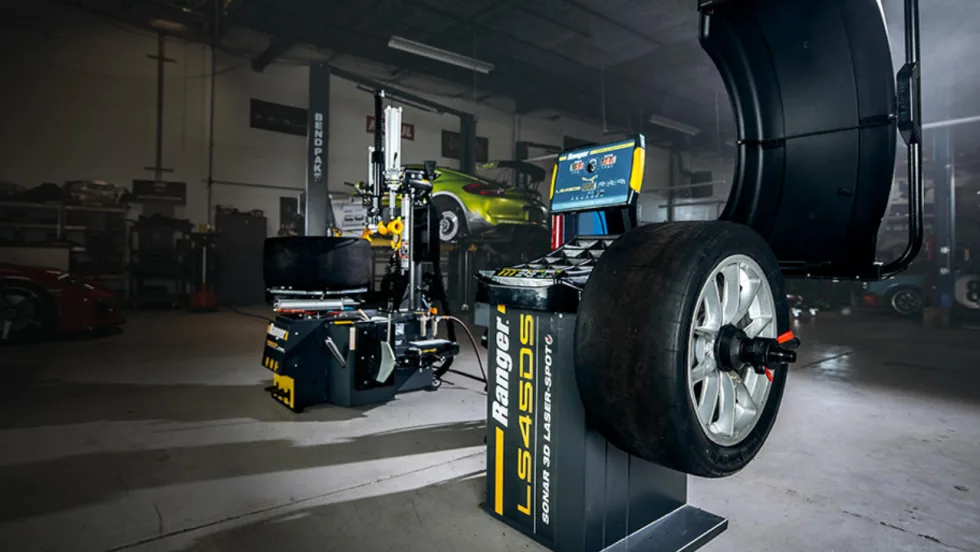
BendPak’s Ranger Wheel Service Equipment Achieves North American Safety Certification
BendPak’s full line of Ranger tire changers and wheel balancers has been ETL certified to UL and CSA standards to improve operator safety.
Read More →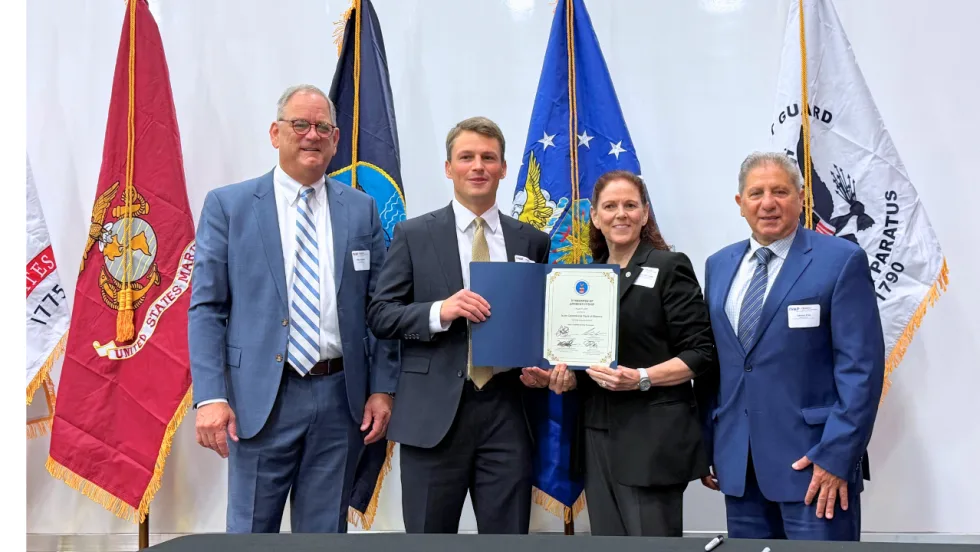
Isuzu & U.S. Department of Labor Celebrate Milestone for Veterans Apprenticeship Program
The Isuzu Veterans Apprenticeship Program (IVAP) signing ceremony highlighted Isuzu’s long-term commitment to veterans, Isuzu dealers, and the skilled workforce supporting its customers and the commercial transportation industry.
Read More →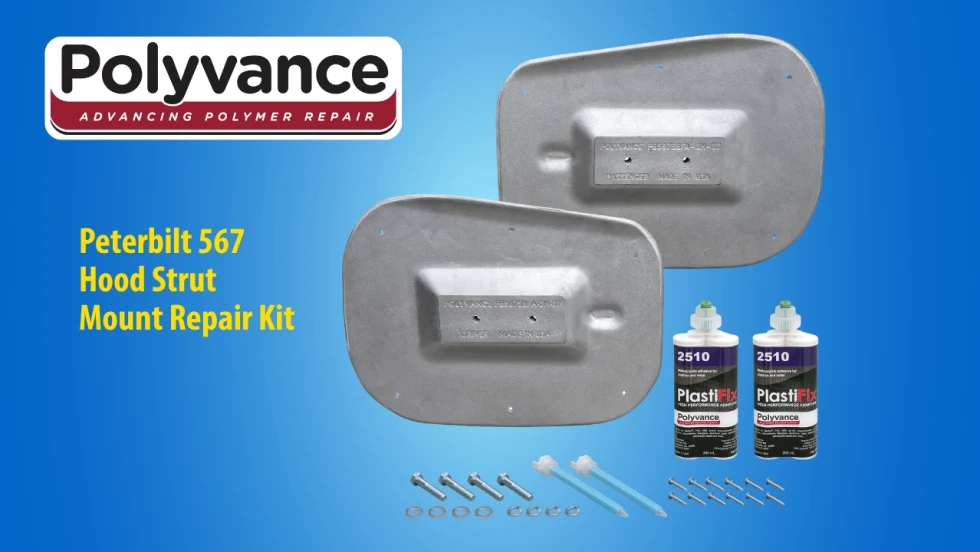
Polyvance Introduces New Peterbilt 567 Hood Strut Mount Repair Kit
Polyvance has launched a repair solution for Peterbilt 567 hood struts, helping truck owners and repair facilities avoid costly hood replacements.
Read More →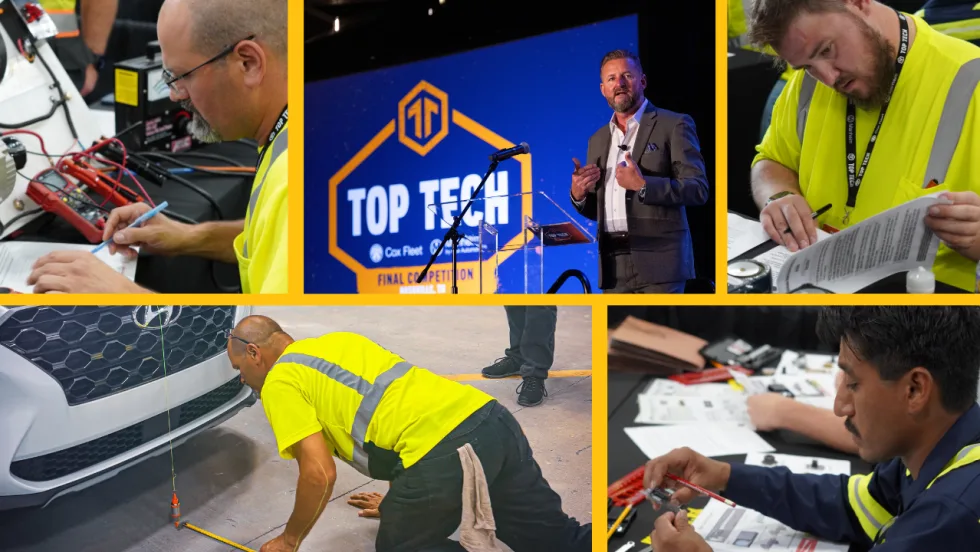
Cox Automotive Celebrates Technical Excellence at 2026 Top Tech Finals
The top technicians from Cox Fleet and Manheim tested their skills in Nashville, Tennessee, at Cox Automotive’s 2026 Top Tech Finals. The overall winners will advance to compete at the American Trucking Association’s TMC SuperTech competition.
Read More →
Grote Industries Appoints Vice President of North American Operations
Grote Industries has appointed Patrick Smith as vice president of North American operations as it celebrates 125 years of innovation and manufacturing excellence. He has more than 20 years of manufacturing leadership experience.
Read More →
Winter Fleet Prep: Expert Tips to Keep Vehicles Running Smoothly
Cold weather can expose weak batteries, tires, fuel systems, and maintenance gaps fast. Use this winter fleet checklist to prepare trucks and drivers before temperatures drop.
Read More →