




Learn More: How to Audit Contract Vendors: Ensuring Top Performance
How to Conduct a 'Size Audit' of Your Truck Fleet
Reviewing payload, cargo requirements, access, mileage, and roadway requirements can be the answer to saving costs and simplifying fleet vehicle choices.
by Russ Cass
June 23, 2009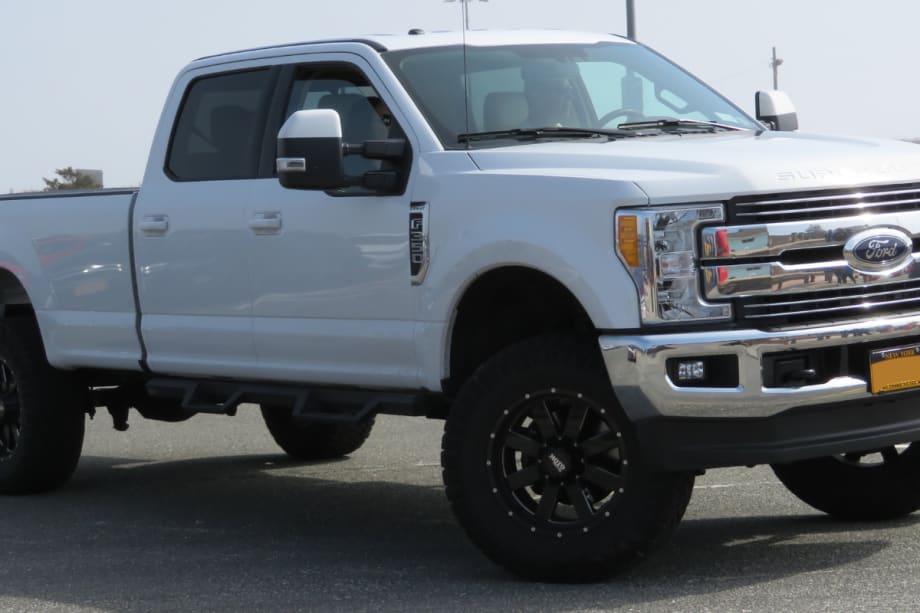
GVW and payloads have crept up to a point where a truck purchased today isn't the same truck with the same model designation available 10 years ago.
Photo: Ford
3 min to read
Is your company buying too much truck? Do you really need that diesel-powered 1-ton dually 4x4 Crew Cab long-bed pickup for the foreman just to drive from jobsite to jobsite? Have you done payload and weight analysis for the actual needs of your truck fleet to purchase just enough truck? Not sure what you really need? Need more help configuring the proper vehicle for the job from your vehicle provider?
These are just a few questions you can ask yourself regarding the configuration of your company's truck fleet. Many businesses have become comfortable with the types of trucks they purchase or lease for use in their fleet without noticing the vehicle specs have changed over the years or the job the truck is required to accomplish every day has moved in a different direction.
Hard Habit to Break
Sometimes, this comfort level translates into buying heavier payloads and GVWRs than really needed. Case in point: the domestic cargo van manufacturers have increased the GVW ratings of their vans over the years. Now, one company's van with a "½-ton" nominal rating has a higher GVW rating than the same company's "¾-ton" van had just a few years ago.
It is a hard habit to break, buying a ¾-ton van because you think you really need it, when the ½-ton model would do the job just fine.
The same situation exists with weight ratings and payloads of most pickup trucks and chassis cabs offered in today's market. GVW and payloads have crept up to a point where a truck purchased today isn't the same truck with the same model designation available 10 years ago.
Audit Can Save Costs & Simplify Choices
A size audit may be the answer not only to save your company money, but also to simplify your fleet's vehicle choices. First, determine exactly what the vehicle must accomplish in its daily routine. For example, for delivery type vehicles:
What is the payload requirement?
What is the cargo volume (physical size)?
Must the cargo be protected, not exposed to the elements?
Does the driver need to access any cargo before exiting the vehicle or is exterior access to cargo available?
Does the driver load up first thing with the entire day's deliveries or will he or she return to reload?
How many miles per day, week, month, or year does the vehicle travel? A smaller engine may fit the job and save fuel and money in the process.
Does the truck travel inner city or highway miles? The correct engine/transmission/axle ratio combination can save fuel. This factor is critical on Class 7-8 trucks (26,000 lb. GVWR and higher) for which the powertrain needs to be spec'd for optimal performance.
Answers to many of these questions can help you decide if a smaller, more fuel-efficient vehicle can be used in place of the old large truck the company has been using "forever."
Choose Fuel-Efficient Components
More fuel-efficient components can also be chosen. For example, highway-tread tires create less rolling resistance than on/off road-tread tires. Don't forget proper tire inflation helps reduce fuel consumption as well.
A smaller or more aerodynamic vehicle and/or truck body featuring less frontal area can offer better fuel economy by creating less rolling wind resistance. Tonneau covers or caps on pickups help with fuel savings.
A similar-sized audit can be used for virtually any type of work truck in the marketplace, from delivery to utility vehicles and everything in between. Such an audit can easily determine the correct pickup truck and cargo van requirements as well.
Setting aside personal preference can be a big help in determining the right truck for the job. Sometimes, it is difficult to view a vehicle with an unbiased eye to determine the best choice. We all have our favorite brands and models. Take a step back and look at all the offerings in the marketplace. You'll be amazed at what you will find.
Subscribe to Our Newsletter
More Operations

Family Ties Inside the Fleet Families Building Careers Across Generations
Three fleet families share what it really takes to work together, learn across generations, and keep business from following them home.
Read More →
Shades of Fleet Call for Voices: Fleet's Hidden Heroes
Fleet’s hidden heroes are often the ones keeping everything moving behind the scenes. September’s Shades of Fleet is looking for dispatchers, coordinators, parts specialists, and other support pros to share their stories.
Read More →
Truck Centers, Inc. Celebrates National Truck Driver Appreciation Week with $1,000 Fuel Card Giveaways
During National Truck Driver Appreciation Week, Truck Centers, Inc. is offering customers a chance to fuel up for free. Customers at all Truck Centers locations can enter to win one of four $1,000 fuel cards from Sept. 14 - 18.
Read More →
Fleet Guides, AI Time-Savers, Truck Tariffs & Fuel Strategy Lead the News
This week’s Truck Chat Cheat Sheet covers new fleet vehicle guides, practical AI use cases, U.S.-Canada truck production, mixed-energy strategy, and more.
Read More →
What Fleet Employers Are Missing When Hiring Veterans
What if some of the strongest candidates for fleet are already out there, but their experience is written in a language our industry does not always recognize?
Read More →
Automotive Fleet Opens 2026 Personal Use Survey for Commercial Fleet Managers
Less than two weeks left! Commercial and corporate fleet managers are invited to share how their organizations handle company vehicle personal-use policies, charges, and driver eligibility.
Read More →
What Resilient Fleets Do Differently When Conditions Change
Fleet resilience is about more than reacting to disruption. Lauren Fletcher talks with AP Fleet’s Alex Coveney about flexibility, planning, scaling, and what helps fleets adapt when business conditions shift.
Read More →
If We Want the Next Generation in Automotive, We Have to Give Them a Reason to Care
The automotive industry talks constantly about its workforce shortage. But before we can recruit the next generation, we may need to do a better job giving kids a reason to care about automotive in the first place.
Read More →
Ram ProMaster City Under $40K, Truck Tariffs, and AI Maintenance Lead the News
A sub-$40K commercial van, tariff questions, AI-powered maintenance, and a new EV production strategy headline this week’s Truck Chat Cheat Sheet.
Read More →
Bob Adamsky Shares the Fleet Lessons You Usually Learn the Hard Way
After more than 30 years in fleet, Arrow International’s Bob Adamsky has learned that the job is about far more than vehicles. He shares the lessons he wishes every fleet manager could learn a little earlier.
Read More →