




How to Audit Fleet Fuel Invoices
Auditing fuel purchase invoices takes time and access to industry pricing data, but such scrutiny can avoid overcharges and duplicate transactions.
Your company has worked hard to get the right fleet fuel program in place. You have picked the right fleet fuel card provider, and you may have negotiated and set up some discounts with your fuel providers. However, the fuel management task has only just begun.
Companies often neglect to monitor their fleet fuel programs following the original set-up. Some companies do review fuel transactions or exception reports. However, do they review all reports, check for duplicate transactions, or confirm discounts are applied properly? Many companies cannot perform this level of scrutiny because they lack the time or tools to check.
How should companies audit fleet fuel invoices?
Audits Require Time & Data
Staff time and access to relevant data are the first elements in a successful fuel purchase auditing system.
A few tips to facilitate this process include:
Subscribe to a fuel price service.
Have a "sense" of the fuel market.
Hire an outside service to review your fuel program.
Fuel price data is available through Oil Price Information Service (OPIS), data transmission service company DTN, or other pricing sources published daily at a local level. Broader-range indices, such as the New York Mercantile Exchange (NYMEX), Department of Energy (DOE), and the American Automobile Association (AAA), provide national fuel pricing.
While these national services offer a big picture view of fuel prices, they can also obscure the various price differentials distinguishing one area from another. Local indices provide more accurate fuel price data.
These services are not cheap to purchase, but they are essential to a successful fuel program review.
Calculating Vendor Margins
The basic data required for a fuel program review is price per gallon for each fuel transaction. Next, the federal, state, county, and local taxes are subtracted from the price per gallon numbers. A tax guide can provide a resource for such data.
The price per gallon less taxes calculation provides fuel cost only. Comprising that fuel cost are the fuel itself and vendor-charged margins. To determine the vendor margin, fleet fuel transaction costs are compared with same-day OPIS or DTN pricing for the relevant geographic area.
Fleet managers can monitor fuel margin numbers to determine if they match or closely approach vendor-negotiated fuel price deals. If the numbers do not agree, it's time to investigate.
Detecting Duplicates
Duplicate transactions are another fuel program invoice issue to track. These errors occur more frequently than commonly realized. When hundreds of thousands of transactions are produced each day, mistakes happen. If invoices are not monitored carefully, a fleet manager can miss duplicate transactions, and there's a good chance the fleet fuel card provider won't catch the mistakes as well.
Guidelines in monitoring fuel reports include:
Develop a good "feel" for the monthly volume and transaction count.
If purchased volume or transactions are higher than normal, dig deeper into reports.
Randomly sample 5 percent of monthly fleet invoices and closely review the selected transactions.
Implement Checks & Balances
Fuel is among fleet's top five expenses, and hundreds to tens of thousands of transactions happen each month as part of a fuel program. Successful programs require a good checks-and-balances system. One of the best checks is performing monthly fleet fuel audits of the fleet management operation.
A fleet might have trucks fueling off-road equipment or reefer units, putting all that volume on the same transaction. One fleet fuel card for each truck, equipment, reefer, small tank, etc., is recommended to accurately capture every drop of fuel and where it went.
Accurate records of where the fuel is used are critical. If on-road fuel is used in an off-road application, as much as 50 cents per gallon or more in extra, unnecessary taxes could be spent. In other words, fuel tax should be paid when fuel is purchased, but accurate recordkeeping allows fleets to file for a tax refund with the federal and state government. Those 50 cents per gallon can add up quickly.
Another critical benefit of accurate recordkeeping is the ability to spot incidents of theft. Most companies would downplay the possibility employees would steal from them. However, the national rate for theft is 1.5 percent of a company's fuel budget on overall fuel purchases. That rate rises to more than 3 percent when dealing with a fleet of gasoline-powered vehicles. The more controls in place, the greater the control over one of fleet's top expenses.
Giving Money Away
An old expression holds that what isn't inspected is not respected. By neglecting to perform daily fuel management audits on fleet fuel purchases, companies could be literally giving money away.
Most often, fuel invoice errors are not the result of unethical business practices or nefarious individual actions. Generally, errors are the result of an incorrect account set-up or account change. If invoice numbers are not audited, they look like what they are - simple numbers. However, when fleet managers "peel back" the first "layer" and take a deeper look, comparing the numbers to a benchmark, the figures become numbers with a purpose.
Fuel Management Tips
Make sure the fleet staff member responsible for the fuel program has time to review fuel price quotes carefully.
To facilitate a smooth process, the staff member who secures the fuel price quote and places the fuel order should also receive the fuel invoice.
Two people should review fuel invoices for accuracy. Sometimes invoices are signed off for payment with such errors as total gallon amounts in error by more than 1,000 gallons and prices in error by more than $3 per gallon. Fuel transactions and invoices contain many numbers, which can make reviewing their accuracy difficult and confusing.
Benchmark fuel prices to industry indices.
Use a fleet fuel card widely accepted at truck stops. Many companies use a local-use fleet fuel card for truck stop purchases. These cards often charge a premium over the cash price, typically 7-12 cents per gallon more.
Quantity brings better prices. Limiting fuel suppliers to just a few allows fleet managers to negotiate greater price breaks based on larger volume purchasing.
Originally posted on Automotive Fleet
More Vehicle Research
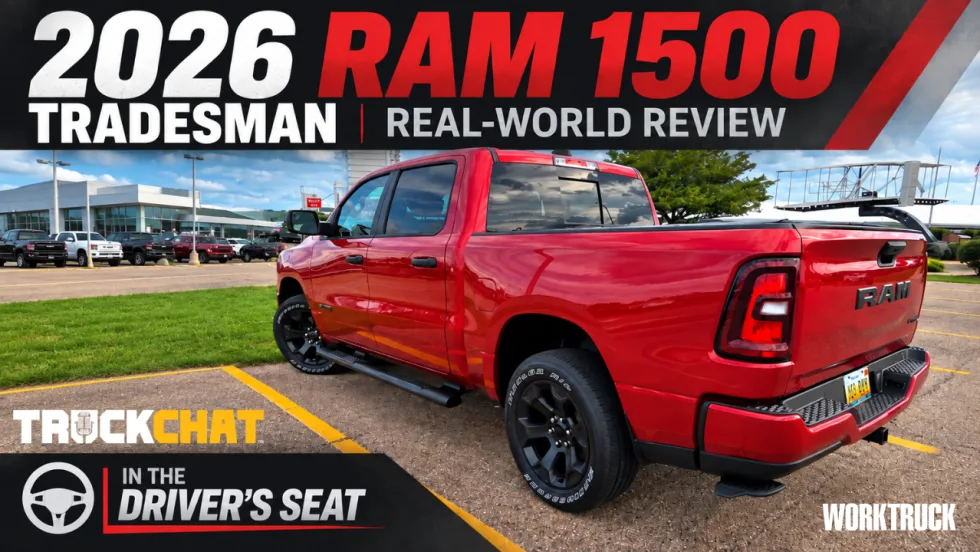
2026 Ram 1500 Tradesman Put to a Real-World Fleet Test
A few days behind the wheel of a 2026 Ram 1500 Tradesman turned into a test of visibility, parking, work-ready features, and even severe-weather driving.
Read More →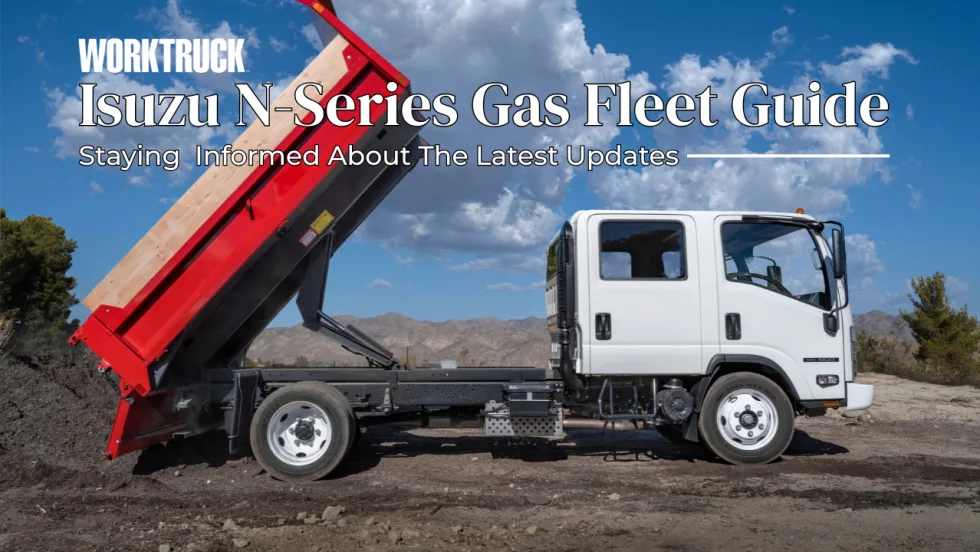
Isuzu N-Series Gas Fleet Guide: Specs, Capability and 2027 Model-Year Updates
Explore Isuzu Truck North America’s N-Series Gas fleet specs, engine performance, GVWR and payload capability, configurations, chassis dimensions, work-focused features, and 2027 model-year information.
Read More →
Chevrolet Silverado 1500 Fleet Guide Specs Capability and 2027 Model-Year Updates
The next-generation 2027 Chevrolet Silverado 1500 brings new V-8 engines, updated technology, expanded safety features, and a fleet-focused Work Truck. Here’s what commercial fleets need to know so far.
Read More →
Ram ProMaster City Fleet Guide Specs Cargo Capacity and 2027 Updates
Work Truck’s Ram ProMaster City Fleet Guide tracks the latest specifications, cargo capability, configurations, fleet technology, pricing, and model-year updates for Ram’s mid-size commercial van.
Read More →
Ford F-150 Fleet Guide Specs Capability and 2026 Model-Year Updates
Explore 2026 Ford F-150 fleet specs, engines, towing and payload capability, configurations, work features, technology, and model-year updates.
Read More →
TCI Now Sells & Supports Battle Motors’ Vocational Trucks
Midwest truck dealer Truck Centers, Inc. (TCI) has expanded its transportation solutions with sales and service support for Battle Motors’ heavy-duty vocational trucks at locations in locations in Indiana, Illinois, and Missouri
Read More →
Ram 1500 Fleet Guide Specs, Capability and 2027 Model-Year Updates
Explore always up-to-date Ram 1500 fleet specs, engines, towing and payload capability, configurations, technology, pricing updates, and model-year changes.
Read More →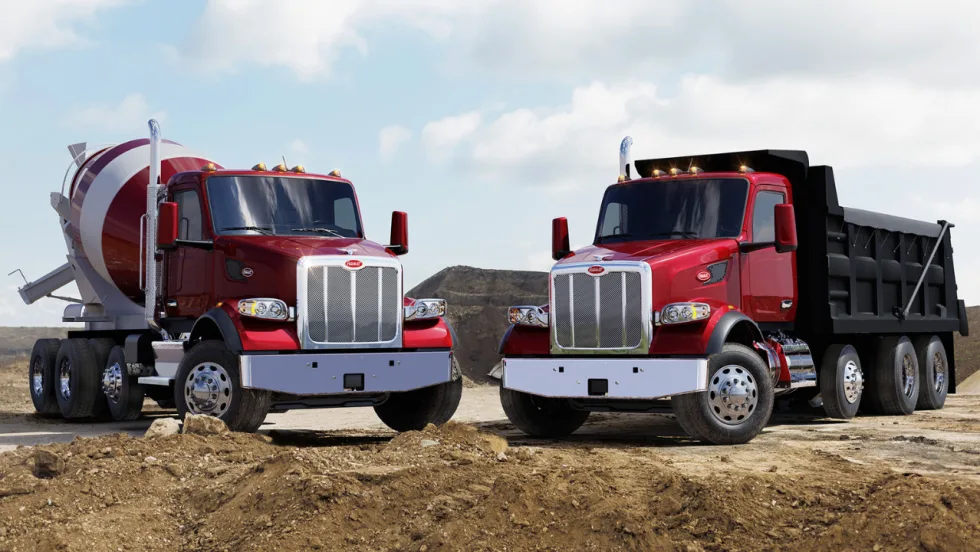
Peterbilt Trucks Equipped with Paccar TX-18 Pro Boost Efficiency for Maryland Fleet
Patuxent Companies is replacing aging trucks with the Peterbilt Model 567 and Model 589, specified with the Paccar TX-18 Pro 18-speed automated transmissions, and is reporting an 8% to 10% improvement in fuel economy.
Read More →
Stellar Expands into Fire Apparatus Market with Acquisition of Midwest Fire
Stellar Industries has acquired Midwest Fire, a custom fire apparatus manufacturer headquartered in Luverne, Minnesota, with nearly four decades of specialized apparatus experience.
Read More →
Recalls You Need to Know About in August 2026
If you have Altec, Chrysler, Ford, Heil, General Motors, International, Mack Trucks, Paccar, Rivian, Royal Truck, Toyota, US Truck Body, or Volvo Trucks vehicles in your fleet, you should check these important recalls issued by the National Highway Safety Administration.
Read More →