




High-Gear Transmissions: How Many Gears Are Enough?
With Corporate Average Fuel Economy standards pushing automotive companies to produce more fuel-efficient vehicles, vehicle manufacturers have been evolving their transmissions so they can sell highly efficient vehicles without sacrificing performance.
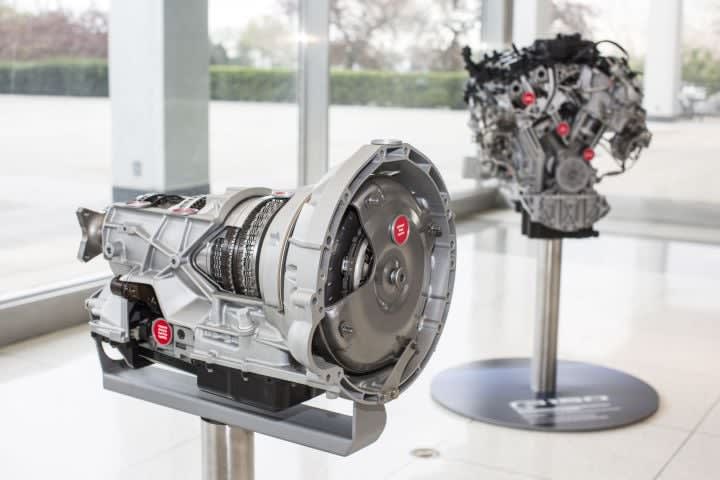
10R80 10-speed (left) and 3.5-liter EcoBoost engine.
Photo: Ford
With Corporate Average Fuel Economy standards (CAFE) pushing automotive companies to produce more fuel-efficient vehicles, vehicle manufacturers have been evolving their transmissions so they can sell highly efficient vehicles without sacrificing performance.
The past two model years have brought a quantum leap with higher-gear transmissions that provide at least six gears and, in some cases, as many as 10. In the 1990s, typical automotive gearboxes provided only three to five speeds.
A clear step in the evolution of automobile transmissions came in 2017 with the release of vehicles that benefitted from a collaboration by Ford and General Motors to develop two of the most advanced transmissions in the automotive industry — 10-speed and nine-speed transmissions. The partnership was announced in 2013.
The 10-speed transmission can be found in the 2017 Ford F-150, including the Raptor model, as well as the 2018 Expedition and 2018 Lincoln Navigator. GM is adding it to the 2017 Chevrolet Camaro ZL1, 2018 Yukon Denali, and 2018 Tahoe RST. GM will pair the nine-speed transmission with several front-wheel drive vehicles, such as the 2017 Chevrolet Malibu and 2017 Chevrolet Cruze Diesel.
The move to the 10-speed transmission, nine-speed transmission, as well as the already-popular ZF 9HP nine-speed transmission (which is found in various Fiat-Chrysler models, including the Chrysler Pacifica and the Jeep Compass) raises a few questions.
Why do automotive manufacturers keep adding more gears to their transmissions? How many gears are too many? And, lastly, how much power would you sacrifice to get the efficiency the higher-gear transmissions provide?
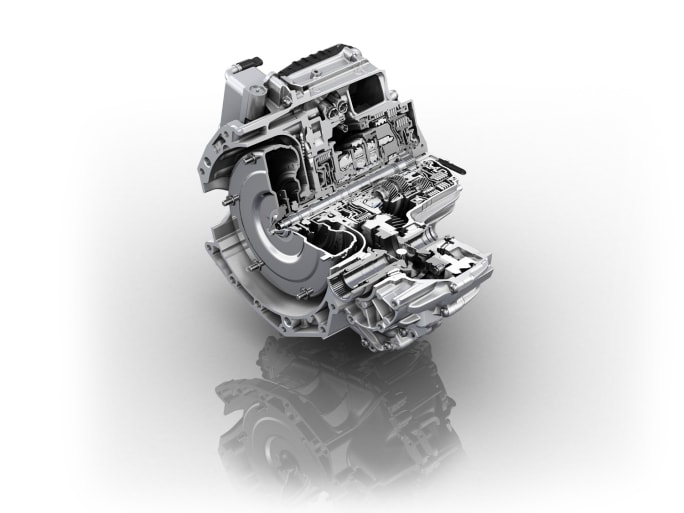
ZF 9HP
Photo: ZF Friedrichshafen.
The Purpose of a Higher-Gear Transmission
General Motors invested $323-million in a new facility in Romulus, Mich., to develop their latest high-gear transmission.
Fuel economy played a big role in increasing the number of gears, said Scott Kline, assistant chief engineer for the Hydra-Matic nine-speed automatic transmission. As you put more gear ranges in a transmission, the overall ratio range becomes limited, so you end up making the gears shorter. This results in making the steps shorter, which takes a tremendous energy out of the shift, thus taking the disturbance out.
"So for the customer, the transmission becomes very precise, very smooth shifting," Kline said. "You have both plays: the fuel economy, and the shift feel."
The small gears in higher-gear transmissions allow the engine to stay extremely close to the top of each gear when in operation.
This makes for extremely responsive throttle and smooth shifting, not to mention quick downshifting and more options for the transmission to choose from, allowing it to be as efficient as possible, while remaining close to peak performance within moments.
"The reason we go to more gears is so we can operate at or near the optimal point of the engine," said Mike Solt, FCA's director of automatic transmissions. The more gears you add to a transmission, the more often it will operate at optimal points.
"Having the appropriate overall ratio spread allows you at launches and at highway speeds to operate there," Solt said.
The Efficiency of Higher-Gear Transmissions
If 2017 marks a rise in nine- and 10-speed gearboxes, 2018 will likely feature more vehicles with those transmissions.
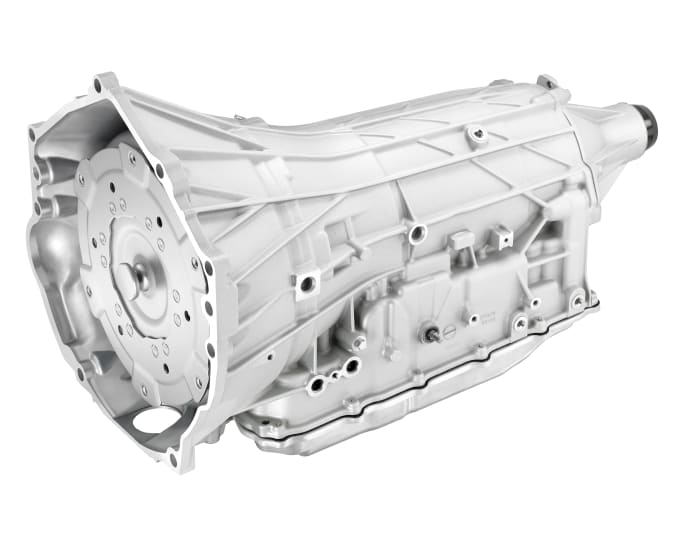
2018 HydraMatic 10L80 MF6 10-speed.
Photo: GM
The reason for the higher-gear transmission movement is simply fuel efficiency, as well as enhancing the driving experience. The more gears the engine has to choose from, the less revolutions it rotates per minute as it picks the most optimal gear for the speed, which allows the engine to work less while keeping the vehicle at the same speed.
With a more limited choice of gears, an engine operates at a higher RPM, because the transmission has to settle for whatever gear is closest to the car’s current speed.
When the engine rotates at a higher RPM it works harder, thus burning more fuel. In the 2017 Ford F-150, the 10-speed transmission helps add one mpg more than last year’s six-speed transmission, for a total of 18 mpg in the city and 25 mpg on the highway, and two mpg in the 4x4 model.
The nine-speed transmission increased fuel efficiency by 3% in the 2017 Malibu when compared to the prior eight-speed gearbox.
Fuel Economy vs. Performance
"With the higher ratio span, we can get really numerically high first-gear ratios for good launch performance, but we also have very small step sizes between all the gears, so you can target exactly the ratio you need, either for just pure performance, or for trailer tow, so it’s an overall improvement," said Kevin Norris, Ford's manager of 10R transmission systems.
The first gear is quite short in the new Ford/GM transmission, which makes for aggressive acceleration. The higher-gears are tall, which allow for better fuel consumption at cruising speeds. As the number of gears increase, the ratio becomes more aggressive, which improves the 0-to-60 mph time (0.2 seconds faster in the 2017 F-150) and raises the top speed.
"With our nine-speed, we are finding we are getting both fuel economy and the shift precision we want," said GM's Kline. "There are always trade-offs, and by adding more parts, comes more costs. You are balancing all of those things, but you are ending up with fuel economy at the end of it."
A gearbox like the 10-speed transmission can downshift four or five gears at a time, depending on how the driver steps on the gas pedal, and it can upshift just as quickly, skipping as many gears as it needs to. In other words, the transmission would do whatever it takes, as quickly as it needs to do it, to shift to the right gear at the right time.
The advanced gearbox is managed by a brand-new computer, which uses more than double the coding in the previous six-speed transmission with over 1 million codes. Even though Ford and General Motors are programming their transmissions differently, their engineering are nearly identical.
Aside from improving the 2017 F-150’s efficiency, the new transmission contributes to increasing the F-150's performance by 10 horsepower and 50 lb.-ft. of torque, making it develop 375 horsepower and 470 lb.-ft. of torque, as well as maintaining a tow rating of 12,200 pounds.
"If we’ve done our job right, the average driver won’t notice that there are more gears or more shifts," said Ford's Norris. Drivers will notice improved performance and better responsiveness.
Another byproduct of higher-gear transmissions comes in the form of quieter operation, said FCA's Solt.
"At highway speeds, you’ll run lower engine RPMs, so the vehicle will be quieter, you’ll get better fuel economy, and because you also have more ratios, the step sizes are smaller, so the disturbance of the shifts are less," Solt said.
Too Many Gears?
The ultimate goal of a transmission is to keep the engine working where it is most efficient, or at the highest torque point when performance is needed.
"The more narrow the spots are in the engine, the more speeds you need to make sure you’re operating right on those spots," said GM's Kline.
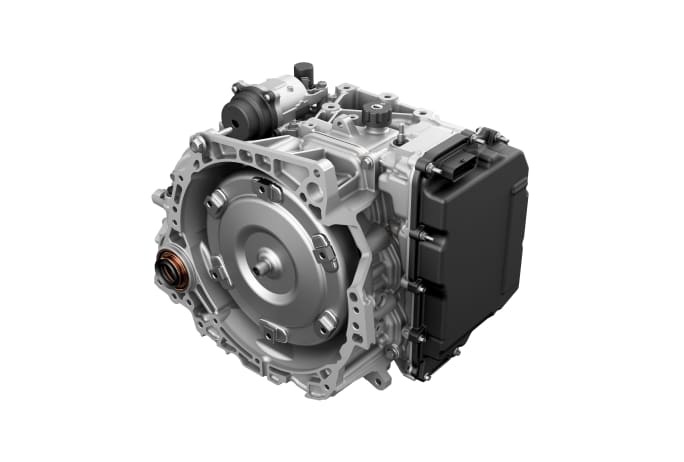
2017 Hydra-Matic 9T50 with accumulator.
Photo: GM
Ford and GM believe they’ve hit the sweet spot with the number of gears in their new transmissions, and anything after that won’t add any real value to the gearbox. However, just as the idea of a 10-speed transmission may have sounded crazy a decade ago, we never know what the future holds.
"At Ford, we did an exhaustive amount of research and analysis on all the types of applications that we expected to use the new transmission in, and we found that we definitely could see benefits beyond eight speeds and even beyond nine speeds," said Norris. "We did further analysis, and we found out that if we go beyond that, to like 11 and 12, we could have architecture issues that causes diminishing returns."
Traditional vs. Higher-Gear Transmission
"I think overall, you will see more of a proliferation (of the 10-speed), but I expect, depending on what region of the world you are operating in, for quite some time, there will be a place for some of the traditional six-speed transmissions," Norris said.
Kline explained that GM sees a market for a high-quality, high-value nine-speed transmission, as well as a market for a premium higher-gear transmission, and since both of their transmissions meet the same durability requirements, they feel they can fulfill both niches. Both the six-speed and the nine-speed transmissions are sealed for life, which means they are maintenance-free.
For fleet customers, improving fuel economy comes as a priority over driving preference, and there is a clear fuel efficiency benefit with the higher-gear transmissions.
Editor's note: Bassem Girgis is a freelance writer.
Originally posted on Automotive Fleet
More Vehicle Research
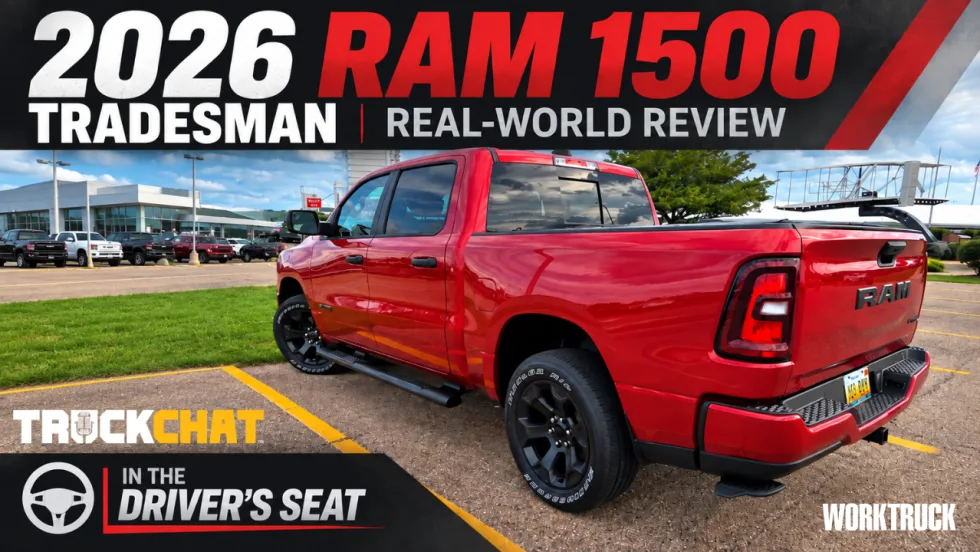
2026 Ram 1500 Tradesman Put to a Real-World Fleet Test
A few days behind the wheel of a 2026 Ram 1500 Tradesman turned into a test of visibility, parking, work-ready features, and even severe-weather driving.
Read More →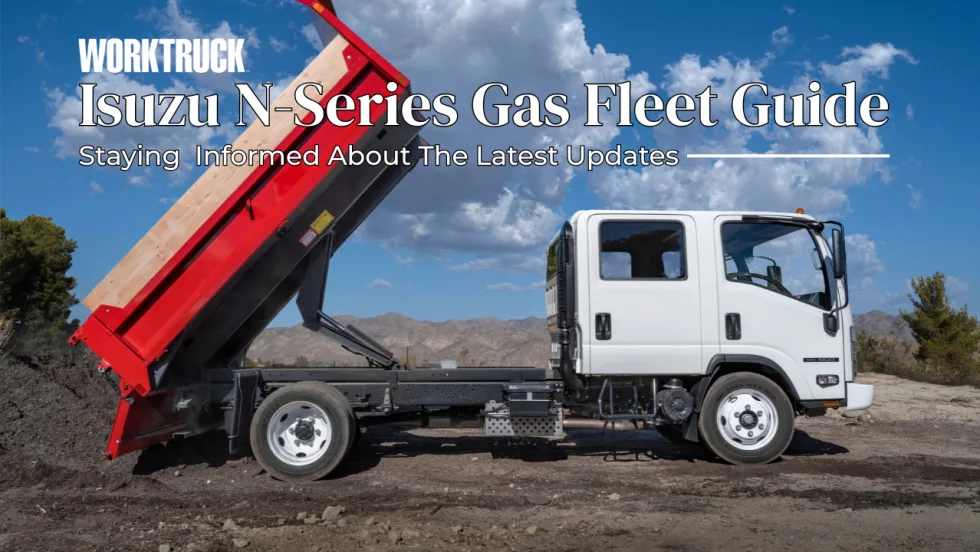
Isuzu N-Series Gas Fleet Guide: Specs, Capability and 2027 Model-Year Updates
Explore Isuzu Truck North America’s N-Series Gas fleet specs, engine performance, GVWR and payload capability, configurations, chassis dimensions, work-focused features, and 2027 model-year information.
Read More →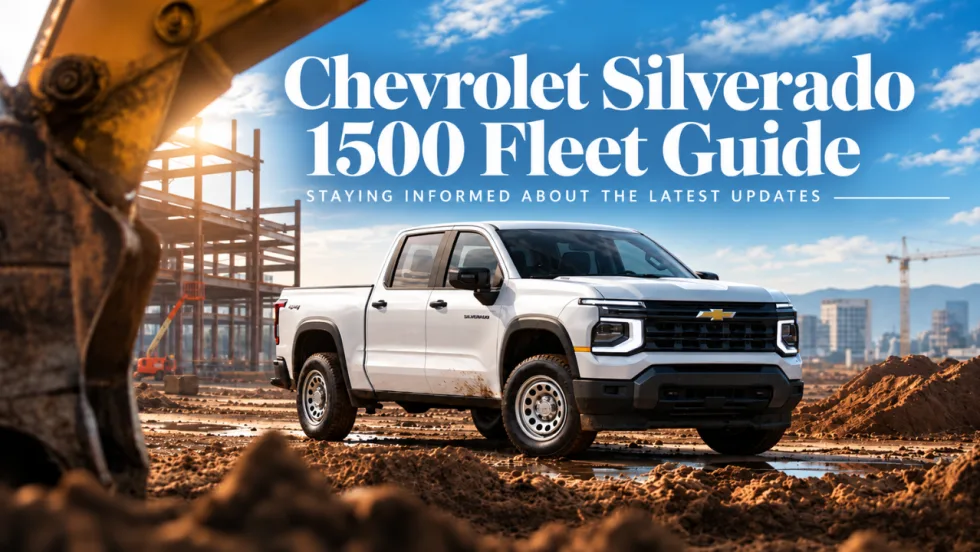
Chevrolet Silverado 1500 Fleet Guide Specs Capability and 2027 Model-Year Updates
The next-generation 2027 Chevrolet Silverado 1500 brings new V-8 engines, updated technology, expanded safety features, and a fleet-focused Work Truck. Here’s what commercial fleets need to know so far.
Read More →
Ram ProMaster City Fleet Guide Specs Cargo Capacity and 2027 Updates
Work Truck’s Ram ProMaster City Fleet Guide tracks the latest specifications, cargo capability, configurations, fleet technology, pricing, and model-year updates for Ram’s mid-size commercial van.
Read More →
Ford F-150 Fleet Guide Specs Capability and 2026 Model-Year Updates
Explore 2026 Ford F-150 fleet specs, engines, towing and payload capability, configurations, work features, technology, and model-year updates.
Read More →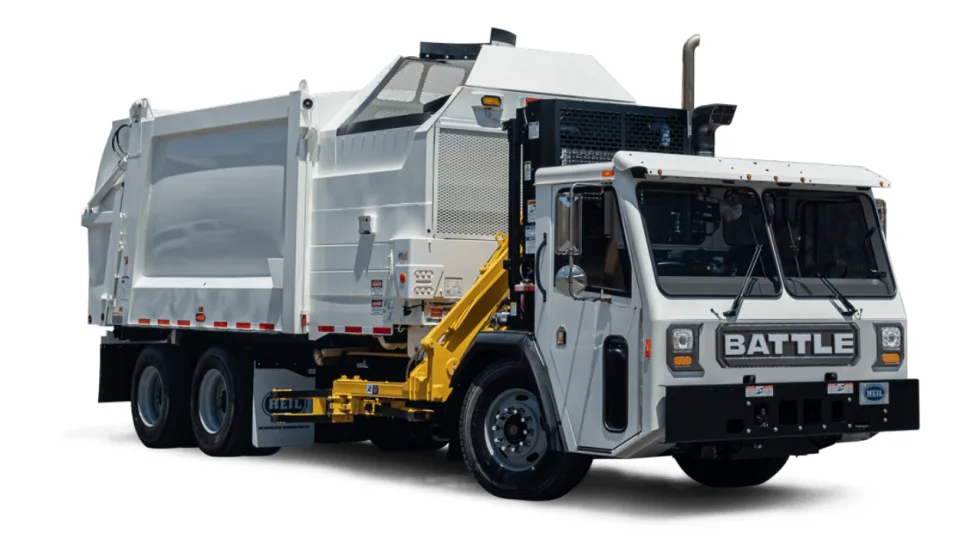
TCI Now Sells & Supports Battle Motors’ Vocational Trucks
Midwest truck dealer Truck Centers, Inc. (TCI) has expanded its transportation solutions with sales and service support for Battle Motors’ heavy-duty vocational trucks at locations in locations in Indiana, Illinois, and Missouri
Read More →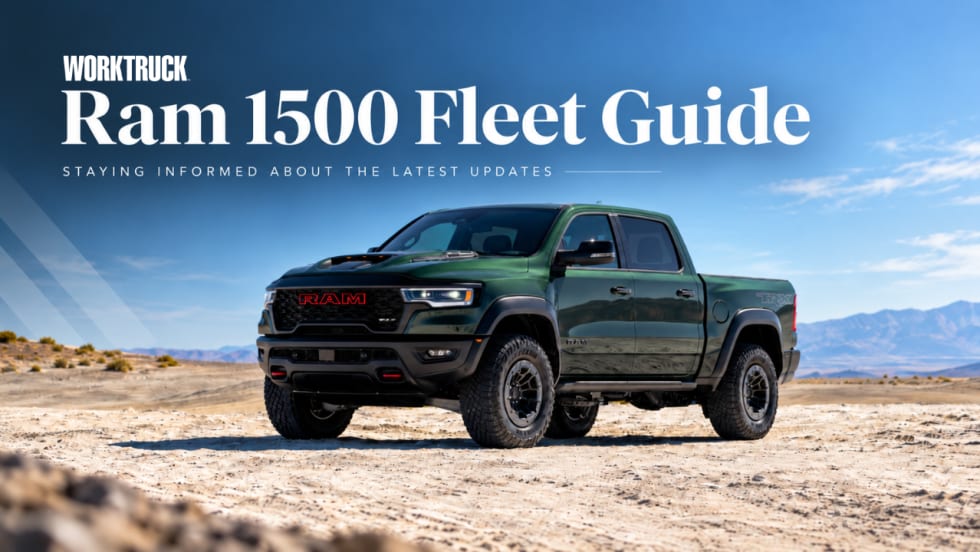
Ram 1500 Fleet Guide Specs, Capability and 2027 Model-Year Updates
Explore always up-to-date Ram 1500 fleet specs, engines, towing and payload capability, configurations, technology, pricing updates, and model-year changes.
Read More →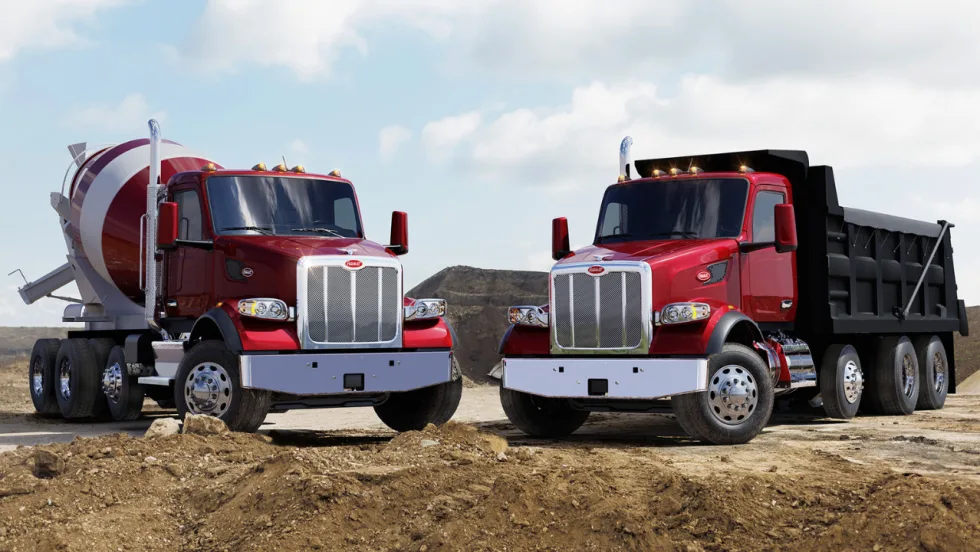
Peterbilt Trucks Equipped with Paccar TX-18 Pro Boost Efficiency for Maryland Fleet
Patuxent Companies is replacing aging trucks with the Peterbilt Model 567 and Model 589, specified with the Paccar TX-18 Pro 18-speed automated transmissions, and is reporting an 8% to 10% improvement in fuel economy.
Read More →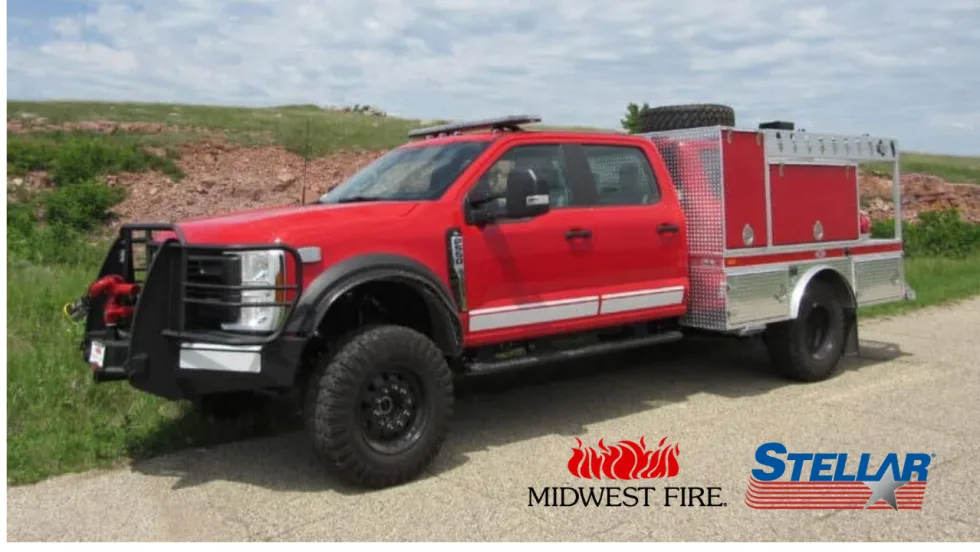
Stellar Expands into Fire Apparatus Market with Acquisition of Midwest Fire
Stellar Industries has acquired Midwest Fire, a custom fire apparatus manufacturer headquartered in Luverne, Minnesota, with nearly four decades of specialized apparatus experience.
Read More →
Recalls You Need to Know About in August 2026
If you have Altec, Chrysler, Ford, Heil, General Motors, International, Mack Trucks, Paccar, Rivian, Royal Truck, Toyota, US Truck Body, or Volvo Trucks vehicles in your fleet, you should check these important recalls issued by the National Highway Safety Administration.
Read More →