




Related: Fleet Policies & Procedures to Minimize COVID-19 Contagion
Getting Fleet Back on Track
Restarting truck fleets after the pandemic requires attending to mechanical issues, understanding the new compliance landscape, and bringing your personnel back online safely and efficiently.
by Oswaldo "Ozzie" Flores
May 27, 2020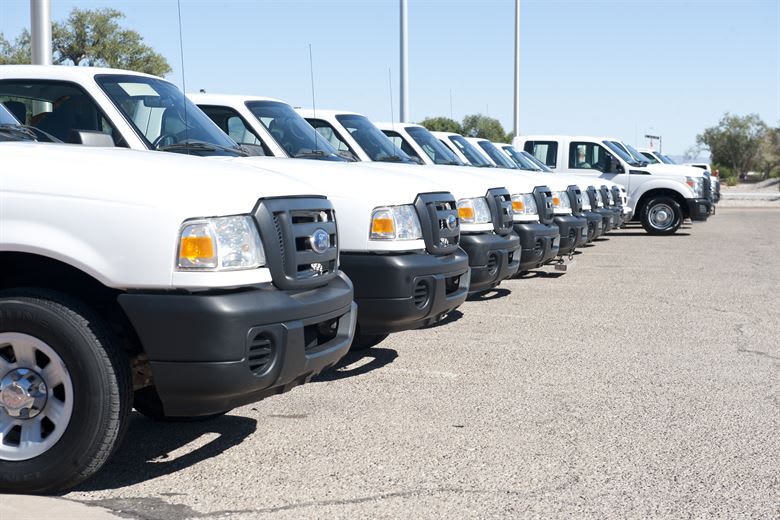
Before deployment, schedule a mechanic to approve the vehicles, leaving enough time to properly inspect for road readiness.
Photo via Holloman Air Force Base.
6 min to read
With much of America’s trucking operations being grounded for the past several months during the COVID-19 outbreak, fleet managers (as well as the rest of the nation) are chomping at the bit to get back to work. But what does that look like in a world where trucks have been sitting idle for 90 days or more?
A trucking fleet is designed to be used, and the fleet management software systems that have been installed to ensure efficiency, compliance, maintenance, and safety are built to mainly monitor a fleet that is in motion — not one that’s been grounded. As we break out of our forced economic slowdown, fleets need to move forward with a fresh outlook and new set of compliance standards.
This redeployment of a stale fleet cannot be figured out “on the fly.” Too much can go wrong on the road — that is, if the trucks even get that far. If vehicles are down for even a little longer than usual, mechanical issues can seep in. Just like having wear and tear from the road, trucks can have wear and tear from sitting in a lot.
With that in mind, here are three key strategies to getting your fleet back on track.
1. Attend to Potential Mechanical Issues
After sitting dormant for an extended period, each truck will be prone to a host of mechanical problems.
Before deployment, schedule a mobile or in-house mechanic to approve the vehicles, leaving enough time to properly inspect for road readiness. If you are unable to have a technician do so, plan to have vehicles scheduled for inspection by your regular shop to review the following:
Tires: Gauge the pressure of all tires before deployment. Air can leak out while trucks sit because the pressure builds at fixed points on the tire. Keep portable air compressors handy in the vehicle yard.
Batteries: Test the condition of each one and their respective charge capacities. Make sure to have readily available jump-starters on hand.
Fuel: Check fuel levels and, if possible, the condition of the fuel. After several months, it’s easy to lose track of who topped off and who didn’t.
Brakes: Make sure all brakes are fully functioning before going back on the road. Even if they haven’t been used, brake pads can deteriorate over time and brake calipers can freeze up from lack of use.
Suspension: Closely inspect all steering components to ensure the vehicle is handling properly. Short test drives are recommended for evaluation prior to heading out on a long haul.
Fluids: Check all fluid levels, including radiator, brake, steering and washer fluids. Excessive leaks should be apparent from vehicle sitting and may be a leading indicator of more serious troubles.
Third-party devices: If equipped with aftermarket mechanical (PTO, cranes, lifts, etc.) or electronic devices (cameras, GPS, etc.) these need to be checked for proper operation as well.
Without knowing where the problems lie within each vehicle, it is critical to conduct a thorough evaluation on every truck. This way, any failures can be addressed before it’s too late.
Automation and recording technologies can be incredibly useful. A digitized maintenance process, portal, and schedule to determine which vehicles had required immediate attention prior to the shutdown is more likely to be accurate and easy to reference than a paper trail which has to be tracked down among a fleet team that’s been sitting around for months.
2. Understand the New Compliance Landscape
Once you’ve determined your fleet is ready to go from a mechanical perspective, there are a series of regulations — including many that have been updated on account of the coronavirus pandemic — fleet managers need to understand. Being well-informed of the latest rules, as well as their exemptions and exceptions, is crucial to operating safely and efficiently, beyond avoiding compliance-related fines or violations.
Lawmakers, government agencies, and industry associations have issued guidance about everything from where to find food in a quarantine zone, remaining socially distant during roadside assistance, how to sanitize the cab, and wearing protective gear.

Oswaldo "Ozzie" Flores is safety and compliance product manager at Teletrac Navman.
Photo courtesy of Teletrac Navman.
Here are 10 key resource links for understanding the compliance landscape in our new era of COVID-19 and perhaps beyond:
North American emergency declarations (exemptions and exceptions) broken down by federal and state governing bodies.
Hours of service waivers and extensions as issued by the FMCSA.
If licensing has been disrupted by COVID-19, drivers may secure waivers for their CDL and medical cards.
The latest guidance on preventing occupational illness and injury from OSHA.
CDC guidance on New York City and other hotspots.
Certain states are not required to train third parties in person due to the COVID-19 pandemic. This waiver may apply to your team.
Some disqualifying events may not be applied to drivers’ records during the emergency period.
This bill aims to provide workers with paid sick leave, tax credits, and free COVID-19 testing; expanding food assistance and unemployment benefits; and increasing Medicaid funding.
New out-of-service criteria for North American truckers has been issued by the Commercial Vehicle Safety Alliance.
These emergency waivers and extensions are for trucker drivers with learner permits who are pursuing licensing.
Staying informed about policies is important during this time of change. Many of the waivers are temporary, though, and will need to be renewed in June or the rules will revert to their pre-pandemic state. Make sure to keep checking back regularly with these resources as compliance codes are changing often on a federal level and varying within individual states.
3. Bring Your Personnel Back Online Safely and Efficiently
Since the machinery is only as good as the people controlling them, we’ll also need to “reboot” the staff — drivers, mechanics, dispatchers, etc. — to ensure they are refreshed and up to date on the latest operating procedures. This re-onboarding takes time and should be planned for long before redeployment.
Take time to retrain drivers on policies and procedures, providing them with a quick, but mandatory, refresher on high-level items which are critical to your business.
With COVID-19, it is strongly advised that each company implement new safe practices for touchless delivery, if possible, to protect both your employees and your customers.
Conduct a quick audit for all documents. Items that need to be in the vehicle(s) at all times may include the following:
Fuel card associated to proper vehicle(s)
Accident kit
Insurance documentation
Registration paperwork
Employee handbook
Vehicle operations manual
User manuals for third-party devices installed in the vehicle (ELD etc.)
Masks and gloves
Disinfectant wipes and spray
Administrative staff should also refresh themselves on company policies and procedures when it comes to requirements due to accidents, vehicle tow away procedures, missing fuel cards, maintenance requirements, etc.
As a fleet manager, your personnel is your most precious cargo, and ensuring the team’s safety and education is the most valuable form of compliance you can practice. Remember that they are working under extraordinary circumstances and be mindful of those pressures.
Take the time to thank everyone for their continued effort, hard work and patience during these unprecedented times. Words of encouragement and thanks go a long way towards providing a great experience for the customer and employee.
Now more than ever, your fleet and team need to be ready to roll. Not only is the economy depending on all the logistics services your trucks provide, but the safety component and new risks from being idle cannot be overstated.
The key to executing this very delicate and high-stakes re-entry is having systems and processes that are current and keep up with the ever-changing compliance requirements of this new normal.
About the Author
Oswaldo "Ozzie" Flores is safety and compliance product manager at Teletrac Navman. Prior to his current position, he held fleet and compliance administrative management, fleet supervisory, sales, and business development roles with Pepsi Cola, Time Warner Cable, British Petroleum North America, and legacy supply chain services.
Subscribe to Our Newsletter
More Small Fleet


Developing Budget-Friendly Driver Safety Programs
From driver training and safety meetings to one-on-one coaching and incentive programs, several small fleets share how they have developed a safety culture with their drivers using low- to no-cost resources.
Read More →
Sponsored•March 9, 2026
Boosting Last-Mile Fleet Uptime, Safety, and Value with AI Vehicle Inspections
AI-powered inspections are transforming last-mile fleets by replacing manual checks with highly accurate automated scans that detect defects in seconds. By giving fleet operations visibility into the daily condition of their vehicles, you can identify trends over the vehicle’s lifecycle that enable improved procurement decisions, route management, driver training and accountability.
Read More →

Five Ways Seat Belts Help Prevent Injuries
There are five ways seat belts protect occupants from injuries, according to the Tennessee Department of Safety and Homeland Security.
Read More →
Sponsored•January 19, 2026
Basic Tracking vs Next Generation Fleet Technology
Fleet software is getting more sophisticated and effective than ever, tying big data models together to transform maintenance, safety, and the value of your existing tech stack. Fleet technology upgrades are undoubtedly an investment, but updated technology can offer a much higher return. Read how upgrading your fleet technology can increase the return on your investment.
Read More →
Sponsored•January 14, 2026
It’s here: The 2026 Fleet Technology Trends Report
What does AI mean for fleets? Get the answer — and learn other top tech trends.
Read More →
Small Fleets, Big Impact: How Independent Drivers Power Wreaths Across America
Check out how small fleets and independent drivers power Wreaths Across America each December and why their impact matters more than ever.
Read More →
VMS Survey Finds 65% of Small Fleet Managers Run Operations Alone
A new VMS survey shows small fleet managers are stretched thin, with most handling operations solo and eager to adopt digital tools for relief.
Read More →
Tips for Driving Safely on Halloween Night
This video features a reminder from the Connecticut Department of Transportation (DOT) and the Connecticut Police Chiefs Association, urging drivers to prioritize safety this Halloween.
Read More →
AI, Access, and Uptime: VMS’s Next Chapter with David Prusinski
VMS’s new Co-CEO, David Prusinski, shares how an AI-first approach will give small fleets and repair shops the tools to compete like big players.
Read More →