





Think About: 5 Considerations to Make When Upfitting HVAC Vehicles
Generator & Inverters: Addressing Mobile AC Power Needs
Commercial vehicles need auxiliary power to operate tools, equipment, and cell phone chargers. New technology offers exciting new technological developments in auxiliary power.
June 23, 2009
With the advent of hybrid vehicles, inverter technology, in particular, has begun to offer exciting new technological developments to meet fleet operators' mobile truck power requirements.
Photo: Kohler Power Systems
5 min to read
Demand for commercial- grade electric power capability on vehicles to operate tools and equipment, and for general utility applications has been increasing, even as fleets have become more fuel and environmentally conscious.
The diverse requirements have spurred a return to auxiliary engine-driven generators and inverters, the latter used to convert DC battery power into AC. With the advent of hybrid vehicles, inverter technology, in particular, has begun to offer exciting new technological developments to meet fleet operators' mobile truck power requirements.
Auxiliary Engine Generators
Generators driven by auxiliary engines provide obvious fuel-saving benefits for small horsepower requirements. Fairly common at one time, they subsequently fell out of favor chiefly because of maintenance issues, as Bob Johnson, fleet relations director for the National Truck Equipment Association (NTEA), Farmington Hills, Mich., pointed out.
"The combination of fuel economy and environmental issues, plus improvements in the design of auxiliary engines themselves, has people taking a fresh look at them," said Johnson.
Tim Cummings, sales representative for Knapheide Truck Equipment Center, Kansas City, Mo., added, "Small engine manufacturers used to have a lot of problems, but they've come a long way with improvements such as overhead valve designs and pressurized crankcases. The carburetion is more advanced."
The 15-and-under horsepower engines used with generators are popular for running power tools and lights, for example. Larger units, such as 10 kW-and-up mobile generators from Kohler Power Systems, Kohler, Wis., use more sophisticated engine technology, such as port fuel injection and electronic control modules.
The 15-and-under horsepower engines used with generators are popular for running power tools and lights, for example.
Photo: Kohler Power Systems
Inverters Attract Attention
Inverters are attracting even more fleet attention because, often, an operator's electrical demands aren't strong enough to require a generator. Typically, inverters also operate more quietly, cleanly, and efficiently, and have fewer maintenance issues than auxiliary generators. In addition, new hybrid-engine trucks are opening exciting opportunities to expand inverters' electrical-generating capabilities.
Later this year, Kohler will introduce a backup system for a vehicle's battery, when the operator is running AC power off the inverter with the engine off.
Kohler's 1.4BEOR unit, providing 12 DC volts/110 amps, senses when battery power starts to reach low levels and automatically starts the engine to maintain the battery's charge level, according to Stacy Peshkopia, marketing manager for Mobile Systems.
The company's mobile idle-reduction DC power unit has a single-cylinder, four-cycle, air-cooled engine and such features as standalone operation, remote start capability, and power to recharge a number of truck batteries.
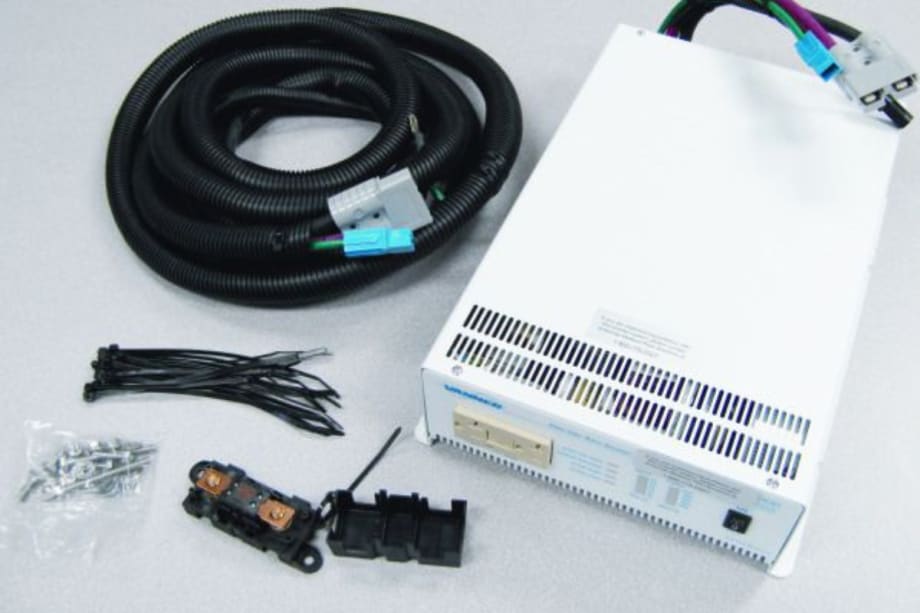
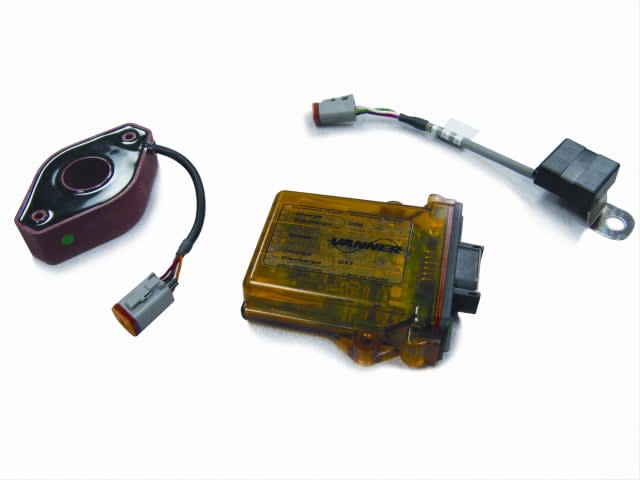
Vanner Inc., a leading Hilliard, Ohio-based mobile power supplier, has also been developing a "no idle" AC power system, currently being tested in Canada, which provides worry-free tool operation through use of an inverter with the engine off.
The unit works with any inverter brand and any vehicle make. Connected to the auxiliary batteries, the system monitors battery temperature, over/under voltage, and the battery's health while the inverter is running.
If the batteries drop to a predetermined discharge level, for example, a 12-volt signal is sent through the system that can be combined with an automatic starter to recharge the battery or it can simply blow the horn, alerting the driver to start the engine, said Bruce Beegle, Vanner vice president of sales and marketing.
The company has also been using conventional inverters to build hybrid-integration kits for hybrid trucks such as the Ford Escape and Chevy Tahoe. The "plug-and -play" hybrid systems connect to the vehicle's DC-DC converter to supply AC power for stationary or mobile use.
Vanner partnered with Fleet Electric, an electrical system integrator, to provide turnkey electrical solutions for mobile requirements.
Their Vanner/Fleet Gold program analyzes a vehicle's application and selects the correct components for its work requirements. The installation procedure is customized to the application to ensure all systems are installed in the same manner.
All components are also shipped in a turnkey installation kit to the fleet or truck equipment manufacturer to reduce installation time and ensure long-term reliability.
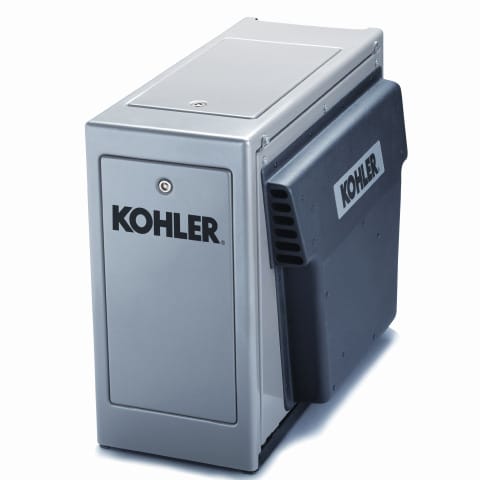
Larger units, such as 10 kW-and-up mobile generators from Kohler Power Systems.
Photo: Kohler Power Systems
2010 and Beyond
The growth of the hybrid-vehicle market offers the opportunity to leverage large traction-drive motors and large battery banks for even greater adaptation of inverter technology.
Currently aided by federal grants and driven by federal mandates, this technology's development is spearheaded by the transit bus industry. However, once developed for use in larger vehicles, industry members such as Beegle believe inverter technology can be scaled down for use in various size commercial trucks.
OEM truck/powertrain manufacturers still use auxiliary power units (APU) - essentially bolt-on generators - for auxiliary loads, utility, or work applications. In the bus and transit market, for example, Vanner has been working with Allison Transmissions to tie into hybrid-vehicle systems, tapping into the traction-drive motor that drives the wheels to provide an alternative to the bolt-on generator.
In diesel engine trucks, for example, the only power generation source is the alternator. All its power is consumed in supplying the vehicle's electrical needs.
Truck customers and distributors have often upgraded or oversized alternators to run auxiliary loads, such as may be required by inverters for work applications. The downside is the engine must remain running.
"Now, with tighter restrictions on engine idling and idling laws, we're seeing a decline in that practice," said Beegle.
Hybrid vehicles, he added, already have an ample power source because they have the large traction-drive motor and a large battery bank, capable of providing power with the engine on or off.
By tying into this power with a DC converter, the vehicle's mechanical alternator can be eliminated and replaced with a solid-state device to handle auxiliary loads/work applications, Beegle added.
Eliminating the vehicle's alternator and, basically, one belt from the engine accommodates all electrical support needs with a solid state device.
With inverter technology, the DC can be converted to 120V AC to supply all the vehicle's power needs, such as air conditioning, power-steering pumps, and even air compressors, as well as other auxiliary needs, such as powering tools, without belts and without running the engine unnecessarily. The upshot provides fleets even better fuel economy and more maintenance-free operation.
Subscribe to Our Newsletter
More Maintenance
Les Schwab Expands Commercial Tire Footprint Into Arizona
Les Schwab Tires has expanded into Arizona with two commercial tire locations in Phoenix and Tucson, strengthening its fleet service footprint in the Southwest.
Read More →
Volvo Trucks’ 'Lock and Leave' Software Updates Go Live Across North America
Unattended over-the-air software updates are now available in Volvo trucks across the U.S. and Canada. The new capability lets trucks stay current with the latest software without interrupting operations or requiring a dealership visit.
Read More →
Why Technician Appreciation Can’t Be a Once-a-Year Thought
For fleets trying to keep skilled technicians, recognition cannot begin and end with Technician Appreciation Week. Learn what year-round appreciation really looks like and why the everyday technician experience matters just as much as pay when fleets are trying to keep good people.
Read More →
How Faster Driver Reporting Can Keep Small Truck Problems Small
When minor damage, warning lights, or equipment issues are reported late, small problems can quickly become bigger maintenance headaches. Conversational AI can help shorten the path from what a driver notices in the field to the person who can act on it.
Read More →
BendPak’s Ranger Wheel Service Equipment Achieves North American Safety Certification
BendPak’s full line of Ranger tire changers and wheel balancers has been ETL certified to UL and CSA standards to improve operator safety.
Read More →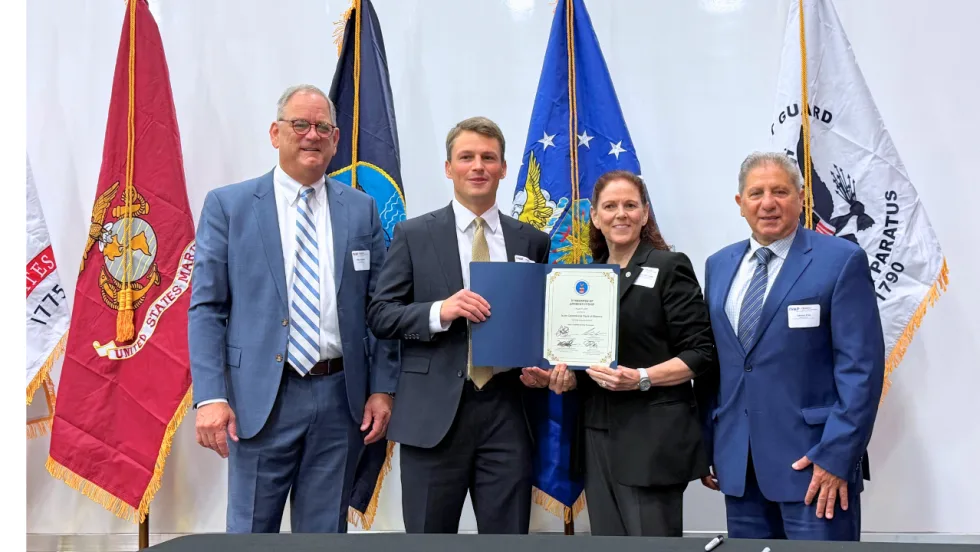
Isuzu & U.S. Department of Labor Celebrate Milestone for Veterans Apprenticeship Program
The Isuzu Veterans Apprenticeship Program (IVAP) signing ceremony highlighted Isuzu’s long-term commitment to veterans, Isuzu dealers, and the skilled workforce supporting its customers and the commercial transportation industry.
Read More →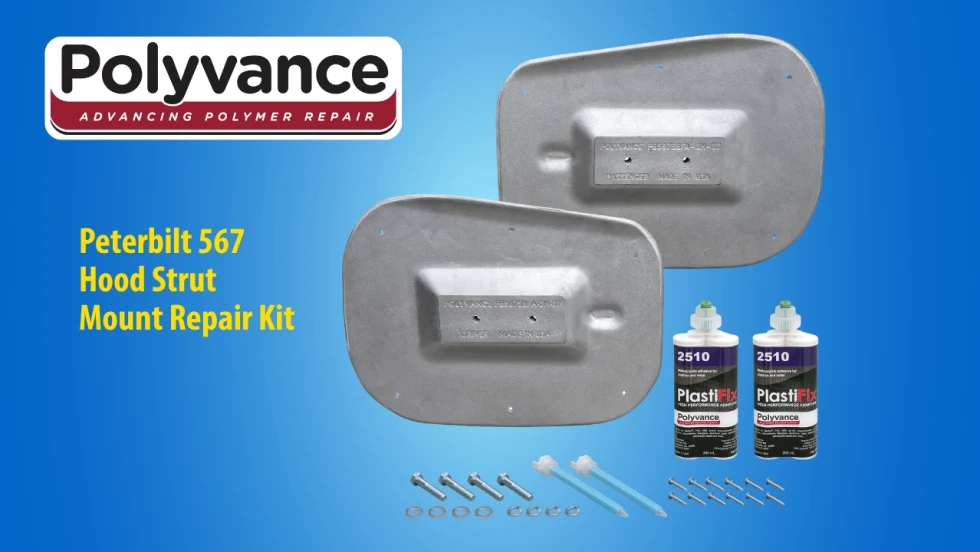
Polyvance Introduces New Peterbilt 567 Hood Strut Mount Repair Kit
Polyvance has launched a repair solution for Peterbilt 567 hood struts, helping truck owners and repair facilities avoid costly hood replacements.
Read More →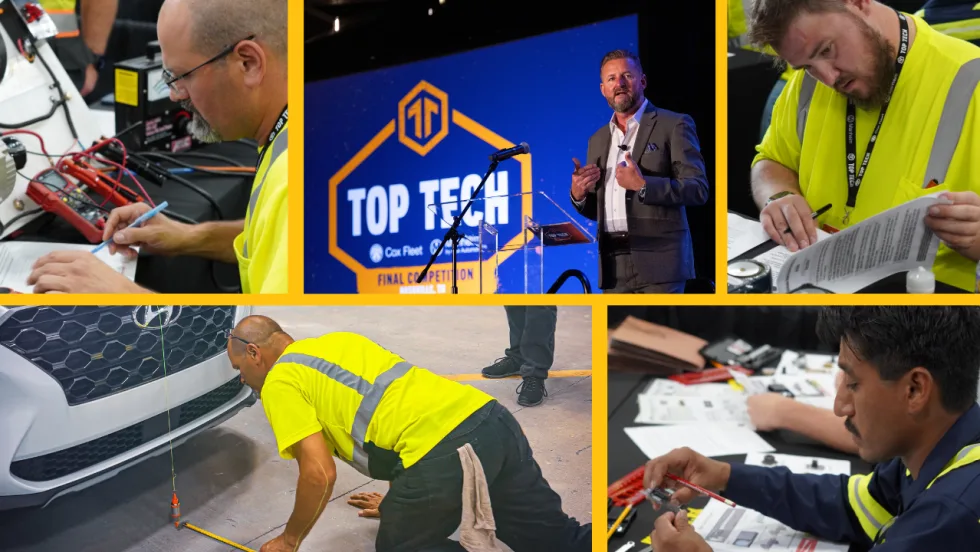
Cox Automotive Celebrates Technical Excellence at 2026 Top Tech Finals
The top technicians from Cox Fleet and Manheim tested their skills in Nashville, Tennessee, at Cox Automotive’s 2026 Top Tech Finals. The overall winners will advance to compete at the American Trucking Association’s TMC SuperTech competition.
Read More →
Grote Industries Appoints Vice President of North American Operations
Grote Industries has appointed Patrick Smith as vice president of North American operations as it celebrates 125 years of innovation and manufacturing excellence. He has more than 20 years of manufacturing leadership experience.
Read More →
Winter Fleet Prep: Expert Tips to Keep Vehicles Running Smoothly
Cold weather can expose weak batteries, tires, fuel systems, and maintenance gaps fast. Use this winter fleet checklist to prepare trucks and drivers before temperatures drop.
Read More →